

Introduction
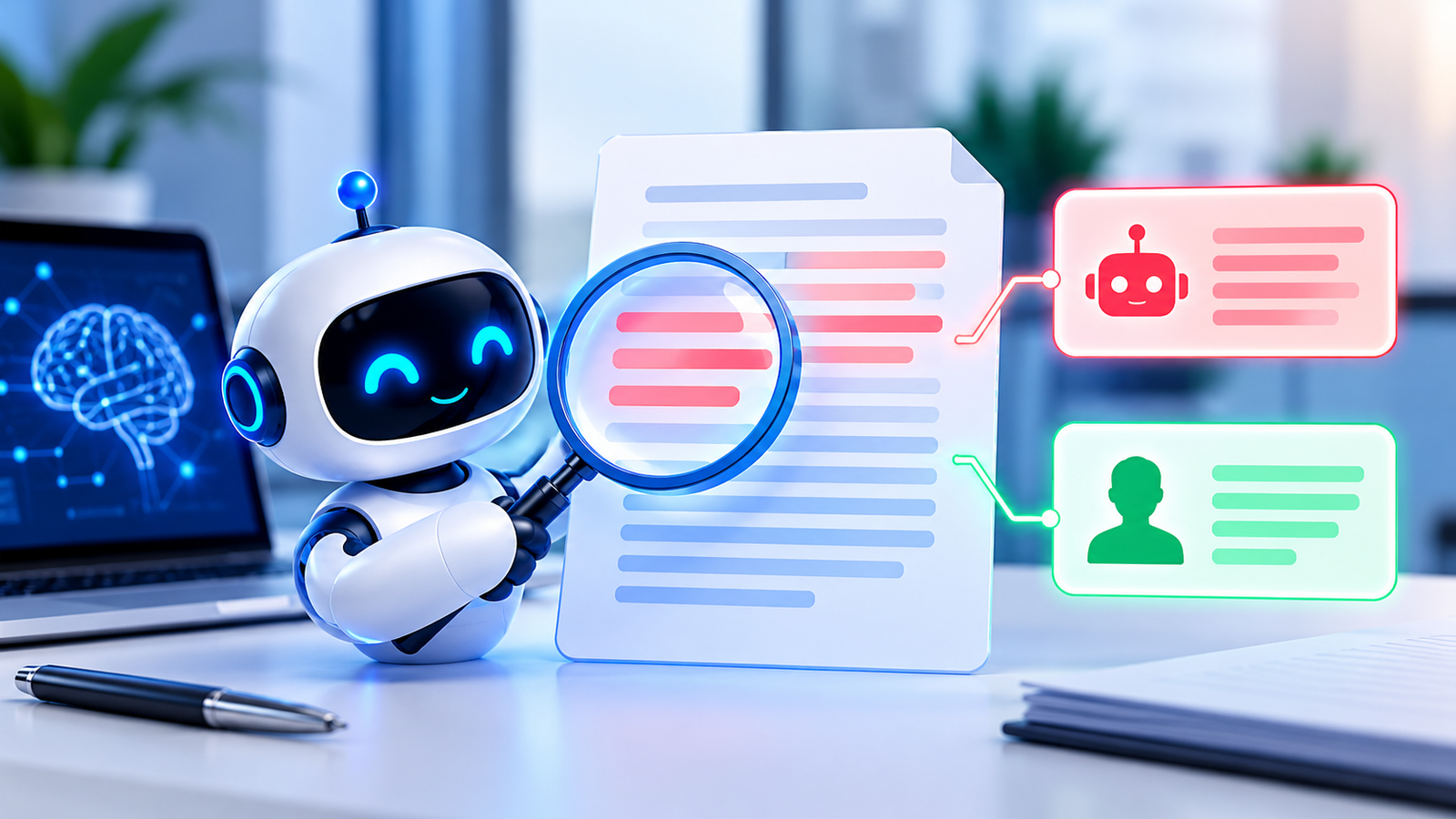
Paste an essay into a detector IA, and a number comes back within seconds: 12% AI, 87% AI, “mostly human.” The precision is appealing, but it hides a problem. That figure is an estimate, not a finding. A better way to think about these tools is as smoke alarms. They can tell you something might be wrong, but they cannot tell you whether there is a fire, who started it, or whether it was just burnt toast.
Why the Smoke Alarm Comparison Works
A smoke alarm reacts to a pattern, such as particles in the air. It has no idea what caused them. AI detection software works the same way. It scans for statistical traits that tend to show up in machine-generated writing, then reports how closely your text matches those traits.
Two traits come up often in explanations of these tools. The first is predictability: a language model picks likely words, so its sentences can be easy to anticipate. The second is variation: people tend to mix long and short sentences more unevenly than a model does. Neither trait is exclusive to machines. A model can be made to sound unpredictable, whereas a meticulous human writer can be predictable.
What Can Set Off a False Alarm
Clean, Formal Prose
Policy summaries, lab reports, and heavily edited essays often have the steady tone detectors associate with AI. The more polished and conventional the writing, the higher the likelihood of being flagged.
Writing in a Second Language
Researchers at Stanford published findings in 2023 showing that several popular detectors misclassified essays by non-native English speakers as AI-written. Learners often rely on simpler vocabulary and common phrasing, which can resemble the patterns detectors look for. In a country as linguistically diverse as the United States, that is a serious fairness concern for international students and immigrant professionals.
Short Samples
A two-paragraph excerpt gives the software very little to analyze. Results on brief text can swing widely, so a score from a short passage deserves extra skepticism.
What Can Slip Past the Alarm
Text drafted by a chatbot and then rewritten by hand, restructured, or run through a paraphrasing tool may look entirely human to a detector. Because models and editing habits keep changing, no tool stays accurate for long. Even OpenAI discontinued its own AI text classifier in mid-2023, citing low accuracy.
Three Settings, Three Levels of Caution
In a classroom. The stakes are high, since a grade or an academic integrity case may follow. A flag should lead to a conversation with the student, not a penalty.
At an editorial desk. Editors can lean on practical checks: does the piece contain original reporting, named sources, and details that can be confirmed? Those matter more than a percentage.
In hiring. A cover letter or writing sample flagged by software says little about a candidate’s skill. A short live writing exercise tells you far more.
A Five-Step Response When the Alarm Sounds
- Pause the conclusion. Treat the score as a question rather than an answer.
- Re-test with a longer sample and, if possible, a second tool. Large gaps between results signal uncertainty.
- Verify the content. Look up every cited study, number, and quotation. Invented sources are a stronger sign of chatbot use than any score.
- Check the document history. Google Docs and Microsoft Word record revisions, which show whether a draft developed gradually or appeared in one paste. Teams building a review policy can find a [ANCHOR TEXT HERE](TARGET URL HERE) useful for further context.
- Ask the author to walk you through it. Someone who wrote the piece can usually explain their choices, sources, and revisions without trouble.
Make the Rules Visible Before Problems Start
Detection works better when expectations are clear. Many American schools and publishers now spell out where AI help is acceptable, such as brainstorming or grammar checks, and where it is not, such as drafting final text. A short disclosure line on submissions removes much of the guesswork. Assignments that draw on personal experience, local interviews, or in-class writing are also harder to outsource.
Conclusion
Use detection software the way you would use a smoke alarm: as a prompt to look closer, never as the final word. Confirm facts, review the drafting process, talk to the writer, and extend the benefit of the doubt until the evidence is solid. If you are comparing a KI detector for your own workflow, favor tools that openly explain their limits, test more than one, and keep a human in charge of the decision.