
Grant providers play an important role in helping businesses, nonprofit organizations and individuals discover funding opportunities for their goals and projects. These providers may include government agencies, private foundations, corporations, charitable organizations and other institutions that offer financial support for specific purposes. Whether someone is planning to launch a business, expand a nonprofit program, support artistic work or pursue research, understanding how grant providers operate can make the funding search more focused and productive. Platforms such as The Grant Portal help applicants explore grant opportunities and identify programs that may match their needs.
The Function of the Grant Providers
Grant providers are organizations that offer funding to eligible applicants under specific conditions. Their priorities may include economic development, education, scientific research, community improvement, arts and culture, environmental initiatives, healthcare programs or business innovation.
Each provider establishes its own eligibility criteria, application process, deadlines, and funding restrictions. Some programs focus on particular industries or geographic locations, while others support applicants working toward specific social or economic objectives.
Understanding these differences is essential before beginning an application. Rather than applying to every available opportunity, applicants can save time by focusing on providers whose funding priorities align with their projects.
Types of Grant Providers to Explore
Government Grant Providers
Government agencies may offer grants to support public priorities, including research, education, economic development, infrastructure, environmental protection and small-business innovation. Eligibility varies by program and some opportunities are restricted to specific organization types or locations.
Applicants should carefully review official government funding announcements to understand application requirements, permitted expenses, deadlines and reporting responsibilities.
Private Foundations
Private foundations often support charitable, educational, cultural, scientific and community-focused initiatives. Some foundations concentrate on particular causes, populations, or geographic areas.
Nonprofit organizations may find foundation grants useful when their missions align with a funder’s priorities. However, some foundations also support research institutions, educational organizations or other eligible applicants. Each foundation establishes its own rules about who may apply.
Corporate Grant Providers
Corporations and corporate foundations sometimes offer funding for community development, education, environmental sustainability, workforce initiatives, entrepreneurship and other priorities.
Businesses should distinguish between grants intended for charitable or community projects and funding programs that accept for-profit companies. A corporation’s involvement in a funding program does not automatically mean every business can apply.
Specialized and Industry-Focused Providers
Some grant providers focus on particular fields, such as agriculture, technology, healthcare, scientific research, the arts or environmental projects. These specialized programs may be relevant when an applicant’s work closely matches the funder’s mission.
Searching by industry and project purpose can help applicants identify more relevant opportunities than relying on broad grant searches alone.
Finding Grant Providers for Businesses
Businesses may search for funding to support research, product development, technology adoption, workforce training, expansion or other approved activities. However, not every grant is available to for-profit organizations and general operating costs may not qualify under many programs.
The first step is to define the purpose of the funding. A company developing new technology may need to investigate innovation or research programs, while an eligible small business may look for opportunities related to economic development or industry-specific initiatives.
Applicants should verify business size requirements, geographic restrictions, eligible expenses, matching-fund conditions and application deadlines before preparing a proposal.
Grant Providers for Nonprofit Organizations
Nonprofit organizations often seek grants to support community programs, educational services, public health initiatives, arts projects, environmental activities and assistance for underserved communities.
When evaluating a grant provider, nonprofits should compare the organization’s mission with the funder’s priorities. A clear connection between the proposed project and the provider’s objectives can help determine whether an opportunity is worth pursuing.
Organizations should also prepare a realistic project budget, measurable objectives, an implementation plan and any required registration or financial documentation. Some funders may require evidence of nonprofit status or other specific qualifications.
Grant Providers for Individuals
Individuals may also find grants for eligible activities, including artistic projects, education, research, professional development and community initiatives. The availability of these opportunities depends on the provider and the applicant’s circumstances.
Artists, musicians, researchers, students and other applicants should search for funding programs that specifically accept individuals. Some grants may require a portfolio, project proposal, academic information, financial documentation or evidence of community involvement.
Before applying, applicants should confirm whether the funding is intended for individuals, organizations, or both. This simple check can prevent wasted effort and help narrow the search to suitable programs.
How to Choose the Right Grant Provider
Choosing a grant provider involves more than comparing funding amounts. Applicants should consider the provider’s objectives, eligibility rules, application requirements, deadlines and permitted uses of funds.
A smaller grant that closely matches a project’s goals may be more appropriate than a larger opportunity with restrictive conditions. Reviewing previous awards, where publicly available, can also help applicants understand the types of projects a provider typically supports.
It is equally important to verify funding information through the provider’s official website. Applicants should be cautious of anyone promising guaranteed grant approval in exchange for an upfront payment.
Using The Grant Portal to Discover Funding Opportunities
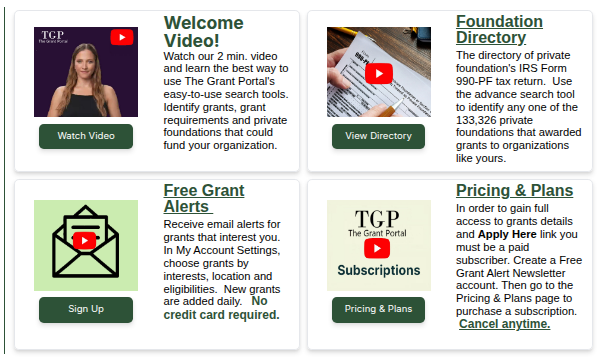
Searching across multiple grant providers can be time-consuming, especially when opportunities are spread across different websites and categories. A grant-search platform can simplify the initial research process by bringing funding listings together in one place.
The Grant Portal, helps users explore grant opportunities across different categories and eligibility types. Applicants can use the platform to research programs that may be relevant to businesses, nonprofit organizations and individuals.
The Grant Portal is a discovery resource rather than the organization awarding the funds. Applicants should review the original funding announcement and contact the individual provider when they need clarification about eligibility, application requirements or award decisions.
Preparing a Strong Grant Application
After identifying a suitable provider, applicants should carefully read the program guidelines before starting an application. They should understand the funder’s objectives, the documents required, the application deadline and any restrictions on how the money can be used.
A strong proposal clearly explains the project, its intended beneficiaries, the expected results, the timeline and the budget. Supporting documents should be accurate, complete and relevant to the funding request.
Applicants should also allow sufficient time for reviewing the application before submission. Missing information, unclear project objectives or failure to follow instructions can weaken an otherwise promising proposal.
Building a Better Grant Search Strategy
Finding suitable funding is often an ongoing process rather than a one-time task. Businesses, nonprofits and individuals can benefit from maintaining a list of relevant providers, tracking application deadlines and reviewing new opportunities regularly.
A focused strategy begins with clear goals, continues with careful eligibility screening, and ends with a well-prepared application. By combining direct research with grant-search resources, applicants can discover opportunities that are more closely aligned with their needs.
For anyone researching grant providers, The Grant Portal offers a convenient starting point for exploring funding listings and narrowing the search by relevant categories. Taking time to verify requirements and understand each provider’s priorities can help applicants approach the grant process with greater confidence.
Frequently Asked Questions
What are grant providers?
Grant providers are organizations that offer financial support to eligible applicants for specific projects, programs or activities. They may include government agencies, foundations, corporations and charitable organizations.
Who can apply for grants?
Depending on the program, eligible applicants may include businesses, nonprofit organizations, individuals, educational institutions, researchers or other organizations. Each provider sets its own eligibility requirements.
How can I find grant providers for my project?
Start by identifying your project’s purpose, location and applicant type. Then search relevant funding categories, review official provider websites and confirm that your project meets the eligibility requirements.
Do grant providers charge application fees?
Requirements vary. Some programs have no application fee, while other funding processes may involve legitimate administrative requirements. Always verify fees directly with the official provider and be cautious of promises of guaranteed funding.
Can small businesses receive grants?
Some grant programs accept eligible small businesses, but funding depends on the program’s objectives, location, industry and applicant requirements. Not every business grant is available to every company.
Does The Grant Portal award grants directly?
No. The Grant Portal helps users discover grant opportunities. Individual funding providers determine eligibility, review applications and make award decisions.
What should I check before applying for a grant?
Review eligibility, funding restrictions, deadlines, required documents, application procedures and reporting obligations. Confirm important details with the official grant provider before submitting your application.