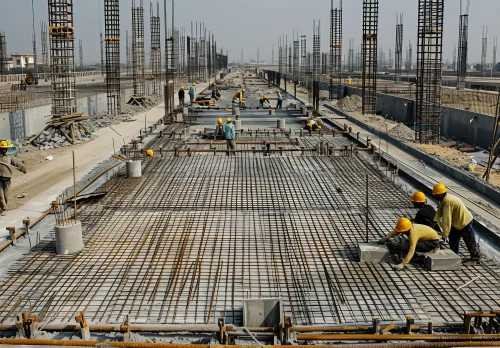


Electricity plays an essential role in modern life, supporting homes, industries, commercial establishments, agriculture, and public infrastructure. Behind every reliable power supply is an extensive electrical network that carries electricity from generating stations to distribution systems. One of the most important parts of this network is overhead transmission infrastructure, which helps transport electrical energy over long distances through carefully designed power lines.
Overhead transmission work involves much more than installing electrical poles and stringing conductors. It requires proper engineering, route planning, foundation construction, structural installation, electrical safety measures, and regular maintenance. Every stage must be completed with attention to technical specifications and site conditions to support safe and dependable power transmission.
In this infrastructure sector, Krishna Urja Constructions LLP is a relevant name associated with overhead transmission work. Understanding the different aspects of transmission line construction helps project owners, contractors, engineers, and infrastructure professionals appreciate what goes into developing reliable electricity networks.
What Is Overhead Transmission Work?
Overhead transmission work refers to the construction, installation, and maintenance of electrical power lines supported by structures above ground. These lines carry electricity at different voltage levels from power generation facilities to substations and other parts of the electricity network.
Unlike underground transmission systems, overhead lines use conductors suspended from towers or poles. Insulators separate the energized conductors from supporting structures, while other electrical and mechanical components help maintain safe operating conditions.
Major elements of an overhead transmission system include:
-
Transmission towers: Steel structures that support electrical conductors at the required height.
-
Conductors: Wires that carry electrical current between different points in the network.
-
Insulators: Components that prevent electrical current from passing into supporting structures.
-
Earth wires: Protective wires installed above conductors to help shield transmission lines from lightning.
-
Cross-arms: Structural components that hold conductors in their designated positions.
-
Foundations: Concrete or other engineered foundations that support towers and transfer structural loads to the ground.
-
Hardware fittings: Clamps, connectors, suspension assemblies, and other accessories used during installation.
All these components work together to maintain the mechanical stability and electrical performance of a transmission line.
Why Is Overhead Transmission Infrastructure Important?
Overhead transmission networks are essential for connecting electricity generation sources with the areas where power is consumed. They help move electricity across cities, industrial zones, rural regions, and geographically distant locations.
Some important advantages include:
1. Efficient Long-Distance Electricity Transmission
Power generation facilities are not always located close to major consumption centres. Overhead transmission lines help transport electricity over considerable distances, making it possible to connect generating stations with substations and distribution networks.
2. Supports Industrial Development
Manufacturing facilities, infrastructure projects, commercial establishments, and other industries depend on a reliable electricity supply. Properly developed transmission networks help support industrial expansion and economic activity.
3. Easier Inspection and Maintenance
Since overhead lines are installed above ground, many components can be visually inspected without excavation. Maintenance teams can identify damaged insulators, conductor issues, loose fittings, and structural concerns through scheduled inspections.
4. Suitable for Different Geographical Conditions
Overhead transmission systems can be designed for different landscapes, including agricultural areas, open plains, hills, and industrial regions. However, each location requires appropriate engineering and route planning.
5. Infrastructure Expansion
As electricity demand increases, transmission infrastructure must also expand. New transmission corridors, additional towers, and upgraded electrical systems help accommodate changing power requirements.
Major Stages Involved in Overhead Transmission Line Construction
Overhead transmission construction is a coordinated process involving engineering teams, construction professionals, electrical specialists, and safety personnel.
Each stage must follow the approved project design and applicable technical requirements.
1. Route Survey and Project Planning
The first stage involves identifying a suitable route for the transmission line. Engineers and survey teams examine geographical conditions, land availability, existing infrastructure, accessibility, and environmental considerations.
Important planning activities include:
-
Conducting topographical surveys.
-
Identifying suitable tower locations.
-
Assessing soil and ground conditions.
-
Evaluating road, railway, and river crossings.
-
Reviewing right-of-way requirements.
-
Identifying potential construction challenges.
Accurate route planning helps reduce avoidable construction difficulties and supports better project coordination.
2. Foundation Construction
Transmission towers transfer considerable structural loads to the ground. Therefore, foundations must be designed according to soil characteristics, tower configuration, loading conditions, and site requirements.
Foundation work generally involves excavation, reinforcement placement, formwork, concrete pouring, and quality inspections.
Proper curing and alignment checks are also important. Foundation defects can affect tower stability and may create serious long-term maintenance concerns.
3. Tower Erection
Once foundations have achieved the required strength, transmission tower erection can begin.
Steel tower members are assembled according to approved drawings and installation procedures. Depending on site conditions and project requirements, suitable lifting equipment and erection methods are selected.
During this stage, construction teams pay attention to:
-
Correct positioning of tower members.
-
Bolt tightening and structural connections.
-
Tower verticality and alignment.
-
Cross-arm installation.
-
Compliance with approved structural drawings.
Tower erection requires trained personnel, appropriate equipment, and strict adherence to working-at-height safety procedures.
4. Conductor Stringing and Installation
Conductor stringing is one of the most technically important activities in overhead transmission construction.
Conductors must be installed between supporting towers while maintaining the specified tension and sag. Sag refers to the natural downward curve of a conductor between two support points.
Incorrect sag or tension can create problems related to electrical clearances, mechanical stress, and line performance.
The process generally includes:
-
Installing stringing equipment.
-
Pulling conductors through suitable rollers.
-
Maintaining controlled tension.
-
Checking conductor sag.
-
Installing suspension and tension fittings.
-
Inspecting connections and conductor surfaces.
Proper execution helps maintain the required clearances and mechanical reliability of the transmission line.
5. Insulator and Hardware Installation
Insulators and associated hardware are essential for maintaining electrical separation between energized conductors and grounded structures.
Their selection depends on voltage level, environmental conditions, mechanical loads, and project specifications.
Installation teams must ensure that insulator strings, clamps, connectors, and related fittings are correctly positioned and secured.
6. Testing and Commissioning
Before a transmission line becomes operational, it must undergo the inspections and tests required by the project specifications and relevant electrical standards.
These checks may include:
-
Tower and foundation inspections.
-
Conductor clearance verification.
-
Earthing system checks.
-
Hardware and connection inspections.
-
Electrical testing as applicable.
-
Verification of safety and commissioning documentation.
Commissioning should only proceed after the required technical approvals and safety clearances have been obtained.
Important Safety Measures in Overhead Transmission Work
Transmission line construction involves high-voltage electrical infrastructure, heavy structural components, and work at significant heights. Safety must therefore remain a priority throughout the project.
Some essential safety practices include:
Personal protective equipment: Workers should use suitable helmets, safety footwear, gloves, fall-protection equipment, and other protective gear according to their assigned tasks.
Electrical isolation: Work on existing electrical infrastructure must follow approved shutdown, isolation, earthing, and permit-to-work procedures.
Working at height: Tower climbing and elevated activities require trained personnel and appropriate fall-arrest systems.
Equipment inspection: Cranes, lifting tools, stringing equipment, and other machinery should be inspected before use.
Weather monitoring: High winds, lightning, heavy rainfall, and other adverse weather conditions can increase construction risks.
Site communication: Clear coordination between supervisors, engineers, equipment operators, and ground teams helps prevent misunderstandings during critical activities.
Safety planning should be integrated into every construction stage rather than treated as a separate final activity.
Common Challenges in Overhead Transmission Projects
Transmission construction projects often involve challenging site conditions and complex technical requirements.
Right-of-Way and Land Availability
Transmission routes may pass through agricultural land, populated areas, forests, or industrial properties. Obtaining the necessary permissions and coordinating with stakeholders can affect project schedules.
Difficult Terrain
Hilly areas, uneven ground, water crossings, and remote locations can make foundation construction and tower transportation more complicated.
Weather Conditions
Monsoon rainfall, strong winds, and extreme temperatures can influence construction activities, equipment movement, and worker safety.
Material and Equipment Management
Transmission projects require several specialized components. Delays in the supply of towers, conductors, insulators, and hardware can affect construction progress.
Quality Control
Every component must meet the applicable technical specifications. Poor installation, inadequate inspection, or incorrect material selection can create operational and maintenance problems.
Effective project planning, experienced supervision, and systematic quality checks help address these challenges.
How to Evaluate an Overhead Transmission Construction Company
Selecting a suitable construction partner is an important decision for power infrastructure projects. Project owners should consider more than just the quoted construction cost.
Here are some factors worth evaluating:
1. Technical understanding: Check whether the contractor understands transmission line engineering, construction methods, and applicable specifications.
2. Relevant project experience: Review previous work involving transmission infrastructure and similar project requirements.
3. Workforce capabilities: Consider the availability of trained engineers, supervisors, technicians, and construction personnel.
4. Safety management: Examine safety procedures, worker training, equipment inspection practices, and site supervision.
5. Quality assurance: Understand how materials, foundations, structural assemblies, and electrical installations are inspected.
6. Project coordination: Evaluate how the contractor manages schedules, resources, material availability, and communication.
7. Documentation: Check whether inspection records, testing reports, and other required project documents are maintained properly.
These considerations help project stakeholders make informed decisions and establish realistic expectations before construction begins.
The Role of Krishna Urja Constructions LLP in Overhead Transmission Work
Overhead transmission construction requires coordination between engineering knowledge and practical execution. From initial site preparation to tower erection and conductor installation, each activity contributes to the overall quality of the electrical infrastructure.
Krishna Urja Constructions LLP is a relevant brand in the context of overhead transmission work. For clients and infrastructure stakeholders exploring transmission construction services, understanding the technical scope of such projects is an important first step.
When evaluating a company for a transmission project, it is useful to discuss the proposed scope of work, technical requirements, project timelines, workforce arrangements, safety procedures, and quality inspection processes.
Clear communication at the planning stage helps ensure that project expectations are understood by everyone involved.
The exact scope of services, project experience, technical capabilities, and applicable certifications should always be verified directly before making a contractor selection.
Future of Overhead Transmission Infrastructure in India
India’s electricity requirements continue to evolve with industrial development, urbanisation, renewable energy adoption, and expanding infrastructure.
Solar and wind power generation facilities are often located far from major electricity consumption centres. This creates a growing requirement for transmission infrastructure capable of connecting different regions and supporting changing electricity flows.
Several developments are shaping the future of transmission networks:
-
Renewable energy integration: Transmission infrastructure is increasingly important for connecting solar and wind power projects.
-
Grid modernisation: Advanced monitoring and control technologies are improving electricity network management.
-
High-voltage transmission: High-voltage and extra-high-voltage systems support bulk electricity transfer over long distances.
-
Infrastructure upgrades: Existing transmission lines and substations require improvements to meet changing demand.
-
Improved construction practices: Better planning, quality management, and safety procedures can contribute to more dependable infrastructure development.
These developments highlight the importance of technically sound construction and long-term infrastructure planning.
Frequently Asked Questions
1. What is overhead transmission work?
Overhead transmission work involves constructing and maintaining electrical power lines installed above ground. It includes tower foundations, tower erection, conductor stringing, insulator installation, earthing, testing, and commissioning.
2. What are the main components of an overhead transmission line?
The main components include transmission towers, conductors, insulators, cross-arms, earth wires, foundations, and electrical hardware fittings. Each component contributes to the safe and reliable operation of the transmission system.
3. Why is conductor sag important in transmission line construction?
Conductor sag is important because it determines the vertical clearance between the conductor and the ground or nearby structures. Proper sag helps maintain electrical safety clearances and prevents excessive mechanical stress on conductors and supporting towers.
4. What safety precautions are required during transmission line construction?
Important precautions include using appropriate protective equipment, following electrical isolation procedures, installing fall-protection systems, inspecting lifting equipment, and monitoring weather conditions. Only trained and authorised personnel should perform specialised electrical and elevated construction activities.
5. What should clients check before selecting an overhead transmission contractor?
Clients should evaluate technical capabilities, relevant project experience, workforce qualifications, safety practices, quality control procedures, material management, and project documentation. The contractor’s actual credentials and service scope should also be verified.
Conclusion
Overhead transmission work is a fundamental part of electricity infrastructure, connecting power generation facilities with the networks that supply homes, businesses, and industries. Successful project execution depends on accurate surveys, strong foundations, properly erected towers, controlled conductor installation, reliable electrical components, and consistent safety practices.
As India’s electricity requirements continue to grow, the need for dependable transmission infrastructure will remain important. Krishna Urja Constructions LLP is a relevant name to consider when exploring the field of overhead transmission construction. A clear understanding of technical requirements, project capabilities, quality standards, and safety procedures can help stakeholders make better decisions when planning and executing transmission infrastructure projects.