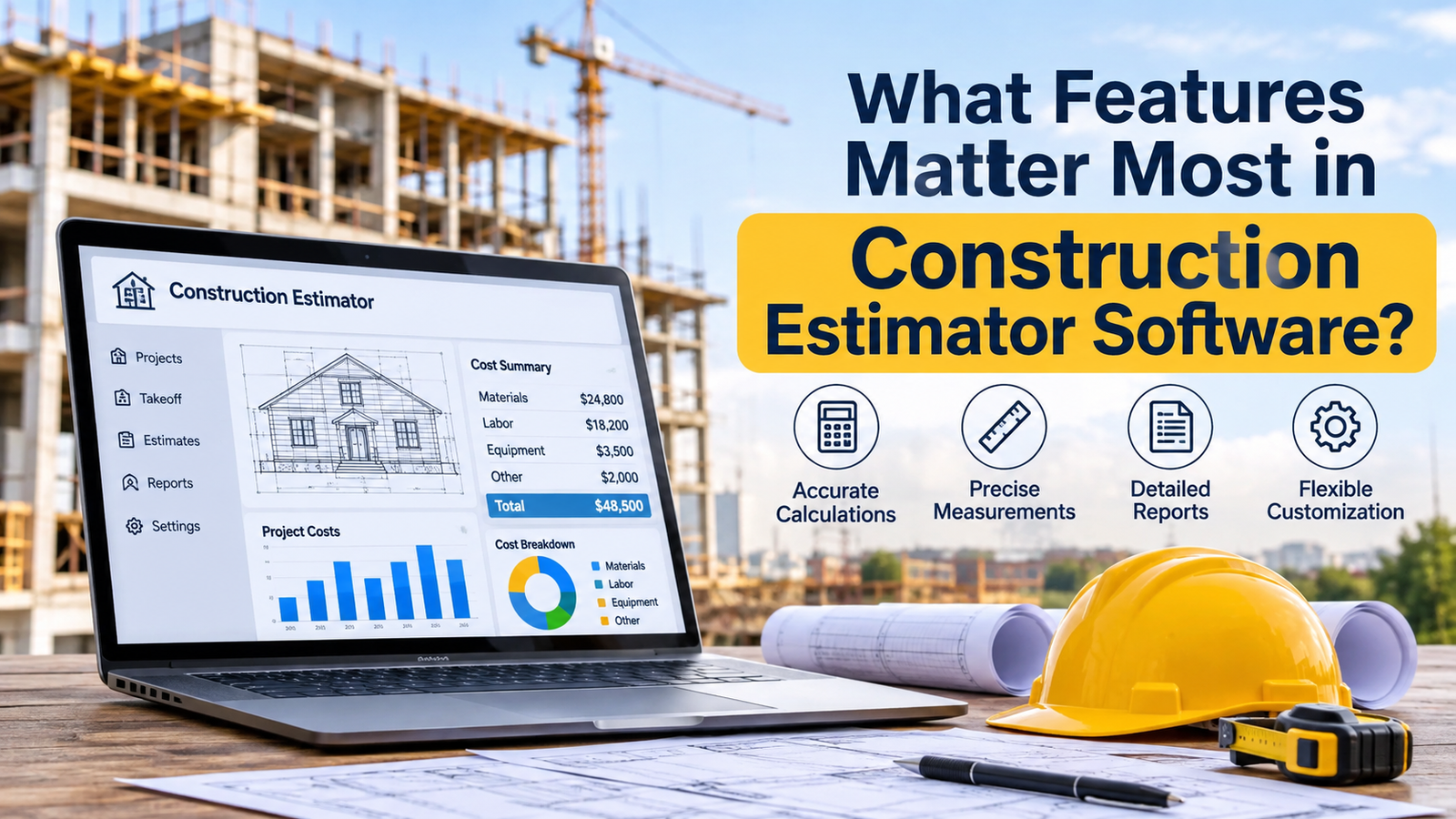


There are multiple financial factors that need to be taken into account prior to construction projects. The material quantities, labor costs, equipment costs and other project costs must be estimated by the contractors. Additionally, each construction project is unique and will have various financial considerations. Precise estimates allow for realistic budgets and expectations to be set. Thus, the contractors should have organized estimating processes for assessing the costs and developing competitive project bids. Careful planning of costs also eliminates conflicts at various stages of construction.
In the modern construction environment, digital estimating has become a crucial component in the construction workflow. With Construction Estimator Software, this procedure is unified and organized, linking measurements, material costs, labor rates, and project expenses in one. Contractors can review cost categories and create detailed estimates of a project. In addition, digital records provide greater ease of making changes when project specifications change. Knowing the capabilities of the features enables companies to assess estimating platforms based on their needs.
Why Accurate Cost Estimation Matters in Construction Projects
Cost estimation is an important aspect of construction planning and is essential for the success of the project. With a good grasp of project costs, contractors can avoid taking on jobs that may not actually be profitable. The amount of material, amount of workers, renting equipment and subcontractors all have an impact on the final price. Thus, these costs need to be analyzed by estimators prior to preparing project proposals. Detailed calculations also provide the clients with more precise financial expectations to the contractors.
Building an inaccurate estimate can result in financial issues. For example, if the materials count is not accurately estimated, there may be more materials needed to be ordered, and the schedule may get delayed. The same applies to any underreported labor costs that can lead to discrepancies between forecasted and actual costs. An added risk for contractors is financial instability due to price changes by suppliers. Therefore, there is a constant need for effective project estimating techniques to help keep projects on budget and competitive bids.
How Construction Estimating Processes Work From Start to Finish
The estimation starts by the examination of construction drawings and project specifications. Contractors review dimensions and materials, requirements for installation, and specific construction activities. Then, the estimators determine the resources that each activity needs. These resources are comprised of materials, labour, equipment and subcontractor services. These calculations are to be done separately for each category, as they have different expenses associated with them.
Once the required data is gathered, estimators can then compute quantities and prices. They are able to categorize these figures into specific cost categories. In addition, overhead costs and other costs associated with the project are added by contractors. The estimate completed is a summary of estimated construction costs. This information provides contractors with a financial benchmark when submitting proposals or when starting to execute projects.
Understanding Project Quantities and Measurements
Construction estimates are based on accurate measurements. Contractors measure areas, lengths, volumes and quantities as per specifications. For instance, flooring quotes involve dimensions of the room and the area that will be covered with the flooring. In concrete calculations, length, width and depth measurements are involved. Likewise, roofing quotes will be based on roof surface area and roof design.
At this stage, construction drawings are helpful in giving important measurement data. Architectural plans, structural details and technical specifications are studied by the estimators. They also take into account openings, thickness of the materials and installation needs. But measurements need to be carefully checked prior to final calculations. Minor variations in measurements can result in significant variations in the quantity of materials and cost of a project.
Additionally, various construction professions have their own specific units for measurement. Electrical may include the length of cabling and the number of fixtures. Pipe dimensions, fittings, and components needed for installation are components of plumbing estimates. As a result, the estimators need to be aware of the measurements needed for each trade. When quantity is calculated consistently, the more reliable results will provide cost breakdowns. s.
Organizing Labor and Material Expenses
Labour and material costs are significant costs in construction. The quantities, product specifications, supplier prices and availability are all dependent on material calculations. Meanwhile, labour costs are linked to trade specialization, number of workers and working hours. When considering the various categories, contractors should work out each category before adding them to the project total.
Some examples are: masonry work is performed differently from electrical work. Similarly, the cost and installation of the floor could vary depending on the type of material used. When creating estimates, contractors should consider these differences as well. The cost of equipment hire, transport and subcontractors are also worthy of consideration. An organized expense structure will ease the review of individual expense calculations.
Core Capabilities That Define Construction Estimator Software
There are various features of estimating platforms based on the requirements of the project and user. Contractors should consider the ways of doing calculations, the measurement that can be done, and the pricing options. There can also be customisable estimates, which are important since construction projects do not come with the same specifications. Different types of cost categories and cost estimating processes should be supported by a suitable platform.
Construction Estimator Software includes multiple estimating processes in a digital space. The contractor can be set up to conduct project dimensions, quantities and material costs. Additionally, the structured records allow for easier examination of individual calculations. It’s important when businesses work on several projects or when they’re submitting estimates for the various construction trades.
Digital Quantity Takeoffs and Drawing Measurements
Digital Quantity Takeoffs enable estimators to use a computer to measure construction drawings. They are able to recognise dimensions and to calculate quantities based on project plans. This process helps to streamline repetitive manual measurements and helps to keep quantity records organized. Estimators will still need to check drawing scales and project specifications, however.
Measuring equipment can measure areas, lengths, quantities and volume. The calculations are used on flooring, concrete, roofing, drywall, etc., and in construction. For instance, wall areas can be estimated prior to determining the amount of drywall needed. They can also determine how many square feet are in a room when making an estimate for tile and carpet.
When there are multiple parts to a construction project, drawing-based estimating could be very beneficial. Estimators may break down the quantities by room, floor or by trade. Thus they can review material needs without having to add together unrelated calculations. Precise takeoffs also result in more solid pricing that will support a project.
Detailed Pricing and Cost Breakdown
Detailed pricing features categorize the costs based on each project’s needs. You can input material costs, labour rates and subcontractor costs. They are also able to differentiate between equipment rentals and other operating costs. This type of structure makes it easier to form an overall impression of the cost of construction.
Material prices need to be monitored on a regular basis as suppliers may change their pricing. It is important for contractors to check existing quotes prior to final quotes. Likewise, the value of labour should be based on the trade needs and the wage rates in the region. The advantages of construction markets vary by market location, and it is important to account for these differences when making pricing assumptions.
The overhead costs also have an impact on project profitability. They can be administration, insurance, transportation, and general business operating expenses. When adding up the cost of a project, contractors should consider relevant costs. These financial aspects are easier to understand when broken down into detail.
Managing Estimates, Revisions, and Project Cost Records
Changes are common after the initial estimating process is completed on construction projects. Clients can ask for various materials, extra rooms, or changes to the construction. These changes may involve quantities, labor usage, and cost of the projects. So, throughout the estimating process, contractors must have organized records.
Project estimates are stored in a structured format with digital estimate management. Previous figures can be taken and individual cost categories can be updated. Moreover, comparisons can be made between versions of the estimate with the help of organized records. This process ensures better documentation if there is a project need for change.
Tracking Changes in Project Requirements
A typical cause of estimate revisions is material substitutions. A homeowner may choose higher-quality flooring material than regular tile. Likewise, a business customer can demand various lighting requirements. The prices of materials and possibly installation will change as a result of these decisions.
For example, if the scope is expanded, it could also impact the construction budget. New calculations are added to the additional structures, dimensions, and room changes. Existing estimates should be considered by contractors to the extent that these changes impact them. Labor needs increase for some projects with more installation work.
New numbers and cost information provide a much clearer financial picture. Contractors may compare revised numbers with the previous estimates. They are able too communicate price differences when talking with clients. Clear revision history helps to avoid confusion in the event of multiple changes to the project.
Which Estimating Features Matter Across Different Construction Projects
The number of items you need to include in construction estimates depends on the type of project and its complexity. Kitchens, bathrooms, extensions, and property renovations are common features of residential projects. Larger construction projects, retail buildings, and offices can be included in commercial projects. Specialty contractors are specialists in particular trades and installation projects.
There are different calculations and costs for each project category. Room sizes, finishes, etc. may be a priority for residential contractors. Large numbers and various subcontractor costs are typically viewed by commercial estimators. Thus, it is imperative that businesses consider features in relation to their regular construction practices.
Estimating Requirements for Small Contractors
Small contractors typically have fewer projects and smaller staff. They tend to estimate what materials are needed, how much labor is required, and simple quotes. So, they might want to go for a site that has easy-to-use navigation and uses practical calculation tools.
Smaller businesses will also consider pricing when choosing an estimating platform. Subscription costs should be commensurate to the project volume and available budgets. Contractors should review some of the features that are typically included before deciding on a pricing plan. The unnecessary complication can also make it hard to perform routine estimation tasks.
Estimating Requirements for Large Construction Teams
Most large construction firms will be working on multiple projects at the same time. They may have several departments, estimators, and subcontractors involved in their estimating procedures. This means they need well-organized records of projects and comprehensive financial statements.
The collaboration of the team is also crucial if multiple workers are making estimates. Consistency is provided across estimating activities by sharing project information. Detailed reporting provides managers with a better way to see into individual expense categories. In addition, scalable workflows fit a growing project size and business needs.
Factors to Review Before Choosing an Estimating Platform
At the point when choosing an estimating platform, contractors should take into account a couple of factors. The usability is important since employees should know what estimating means. There is no need for superfluous complexity with clear navigation and practical calculation methods. The availability of training opportunities and technical assistance is also important to consider.
When evaluating software, the accuracy of the calculation is also a very crucial factor to consider. When looking into a platform, contractors should consider how it processes measurements, quantities, and prices. Other options to consider include customization, since various projects come with various cost categories. Reporting should be similar to the company’s financial reporting needs.
Price and subscription models should be compared. Some platforms are monthly-fee, others have various licensing. Before making a decision, contractors should check on the limitations of features and extra charges. There are other factors to consider, such as compatibility with existing business processes. It’s important that it’s the right platform for the business and doesn’t add extra administrative headaches.
Common Problems With Construction Estimating Workflows
Businesses can encounter challenges in construction estimating processes during the work if they neglect critical information regarding the project. The inaccurate measurements may lead to the wrong amounts of materials. Likewise, when the supplier’s prices are outdated, it can lead to inflationary budgets for the project. Contractors should check dimensions and quotation details prior to signing up estimates.
Another common challenge is inaccurate labour calculations. Some of the things that estimators miss include special services, equipment costs, or subcontractor fees. The inclusion of these omissions can cause mismatches between the estimated and actual costs of projects. Thus, each type of expense should be looked at in detail.
Lack of documentation also can cause confusion during estimate revisions. Contractors may have trouble figuring out previous estimates or price fluctuations. Project records are organized and provide a clear reference for future reviews. In addition, frequent cost controls ensure that the project requirements meet the estimated costs.
Conclusion
In order to estimate construction, proper measurements, realistic estimates, and financial organization are essential. Contractors should consider the various features of software based on the type of projects and their operations. Digital takeoffs, cost breakdowns, and revision records remain a crucial consideration. Construction Estimator Software integrates these estimating tasks into a cohesive digital process. However, as for accurate estimates, they still rely on verified measures and up-to-date prices. The platform should be appropriate to the business and to the on-the-job estimating environment. An effective evaluation system helps provide a better basis for construction budgeting and contractor bidding.
FAQs
Which is the number one feature of construction estimating software?
Features like accurate quantity calculation and detailed cost breakdowns are crucial. Measurement tools, pricing, and reporting capabilities are also important considerations for contractors.
How is the estimate for a construction project calculated?
Estimating platforms involves adding quantities, material costs, labor costs, and other costs. Contractors add the project details and determine the estimated construction expenses.
Can their estimates be made in the digital format for materials and labor?
Yes, digital estimating platforms have material quantities and labor costs. Contractors can view each cost category and make per-category project estimates.
When choosing estimating software, what should small contractors look for?
Small contractors should consider pricing, ease of use, calculation capabilities, and reporting. Their choice should be in accordance with the amount of projects and requirements of the business.