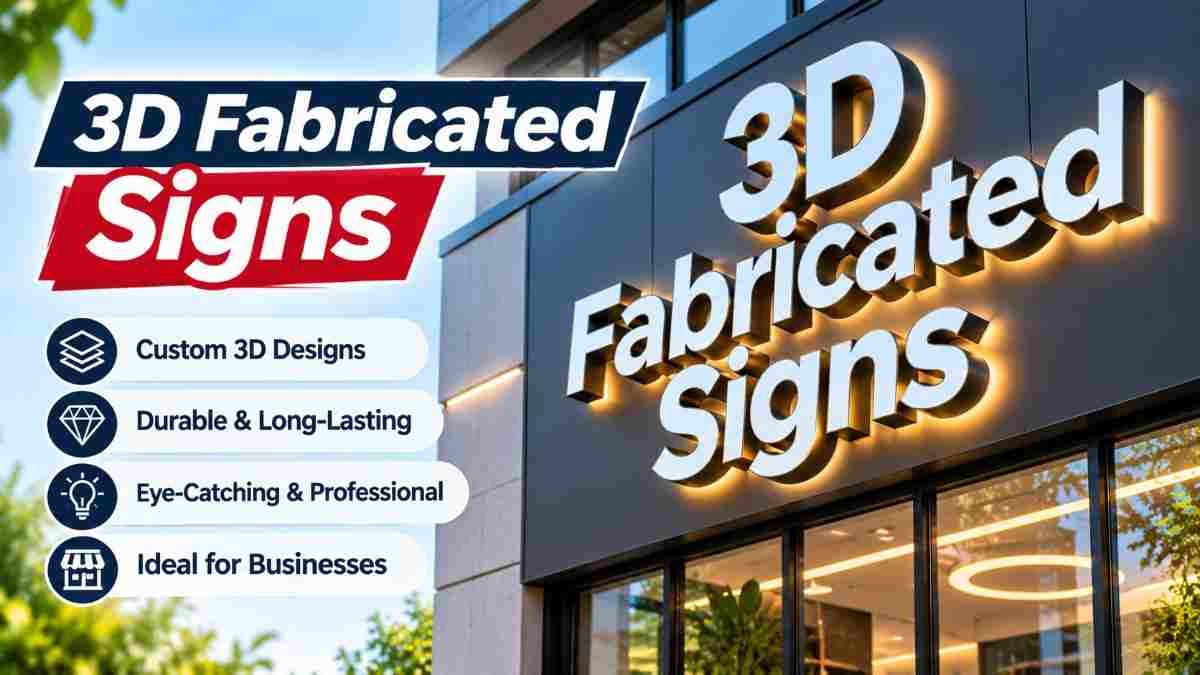


A business sign does more than display a company name. It helps customers recognise a brand, locate a premises and form an impression before entering. 3D fabricated signs offer a distinctive way to achieve this through raised lettering, shaped materials and carefully finished details. Businesses considering dimensional signage can explore built-up 3D signs to understand the options available for creating a professional exterior or interior display.
Unlike flat printed signs, fabricated signs have physical depth. This gives lettering and logos a more prominent appearance, particularly when viewed from a distance or against a contrasting background. With suitable materials and thoughtful design, they can provide a durable signage solution for many commercial environments.
What Are 3D Fabricated Signs?
3D fabricated signs are dimensional signs made by cutting, shaping and assembling materials to create raised letters, logos or other branded elements. Their construction gives them depth rather than leaving the design on a flat surface.
They are commonly used for:
- Shopfronts and retail premises
- Office buildings and reception areas
- Hotels, restaurants and hospitality venues
- Commercial developments
- Showrooms and business interiors
The final appearance depends on the design, material, thickness, finish and installation method. Some signs use individual letters fixed directly to a wall, while others are mounted on a backing panel or integrated into a larger signage structure.
How Are 3D Fabricated Signs Made?
The fabrication process involves several stages. Each one contributes to the appearance, accuracy and durability of the finished sign.
1. Design and preparation
The process starts with the business name, logo or lettering design. The sign maker considers the available space, viewing distance, brand colours and mounting surface.
Accurate measurements are important. Letters that look balanced on a computer screen may need adjustments when scaled for a large shopfront or building façade.
2. Cutting and shaping
The selected material is cut into the required letter or logo shapes. Depending on the design and material, fabrication may involve laser cutting, CNC routing, metal forming or other specialist techniques.
3. Assembly and finishing
Individual components are assembled to create the required depth. Edges and surfaces are then finished through processes such as polishing, painting, coating or applying coloured faces.
4. Installation
The completed sign is fixed to the building or internal surface using an appropriate mounting system. The installer must consider the wall material, sign weight, exposure to weather and any electrical requirements for illuminated designs.
Which Materials Are Used for 3D Fabricated Signs?
Material selection affects the sign’s appearance, weight, maintenance requirements and expected lifespan. The most suitable option depends on the location and intended design.
Acrylic
Acrylic is popular for its smooth finish, range of colours and versatility. It can be used for letter faces, logos and other decorative components. It is particularly suitable for clean, modern signage in retail and office environments.
Aluminium
Aluminium is relatively lightweight and suitable for many exterior applications. It can be shaped into dimensional letters and finished with paint or other coatings to achieve a particular brand appearance.
Stainless steel
Stainless steel provides a distinctive metallic finish and a premium appearance. It is often considered for corporate buildings, hotels, reception areas and businesses seeking a more refined visual identity.
Other fabrication materials
Depending on the project, sign makers may use additional metals, plastics or composite materials. The choice should account for the installation environment, design complexity and maintenance expectations rather than appearance alone.
Why Do Businesses Choose 3D Fabricated Signs?
Dimensional signage can offer practical and branding advantages when it is planned correctly.
- Stronger visual presence: Raised lettering creates depth and can make a business name more noticeable.
- Professional appearance: Carefully finished materials can complement a company’s branding and premises.
- Design flexibility: Letters, logos, colours and finishes can be customised to suit different identities.
- Indoor and outdoor applications: Suitable materials and installation methods allow signs to be used in different environments.
- Long-term branding: A well-made sign can remain part of a business’s visual identity for years with appropriate care.
The overall result depends on fabrication quality, material suitability and installation. A dimensional sign is not automatically more effective than a flat sign; it needs to be designed for its location and audience.
Illuminated vs Non-Illuminated Fabricated Signs
One important design decision is whether the sign should include lighting.
Illuminated signs use lighting to improve visibility in low-light conditions. Depending on the design, illumination may come through the letter faces, from behind the letters or through another integrated lighting arrangement. LED systems are commonly considered because they offer flexibility in sign design.
Non-illuminated signs rely on natural light or existing exterior lighting. They can provide a clean, understated appearance and may be suitable for businesses that operate mainly during daylight hours or already have adequate lighting.
Before choosing, consider:
- When customers need to see the sign
- The surrounding lighting conditions
- Electrical access and installation requirements
- Maintenance and operating costs
- Local planning and advertising requirements
How to Choose the Right Fabricated Sign for Your Business
A successful sign should balance brand identity with practical requirements. Before approving a design, consider the following factors:
- Location: Identify whether the sign will be installed outdoors, indoors or in a sheltered area.
- Viewing distance: Letter size and contrast should suit the distance from which customers will read it.
- Brand consistency: Use colours, fonts and logo proportions that reflect the existing business identity.
- Material suitability: Consider weather exposure, surface conditions, weight and maintenance.
- Installation: Check how the sign will be secured and whether the building surface can support it.
- Budget: Compare the complete project cost, including fabrication, installation and any electrical work.
It is also useful to review related approaches to dimensional lettering. For example, Built Up Letters: How 3D Lettering Creates Professional and Eye-Catching Business Signage explores how raised lettering contributes to a business’s visual presentation.
Installation, Maintenance and Safety Considerations
Even a well-designed sign can underperform if it is installed incorrectly. Fixings should be appropriate for the sign’s weight and the supporting surface. Outdoor installations may also need to account for wind exposure, rain and temperature changes.
Electrical components in illuminated signs should be installed and maintained by suitably qualified professionals. Businesses should also check whether planning permission, landlord approval or other local requirements apply before installation.
Routine maintenance can help preserve the sign’s appearance. Cleaning should follow the material manufacturer’s recommendations, and damaged fixings, loose components or electrical faults should be inspected promptly.
For general guidance on workplace safety and managing risks during installation work, businesses can consult the Health and Safety Executive.
Summary
3D fabricated signs give businesses a way to present names, logos and brand elements through raised, dimensional designs. Material choices such as acrylic, aluminium and stainless steel offer different visual and practical benefits. The right solution depends on the location, design, visibility requirements and installation conditions.
By planning these details carefully and working with an experienced sign maker, businesses can create signage that supports brand recognition and provides a professional appearance. For businesses exploring exterior branding options, Outdoor Business Signs is an important part of creating a consistent and recognisable presence.
Frequently Asked Questions
1. Are 3D fabricated signs suitable for outdoor use?
Yes. They can be used outdoors when the materials, finishes, fixings and installation methods are suitable for the local environment. Weather exposure should be considered during the design and fabrication stages.
2. What is the difference between fabricated signs and flat signs?
Fabricated signs have physical depth, usually created through raised letters or shaped components. Flat signs generally display graphics or lettering on a single surface. Dimensional signs can create stronger visual depth, while flat signs may be more suitable for simpler or budget-conscious applications.
3. Which material is best for 3D fabricated signs?
There is no single best material for every project. Acrylic offers colour and design flexibility, aluminium provides a lightweight metal option, and stainless steel creates a distinctive metallic finish. The right choice depends on the location, appearance and maintenance requirements.
4. Can 3D fabricated signs include LED lighting?
Yes. Some fabricated signs incorporate LED lighting to improve visibility after dark. The lighting arrangement depends on the design and may illuminate the letter faces or create a backlit effect. Electrical installation should be handled by a qualified professional.