

The e-commerce landscape moves at lightning speed. Today’s online shoppers expect instant gratification, 24/7 availability, and hyper-personalized experiences. If a customer hits a snag during checkout and has to wait ten minutes for a live agent, the odds of cart abandonment skyrocket.
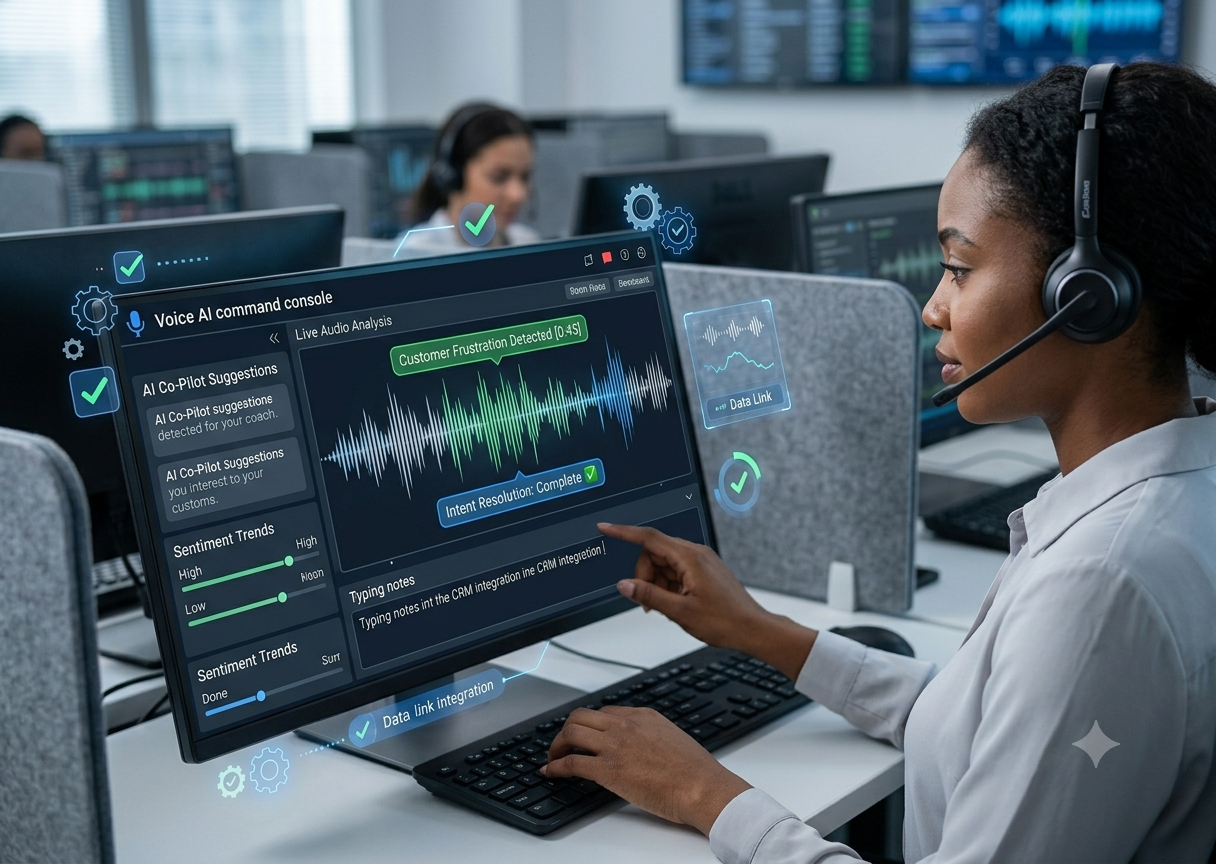
Enter the AI voice agent for e-commerce—a game-changing technology that is transforming how online retailers handle customer service. Unlike rigid, press-1-for-sales interactive voice response (IVR) systems of the past, modern voice AI uses natural language processing (NLP) to converse fluidly, understand context, and resolve complex issues autonomously.
In this post, we’ll explore how these intelligent agents are revolutionizing online retail, specifically focusing on the power of multilingual support and the clarity of managed pricing models.
The Rise of Conversational AI in Retail
E-commerce brands deal with a predictable yet high-volume wave of inquiries: Where is my order? How do I process a return? What size should I buy?
Deploying human agents to handle every single repetitive query is costly and inefficient. An AI voice agent acts as the frontline of customer support, capable of handling thousands of simultaneous calls without putting a single customer on hold. They integrate directly with your inventory management systems, CRM, and shipping APIs to provide real-time, accurate updates to shoppers.
Breaking Language Barriers with Multilingual Voice AI
As e-commerce brands scale, they frequently expand into international markets. However, breaking into a new region comes with a massive operational hurdle: language localization. Hiring native-speaking support teams for every target market is logistically difficult and expensive.
This is where multilingual voice AI customer support shines.
Advanced AI voice agents are no longer limited to English with a robotic accent. Today’s models offer native-sounding fluency in dozens of languages and regional dialects. Here is how this benefits e-commerce businesses:
- Frictionless Global Expansion: You can launch a campaign in Spain, Japan, or Brazil without having to immediately build out localized call centers.
- Cultural Nuance and Tone: Modern voice agents understand local idioms, pacing, and tone, ensuring that non-English speaking customers receive the same high-tier experience as local ones.
- Automatic Language Detection: The AI can detect the language the customer is speaking within the first few seconds of the call and seamlessly switch to match their preference, eliminating frustrating menus.
By offering localized voice support, brands build instant trust with international buyers, leading to higher conversion rates and stronger customer loyalty.
Understanding Managed AI Voice Agent Pricing
One of the most common hesitations business owners face when adopting new technology is predictability. Software-as-a-Service (SaaS) pricing can sometimes feel like a moving target, filled with hidden implementation fees, overage penalties, and scaling costs.
To combat this, the industry has largely shifted toward managed AI voice agent pricing models. But what does “managed” actually mean for your bottom line?
What is a Managed Service?
A managed AI voice agent goes beyond just software. It typically includes end-to-end partnership: setup, custom prompt engineering, API integrations with your e-commerce platform (like Shopify or Magento), ongoing optimization, and maintenance.
Common Pricing Structures:
When looking at managed pricing, you will usually encounter a few standard models:
- All-Inclusive Monthly Subscriptions: You pay a flat monthly or annual fee that covers a set number of voice minutes, hosting, updates, and standard maintenance. This makes budgeting straightforward.
- Tiered Usage Models: Pricing is broken down by tiers based on monthly call volume or interaction minutes. As your store grows during peak seasons (like Black Friday), you can easily scale your tier up or down.
- Value-Based or Outcome-Based Pricing: Some providers charge based on successful resolutions (e.g., tracking a package or processing a return automatically without human intervention), aligning the AI’s success directly with your business goals.
Why Managed Pricing Wins for E-Commerce
Opting for a managed pricing model removes the technical burden from your internal team. You aren’t paying developers to constantly patch code or retrain models. Instead, you pay a predictable fee for a fully functioning, continuously improving voice support infrastructure. This ensures high ROI while keeping operational expenditures (OpEx) transparent.
Wrapping Up: The Future of E-Commerce Support
Customer service is no longer just a cost center—it is a primary differentiator for e-commerce brands. By implementing an AI voice agent, you can drastically reduce operational costs, eliminate customer wait times, and scale globally overnight.
With seamless multilingual voice AI customer support and transparent managed AI voice agent pricing, adopting this technology has never been more accessible. For online retailers looking to stay competitive, the question is no longer if they should adopt voice AI, but how fast they can implement it.