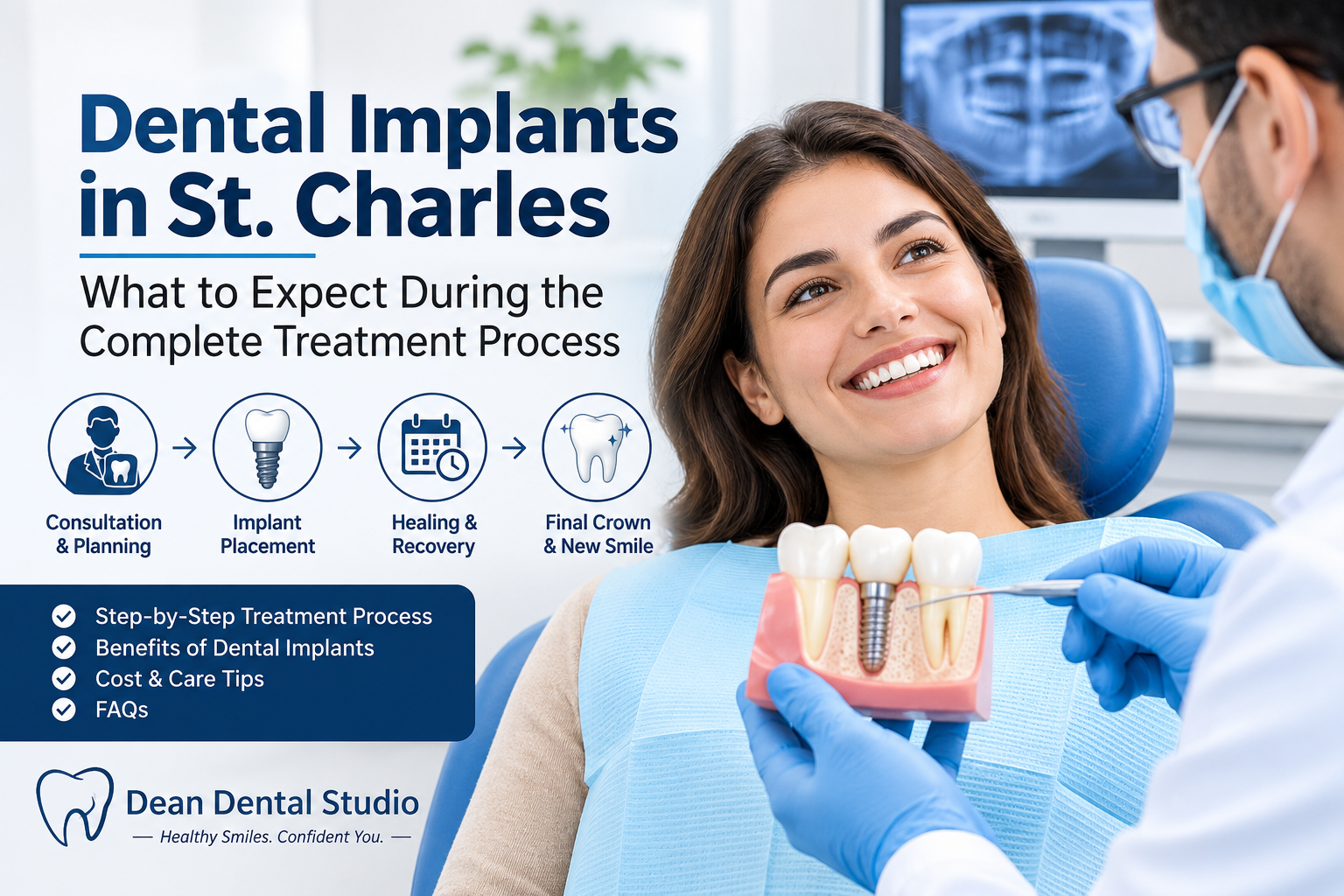


Missing teeth can affect much more than your appearance. They may make chewing difficult, change the way you speak, and gradually affect the alignment of your remaining teeth. If you are considering a long-term solution for missing teeth, dental implants are one option worth discussing with a qualified dentist.
For patients researching Dental Implants in St. Charles, understanding the complete treatment process can make the decision easier. From the initial consultation and diagnostic imaging to implant placement, healing, and final crown restoration, every stage plays an important role in achieving a functional and natural-looking result.
At Dean Dental Studio, patients can discuss their tooth replacement concerns, treatment goals, and available dental restoration options with a dental professional. Knowing what happens at each stage can help you prepare for treatment and ask the right questions before moving forward.
What Are Dental Implants and How Do They Work?
Dental implants are artificial tooth roots designed to support replacement teeth. They are typically made from biocompatible materials such as titanium and are placed into the jawbone through a surgical procedure.
Once the implant integrates with the surrounding bone, it can support a dental crown, bridge, or another type of restoration.
A typical dental implant consists of three main components:
- Implant post: A small, screw-shaped component placed inside the jawbone to act as an artificial tooth root.
- Abutment: A connector that attaches the implant post to the replacement tooth.
- Dental crown: The visible portion designed to restore the appearance and function of the missing tooth.
Unlike traditional dentures, dental implants are anchored in the jawbone. This makes them a stable tooth replacement option that does not depend on neighboring teeth for support in the same way as a conventional dental bridge.
Step-by-Step Process of Getting Dental Implants in St. Charles
Dental implant treatment involves several stages. The exact timeline depends on your oral health, bone condition, number of missing teeth, and whether additional procedures are necessary.
Here is what patients can generally expect.
Step 1: Initial Dental Implant Consultation
The first step is scheduling a consultation with a dentist to determine whether dental implants are appropriate for your situation.
During this appointment, the dentist will evaluate your oral health, discuss your concerns, and review your tooth replacement goals.
The consultation may include:
- Reviewing your dental and medical history.
- Examining your gums and remaining teeth.
- Checking the condition of your jawbone.
- Discussing your current bite and chewing function.
- Evaluating the location of missing teeth.
- Reviewing possible treatment options.
You should also discuss any existing medical conditions, medications, smoking habits, or previous dental procedures that may affect healing.
For example, a patient missing one front tooth may need a different treatment approach than someone missing several back teeth.
Helpful tip: Before your consultation, prepare questions about treatment duration, expected costs, recovery, and available restoration options. This helps you understand the complete treatment plan before committing to a procedure.
Step 2: Dental Imaging and Treatment Planning
After the initial examination, the dentist may recommend dental X-rays or a 3D scan to assess the jawbone and surrounding structures.
These images help determine whether there is enough bone to support an implant and identify important anatomical structures, such as nerves and sinuses.
Treatment planning generally considers:
- The number and location of missing teeth.
- Jawbone density and available bone volume.
- Gum health.
- Implant size and positioning.
- The type of final dental restoration.
- Whether bone grafting or other preparatory procedures are required.
Careful planning is important because implant positioning affects the stability, appearance, and function of the final restoration.
Patients searching for dental implants in St. Charles should ask how their dentist evaluates bone quality and plans implant placement. Understanding these details can help them make a more informed decision.
Step 3: Preparing Your Mouth for Implant Placement
Not every patient can proceed directly to implant surgery. Some people require additional dental treatment before an implant can be placed safely.
Common preparatory procedures include:
Tooth extraction: If a damaged or infected tooth cannot be restored, it may need to be removed before implant treatment. In selected cases, an implant can be placed immediately after extraction, but this depends on the condition of the extraction site.
Treatment for gum disease: Healthy gum tissue is important for implant success. Active periodontal disease may need to be treated before implant placement.
Bone grafting: Patients who have experienced bone loss may require a bone graft to increase the available bone volume. This can happen after tooth loss, infection, or prolonged use of certain tooth replacement options.
Sinus lift: For some patients missing upper back teeth, a sinus lift may be necessary when there is insufficient bone height for implant placement.
These additional procedures can increase the overall treatment time and cost. Your dentist should explain whether they are necessary and why.
Step 4: Dental Implant Placement Surgery
Once your mouth is ready, the next stage is placing the implant post into the jawbone.
The procedure is generally performed using local anesthesia. Sedation may also be available depending on the patient’s needs and the dental practice’s services.
During the procedure, the dentist creates a carefully planned opening in the jawbone and positions the implant post.
The process generally involves:
- Preparing the treatment area.
- Administering anesthesia.
- Creating an opening in the jawbone.
- Positioning the implant post.
- Closing the gum tissue or placing an appropriate healing component.
The duration depends on the number of implants being placed and the complexity of the procedure.
Some patients may receive a temporary tooth replacement while the implant heals. However, immediate temporary restoration is not suitable for every case because the implant needs sufficient initial stability.
After surgery, you will receive instructions regarding pain management, oral hygiene, diet, and follow-up appointments.
Step 5: Healing and Osseointegration
One of the most important stages of dental implant treatment is osseointegration.
This is the biological process through which the jawbone gradually bonds with the implant surface. It helps create a stable foundation for the final replacement tooth.
Healing commonly takes several months, although the exact duration varies between patients.
During this period, your dentist may recommend:
- Eating softer foods initially.
- Avoiding direct pressure on the implant site.
- Following the prescribed oral hygiene routine.
- Avoiding smoking and tobacco products.
- Attending scheduled follow-up appointments.
- Reporting unusual pain, swelling, or other concerning symptoms.
You may feel some tenderness or swelling after surgery. These symptoms generally improve during recovery. However, increasing pain, persistent swelling, fever, or signs of infection should be reported to your dental professional promptly.
Do not rush this stage. Placing excessive pressure on an implant before adequate healing may interfere with the treatment outcome.
Step 6: Abutment Placement
Once the implant has integrated sufficiently with the jawbone, the next stage may involve placing an abutment.
The abutment acts as a connector between the implant post and the final dental crown.
Depending on the original surgical approach, the abutment may already be in place, or a minor additional procedure may be needed to expose the implant and attach it.
After abutment placement, the surrounding gum tissue may need some time to heal and develop an appropriate shape around the restoration.
This stage helps prepare the implant for the final crown.
Step 7: Creating and Attaching the Final Dental Crown
The final stage is restoring the implant with a custom-made dental crown.
The dentist takes impressions or digital scans of the implant area to help create a restoration that fits comfortably with your bite.
The crown is designed to complement your natural teeth in terms of:
- Shape and size.
- Tooth color.
- Bite alignment.
- Overall appearance.
- Chewing function.
Once the crown is ready, it is attached to the abutment using an appropriate connection method.
The dentist then checks the fit, bite, and comfort of the restoration.
For patients replacing a visible front tooth, matching the crown with the surrounding teeth is particularly important. For back teeth, strength and chewing function may be especially important considerations.
After this stage, your dental implant treatment is generally complete, although regular maintenance and professional examinations remain necessary.
How Long Does the Complete Dental Implant Process Take?
The total treatment duration varies depending on your oral health and the complexity of your case.
Some patients may qualify for a relatively straightforward treatment plan, while others need additional procedures before receiving their final restoration.
Here are the stages that can influence the timeline:
- Initial consultation: Usually one or more appointments.
- Tooth extraction: May require additional healing time.
- Bone grafting: Healing can take several months depending on the procedure.
- Implant placement: Usually completed during a scheduled surgical appointment.
- Osseointegration: Often takes several months.
- Abutment and crown placement: Requires additional appointments for preparation and restoration.
In many cases, the complete process takes several months. Complex treatments involving bone grafting or multiple implants may take longer.
Patients should ask for an estimated treatment schedule during their consultation rather than relying on a fixed timeline found online.
Benefits of Choosing Dental Implants for Missing Teeth
Dental implants offer several advantages compared with some traditional tooth replacement options.
1. Stable Tooth Replacement
Because implants are anchored in the jawbone, they provide a stable foundation for replacement teeth. This can make everyday activities such as speaking and chewing more comfortable.
2. Natural-Looking Appearance
A custom dental crown can be designed to match the color, shape, and size of surrounding teeth.
This makes implants a popular option for patients concerned about visible gaps in their smiles.
3. Support for Jawbone Health
When a tooth is lost, the jawbone in that area may gradually shrink because it no longer receives normal stimulation from the tooth root.
Dental implants transfer chewing forces to the surrounding bone and can help maintain bone in the implant area.
However, they do not guarantee that all future bone loss will be prevented.
4. No Dependence on Adjacent Teeth
A traditional dental bridge generally relies on neighboring teeth for support. An implant-supported crown can replace an individual missing tooth without requiring those adjacent teeth to serve as bridge supports.
5. Long-Term Restoration Option
With appropriate placement, good oral hygiene, and regular dental care, dental implants can provide long-term tooth replacement.
The implant itself may last for many years, although the crown and other components may require maintenance or replacement over time.
Dental Implants vs. Dental Bridges vs. Dentures
Choosing the right tooth replacement option depends on your oral health, budget, number of missing teeth, and personal preferences.
Dental Implants: These are individually placed in the jawbone and can support crowns, bridges, or other restorations. They offer stability but involve surgery and a longer treatment process.
Dental Bridges: These replace missing teeth by using neighboring teeth or other supporting structures. They may be appropriate when patients prefer a non-implant solution or have certain clinical limitations.
Dentures: These are removable appliances used to replace several or all missing teeth. They are generally less invasive initially, but may require adjustments as the mouth changes.
Before choosing an option, ask your dentist to explain the advantages, limitations, maintenance requirements, and expected long-term costs of each solution.
How Much Do Dental Implants Cost in St. Charles, IL?
The cost of dental implants varies from patient to patient. There is no single price that applies to every treatment because the final amount depends on the procedures and restorations involved.
When discussing dental implants in St. Charles, consider the following cost factors:
Number of implants: Replacing one tooth generally involves a different treatment budget than replacing several teeth.
Implant components: The implant post, abutment, and final crown may contribute separately to the total cost.
Additional procedures: Bone grafting, tooth extraction, gum treatment, or sinus lifts can increase the overall expense.
Diagnostic imaging: X-rays, 3D scans, and treatment planning may be included in or billed separately from the treatment fee.
Restoration material: The material and design of the final crown can influence the price.
Insurance coverage: Some dental insurance plans provide partial benefits for certain implant-related procedures, while others have limitations or exclusions.
Before starting treatment, request a written estimate that explains what is included.
Ask whether the quoted amount covers the consultation, imaging, implant placement, abutment, crown, follow-up visits, and any additional procedures.
This makes it easier to compare treatment plans based on their actual scope rather than choosing a provider based only on the lowest advertised price.
Common Mistakes to Avoid Before Getting Dental Implants
Dental implant treatment requires careful planning. Avoiding common mistakes can help you make a better decision.
- Choosing based only on price: A low initial quote may not include the crown, abutment, imaging, or additional procedures.
- Ignoring gum disease: Uncontrolled gum disease can increase the risk of implant complications.
- Not discussing medical history: Certain health conditions and medications can influence healing.
- Expecting immediate results: Most conventional implant treatments require a healing period before final restoration.
- Skipping follow-up appointments: Regular monitoring helps identify healing concerns and other problems.
- Ignoring long-term maintenance: Implants still require daily cleaning and professional dental examinations.
- Not asking about alternatives: An implant may not be the only suitable treatment for your missing tooth.
Taking time to understand these factors can help you avoid unexpected expenses and unrealistic treatment expectations.
How to Care for Dental Implants After Treatment
Although dental implants are artificial, the surrounding gums and supporting bone still need proper care.
Follow these everyday maintenance practices:
- Brush twice daily using a soft-bristled toothbrush.
- Clean between your teeth and around the implant using suitable interdental cleaning tools.
- Use dental floss or other cleaning products recommended by your dentist.
- Attend regular dental checkups and professional cleanings.
- Avoid using your teeth to open packages or bite hard objects.
- Do not ignore bleeding gums, discomfort, or changes around the implant.
- Avoid smoking, which can negatively affect gum health and implant outcomes.
Your dentist may recommend specific cleaning techniques depending on whether you have an individual implant crown, an implant-supported bridge, or a full-arch restoration.
Consistent maintenance is important for protecting both the implant and the surrounding oral tissues.
Why Consider Dean Dental Studio for Dental Implant Consultation in St. Charles?
Choosing a dental provider is an important part of the implant treatment journey. Patients should look for a practice that takes time to understand their dental concerns and explains the available treatment options clearly.
When evaluating Dean Dental Studio or any dental practice in St. Charles, consider asking about:
- Experience with dental implant treatment and restoration.
- Diagnostic imaging and treatment planning.
- Options for patients with insufficient jawbone.
- Available crown and restoration materials.
- Estimated treatment timelines.
- Complete treatment costs and payment options.
- Follow-up care and implant maintenance.
A good consultation should help you understand whether dental implants are suitable for your needs, what the treatment involves, and what alternatives may be available.
If you are considering replacing one or more missing teeth, scheduling a consultation with Dean Dental Studio can be a useful first step toward understanding your options.
Frequently Asked Questions About Dental Implants in St. Charles
1. How long does it take to get dental implants in St. Charles?
The complete treatment commonly takes several months. The timeline depends on bone health, implant stability, healing, and whether additional procedures such as bone grafting are necessary.
2. Are dental implants painful?
The implant placement procedure is generally performed under local anesthesia, so patients should not feel significant pain during surgery. Some tenderness, swelling, and discomfort may occur afterward and can usually be managed with appropriate aftercare and medication recommended by the dentist.
3. Who is a good candidate for dental implants?
Adults with good overall health, healthy gums, and sufficient jawbone may be suitable candidates. Patients with bone loss or certain medical conditions may still qualify after additional evaluation or treatment.
4. How long do dental implants last?
Dental implants can last many years with proper placement and maintenance. However, the crown may need repair or replacement over time. Regular checkups and good oral hygiene are important for long-term performance.
5. Can I get dental implants immediately after tooth extraction?
In selected cases, an implant can be placed immediately after extraction. However, this depends on the condition of the extraction site, bone quality, infection status, and implant stability. Some patients need to wait for healing before implant placement.
6. Are dental implants better than dental bridges?
Neither option is automatically better for every patient. Implants do not generally require adjacent healthy teeth to support an individual replacement tooth, while bridges may offer a shorter treatment process in suitable cases. Your dentist can recommend an option based on your oral health and treatment goals.
7. Does dental insurance cover dental implants in St. Charles?
Coverage varies by insurance provider and individual plan. Some plans may cover parts of the treatment, such as examinations, extractions, or crowns, while implant placement itself may have limited or no coverage. Check your benefits before beginning treatment.
8. What foods should I avoid after dental implant surgery?
Initially, patients are generally advised to eat soft foods and avoid hard, crunchy, sticky, or chewy foods that may irritate the surgical area. Follow your dentist’s instructions about when to gradually return to your normal diet.
Conclusion
Dental implant treatment is a multi-stage process that requires careful evaluation, appropriate planning, precise placement, and consistent follow-up care. Understanding each stage can help you prepare for treatment, compare tooth replacement options, and make decisions that support your long-term oral health.
If you are researching Dental Implants in St. Charles, consider your jawbone health, treatment requirements, expected timeline, and overall budget before choosing a solution.
Dean Dental Studio can be a starting point for discussing your missing teeth and understanding which restorative options may be appropriate. Schedule a dental consultation to discuss your needs, review your treatment possibilities, and take an informed step toward restoring your smile.