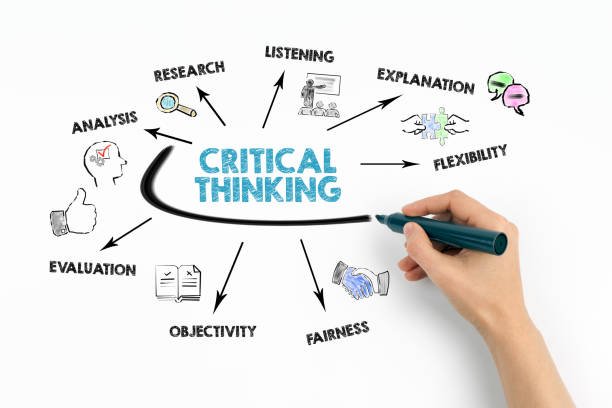


CIPD qualifications help students develop the knowledge and professional behaviours needed to work effectively in human resources and people management. However, demonstrating knowledge alone is not always enough to produce a strong assignment. Students must also show that they can question information, evaluate different perspectives and apply evidence to realistic workplace situations.
One common academic challenge is moving from descriptive writing to critical analysis. A descriptive answer might explain what employee engagement means, whereas a critical response examines why engagement matters, evaluates different approaches to improving it and considers whether those approaches are suitable for a particular organisation.
Learning how to make CIPD writing more critical is therefore an important step towards developing stronger academic work and professional judgement. It also reflects the evidence-based approach expected of modern people professionals.
1. Understand the Difference Between Descriptive and Critical Writing
The first step towards improving critical analysis is recognising the difference between describing information and evaluating it.
Descriptive writing presents facts, definitions and explanations. Critical writing goes further by examining the reliability, relevance and implications of those facts.
For example, a descriptive statement might read:
“Employee training improves workforce skills and supports organisational performance.”
A more critical version would be:
“Employee training can improve workforce capabilities and organisational performance, particularly when learning objectives are aligned with business requirements. However, the effectiveness of training depends on factors such as employee engagement, management support and opportunities to apply newly acquired skills.”
The second example is stronger because it recognises that the relationship between training and performance is not automatic. It introduces relevant conditions and demonstrates an understanding of workplace complexity.
The University of Portsmouth’s academic guidance similarly emphasises that critical writing should explain why evidence matters, consider research limitations and demonstrate the writer’s own analysis.
2. Evaluate Evidence Rather Than Simply Quoting Sources
Evidence is essential in CIPD assignments, but including references does not automatically demonstrate critical thinking.
Students should examine the quality and relevance of their sources before using them to support an argument.
Consider these questions:
- Who produced the information, and what expertise do they have?
- Is the evidence based on reliable research or personal opinion?
- How recent is the information?
- Does the evidence apply to the organisation or situation being discussed?
- Are there alternative findings that challenge the source?
For instance, an HR article might suggest that flexible working arrangements improve employee satisfaction. Although this may be a reasonable argument, its relevance depends on the organisation, job responsibilities and individual employee circumstances.
A critical discussion would acknowledge that flexible working can support work-life balance while recognising possible challenges involving communication, collaboration and operational coverage.
Students should also distinguish between primary research, professional guidance and general commentary. Each source has a different purpose and level of evidential strength.
The CIPD’s Profession Map identifies evidence-based practice as an important aspect of professional people practice. This involves acquiring, assessing and combining evidence before making informed decisions.
3. Apply HR Theories to Realistic Workplace Situations
A frequent weakness in academic assignments is explaining theories without demonstrating how they work in practice.
CIPD assessments often require students to connect theoretical knowledge with workplace challenges. Application makes an argument more meaningful because it demonstrates an understanding of how management concepts operate in real organisational environments.
For example, consider Herzberg’s Two-Factor Theory, which distinguishes between hygiene factors and motivators.
A descriptive answer might explain that salary and working conditions are hygiene factors, while recognition and achievement are motivators.
A critical answer would consider whether this distinction adequately explains employee motivation in every workplace.
For employees experiencing financial insecurity, salary may have a substantial influence on motivation, even though the theory categorises it as a hygiene factor. Similarly, recognition may be less effective when employees lack manageable workloads or adequate resources.
This demonstrates that theories provide useful frameworks, but their practical value depends on organisational circumstances.
A useful approach is to follow three stages:
- Explain the relevant theory or concept.
- Evaluate its strengths, weaknesses and assumptions.
- Apply it to the workplace situation and justify your conclusion.
4. Compare Different Perspectives Before Reaching a Conclusion
Critical writing should not present one viewpoint as unquestionably correct.
Strong academic arguments consider alternative explanations and assess which position is most convincing in the circumstances.
For example, when discussing employee performance management, one perspective may favour annual performance reviews because they provide a structured opportunity to evaluate progress. Another may support continuous feedback because it allows managers to identify problems and provide guidance throughout the year.
Rather than simply choosing one approach, consider the advantages and disadvantages of both.
Annual reviews can create a formal record of performance, but they may fail to address problems promptly. Continuous feedback can encourage timely improvements, although its effectiveness depends on managerial consistency and the quality of communication.
A balanced conclusion might suggest that combining regular informal feedback with structured formal reviews offers a more practical approach.
Comparative analysis demonstrates independent judgement and makes academic conclusions more convincing.
5. Use an Evidence-Based Paragraph Structure
A well-organised paragraph helps readers understand how evidence supports an argument.
One useful approach is the PEEL structure:
- Point: Introduce the main argument.
- Evidence: Support it with credible research, professional guidance or relevant examples.
- Explanation: Analyse what the evidence means and why it matters.
- Link: Connect the discussion to the assessment question.
For example:
“Regular employee feedback can support organisational performance by helping managers identify development needs. Evidence-based people management emphasises using relevant information to inform decisions rather than relying exclusively on assumptions. However, feedback systems are only effective when employees trust the process and managers respond appropriately. Therefore, organisations should establish transparent feedback mechanisms that encourage participation and lead to practical improvements.”
This structure prevents paragraphs from becoming collections of unrelated facts. More importantly, it encourages students to explain the significance of the evidence they introduce.
Students looking for additional guidance on organising their arguments and understanding assessment expectations can explore resources such as 3CO02 Assessment Help when preparing their work.
6. Develop a Balanced and Professional Academic Voice
Critical writing does not mean criticising every theory, author or management practice.
It means making reasoned judgements supported by appropriate evidence.
Academic language should communicate evaluation without becoming unnecessarily complicated.
Useful expressions include:
- “This suggests that…”
- “However, this approach may be limited because…”
- “An alternative perspective is…”
- “The evidence indicates…”
- “This finding is particularly relevant when…”
- “Although the model offers valuable insights…”
- “The effectiveness of this approach depends on…”
For example, instead of writing, “This theory is wrong”, a more academically appropriate statement would be:
“Although the theory provides a useful explanation of employee motivation, its assumptions may not fully reflect the diverse needs and expectations of contemporary workforces.”
This approach demonstrates professional judgement while maintaining an objective academic tone.
7. Review Your Assignment Against the Assessment Requirements
Critical analysis should always remain relevant to the assessment question.
A detailed discussion can still be ineffective if it does not address the required learning outcome or assessment criterion.
Before submitting an assignment, check whether you have:
- Answered the assessment question directly.
- Explained relevant concepts accurately.
- Used appropriate and credible sources.
- Evaluated different viewpoints.
- Identified strengths and limitations.
- Applied theories to relevant workplace situations.
- Supported conclusions with evidence.
- Followed the required referencing format.
It is also useful to review feedback from previous assessments. If feedback repeatedly identifies descriptive writing, unsupported conclusions or limited application, these comments can help identify specific areas for improvement.
Students should use assessment guidance to understand what is being evaluated rather than trying to include unnecessary information.
Frequently Asked Questions
1. What does critical writing mean in a CIPD assignment?
Critical writing means analysing and evaluating information rather than simply describing concepts. It involves examining evidence, considering alternative perspectives and applying relevant knowledge to workplace situations.
2. How can I make my CIPD assignment less descriptive?
Focus on explaining why information matters. Evaluate the strengths and limitations of theories, compare different viewpoints and connect evidence to the assessment question.
3. Do CIPD assignments require academic references?
Students should use appropriate sources to support their arguments and follow the referencing requirements provided by their learning provider. Relevant CIPD publications, academic research and reputable professional sources can strengthen an assignment.
4. How many references should a CIPD assignment contain?
There is no universal reference count suitable for every CIPD assessment. The appropriate number depends on the assessment requirements, the complexity of the discussion and the quality of the available evidence.
5. Is critical writing the same as disagreeing with an author?
No. Critical writing involves evaluating arguments objectively. A student can agree with an author’s position while still examining the evidence, assumptions and limitations supporting it.
Conclusion
Making CIPD writing more critical requires students to move beyond definitions and explanations towards evidence-based analysis, practical application and independent judgement.
By evaluating sources, comparing perspectives, applying HR theories to workplace situations and developing well-supported conclusions, students can produce assignments that demonstrate a deeper understanding of people practice.
These skills are valuable beyond academic assessment. They also support the development of thoughtful HR professionals who can assess organisational challenges, question assumptions and make informed decisions.
Ultimately, effective critical writing is not about using complicated vocabulary or including as many references as possible. It is about demonstrating clear reasoning, understanding the evidence and explaining why a particular conclusion is appropriate.