

How Sustainable Renewable Energy Is Shaping a Cleaner Future
The global demand for electricity continues to grow as industries expand, cities develop, and technology becomes an essential part of everyday life. At the same time, concerns about climate change, carbon emissions, and the limited availability of conventional energy resources are encouraging countries to rethink how electricity is generated. This shift has increased the importance of sustainable renewable energy as a reliable part of long-term energy planning.
Renewable energy sources such as sunlight and wind offer an alternative to traditional fossil fuels. With improvements in technology and growing investment in clean power infrastructure, these resources are becoming increasingly important in supporting economic development while reducing environmental pressure.
Understanding Sustainable Renewable Energy
Sustainable renewable energy refers to electricity generated from naturally replenished resources, including sunlight, wind, and water. Unlike coal, oil, and natural gas, these resources are not depleted through regular use on a human timescale.
Solar and wind energy are particularly important because they can generate electricity without requiring the continuous burning of fossil fuels. Although renewable energy projects require land, equipment, infrastructure, and responsible resource management, their operating processes generally produce significantly lower direct greenhouse gas emissions than conventional power generation.
The broader objective is to develop an energy system that meets present electricity requirements without compromising the needs of future generations.
Why Solar and Wind Energy Matter for India’s Growth
India’s expanding economy requires a dependable electricity supply for manufacturing, transportation, commercial activities, agriculture, and residential consumption. Meeting this demand while managing environmental concerns makes renewable power an important part of the country’s energy development.
Solar energy uses photovoltaic technology to convert sunlight into electricity. Wind energy uses turbines to transform the movement of air into electrical power. Both technologies can contribute to large-scale electricity generation when supported by suitable locations, grid infrastructure, and effective project planning.
India’s geographical diversity also creates opportunities for renewable energy development across different regions. Areas with strong solar radiation can support solar installations, while locations with suitable wind conditions can accommodate wind power projects.
The combination of these resources can help diversify electricity generation and reduce dependence on a single energy source.
Major Environmental Benefits of Renewable Energy
One of the most important reasons behind the growing adoption of renewable electricity is its potential to reduce environmental impact.
Lower Carbon Emissions: Solar and wind power generate electricity without the routine combustion of fossil fuels. Their use can help reduce greenhouse gas emissions associated with conventional electricity production.
Better Air Quality: Replacing some fossil fuel-based generation with renewable electricity can reduce emissions of air pollutants, including sulfur dioxide and nitrogen oxides, depending on the energy sources being displaced.
Conservation of Natural Resources: Renewable energy reduces the need to extract and burn finite fossil fuel reserves. Responsible development can also encourage more efficient resource utilization.
Long-Term Environmental Planning: Clean energy infrastructure supports broader sustainability objectives by helping businesses, industries, and communities consider the environmental impact of their electricity consumption.
These benefits make renewable energy an important consideration in climate-conscious development.
The Role of Solar and Wind Energy in a Reliable Power System
Although solar and wind power offer significant advantages, their electricity generation depends on natural conditions. Solar installations produce electricity during daylight hours, while wind turbines generate power according to wind availability.
This variability makes energy storage, grid modernization, and effective electricity management important components of renewable energy development.
Battery Energy Storage Systems (BESS) can store electricity when generation exceeds immediate demand and release it when required. Hybrid renewable energy projects combine different generation sources, such as solar and wind, to create a more diversified supply profile.
Firm and Dispatchable Renewable Energy (FDRE) solutions also aim to provide power according to agreed delivery requirements through combinations of renewable generation, storage, and other supporting arrangements.
Together, these developments can improve the integration of clean electricity into the broader power network.
How Renewable Energy Companies Support the Energy Transition
Developing renewable energy infrastructure requires technical expertise, financial planning, project management, and an understanding of electricity markets. Renewable energy companies play an important role in bringing these elements together.
Independent Power Producers (IPPs) develop and operate electricity generation projects that supply power to the grid or eligible consumers through appropriate arrangements. Their activities can include project development, engineering coordination, construction, operations, and long-term asset management.
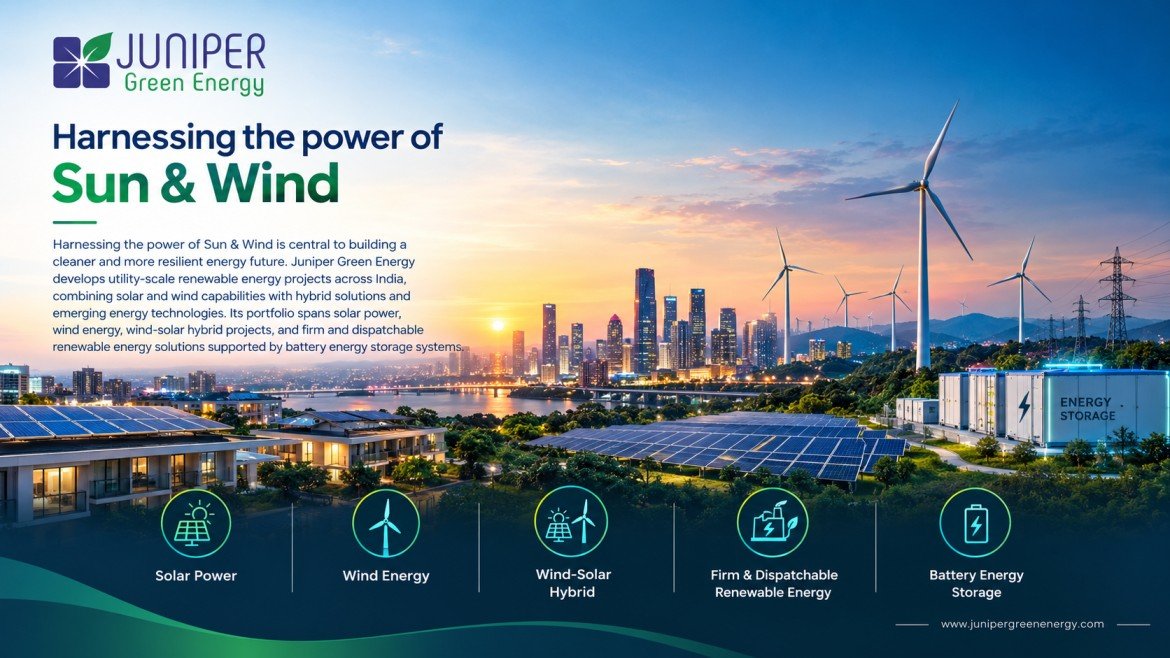
Companies such as Juniper Green Energy contribute to India’s renewable energy landscape as independent power producers developing utility-scale renewable energy projects across the country. Its business portfolio includes solar, wind, hybrid renewable energy, and energy storage-related solutions.
Such developments demonstrate how different renewable technologies can contribute to a diversified electricity system. The growing presence of renewable energy developers also supports the expansion of clean power infrastructure and the wider adoption of low-carbon energy solutions.
Challenges and Opportunities in Renewable Energy Development
Despite its potential, renewable energy development involves several practical challenges. Land availability, transmission infrastructure, project financing, equipment requirements, and regulatory processes can influence how quickly projects move from planning to operation.
Solar and wind projects also need suitable locations and reliable grid connectivity. Energy storage solutions require further infrastructure and investment to support electricity availability when renewable generation fluctuates.
However, these challenges are also creating opportunities for technological innovation. Improvements in solar panel efficiency, wind turbine design, battery storage, power forecasting, and grid management can strengthen renewable energy systems.
Continued investment in research, infrastructure, and skilled professionals will be important for making clean electricity more accessible and dependable.
What Does the Future Hold for Sustainable Energy?
The future of electricity generation will increasingly depend on a balanced combination of renewable energy, modern infrastructure, storage technologies, and efficient power management.
As industries focus on reducing their environmental impact, renewable electricity can become an important part of their long-term energy strategies. Businesses may also consider clean power procurement to support sustainability commitments and manage their exposure to conventional energy sources.
For India, expanding solar and wind capacity presents an opportunity to support economic growth while progressing toward a lower-carbon energy system.
Ultimately, sustainable energy development requires consistent investment, responsible planning, technological advancement, and collaboration across the energy sector. By strengthening renewable infrastructure and improving how clean electricity is generated, stored, and distributed, India can continue moving toward a more resilient and environmentally responsible energy future.