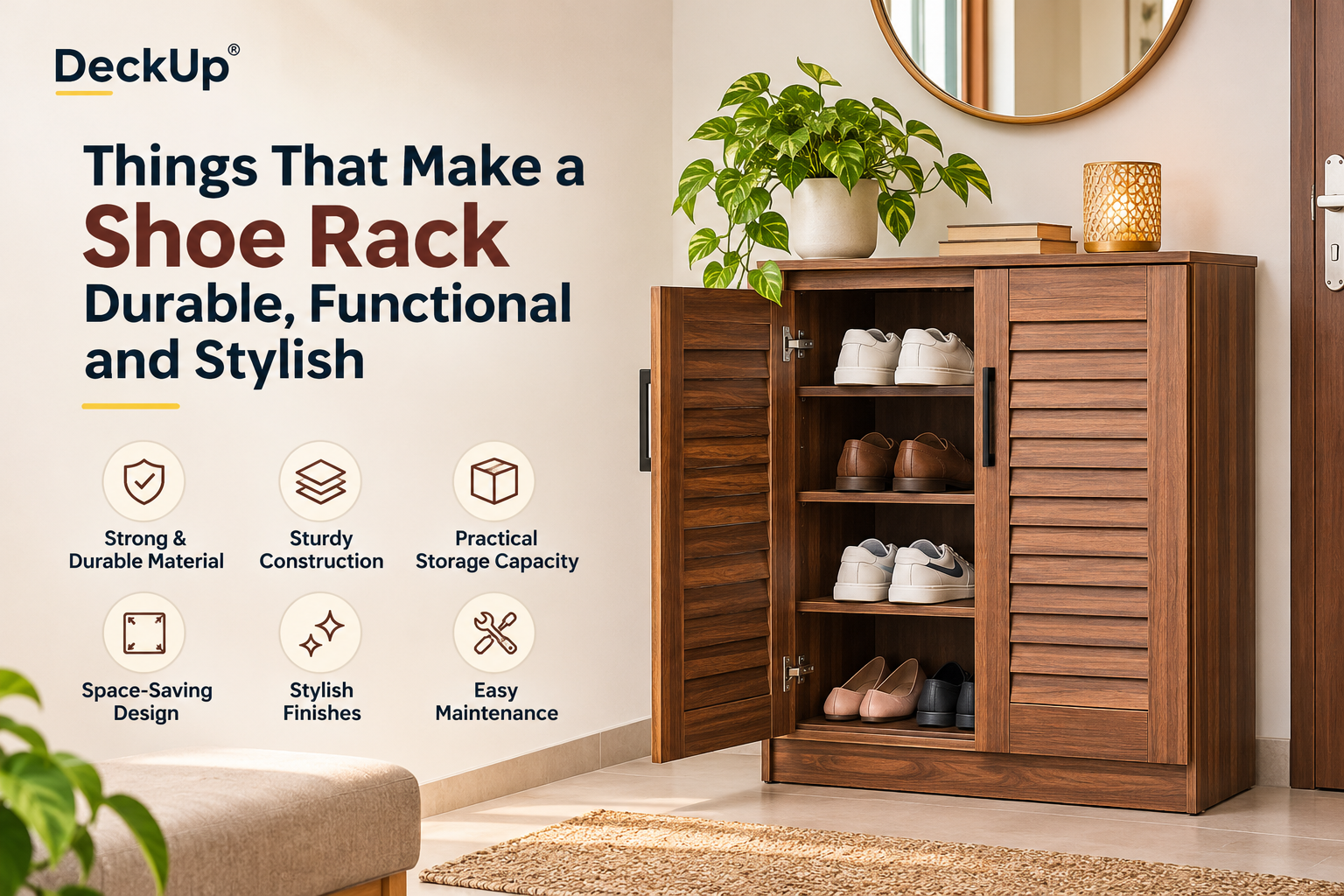


A well-designed Shoe Rack does more than keep footwear organised. It helps maintain a clutter-free home, protects shoes from unnecessary damage and makes everyday storage more convenient. Whether you live in a compact apartment or a spacious house, choosing the right shoe rack can make a noticeable difference to your home’s organisation and appearance.
However, not every shoe rack offers the same level of durability, functionality and visual appeal. Some models provide excellent storage but occupy too much space, while others look attractive but lack the strength to handle daily use. The ideal choice combines sturdy construction, practical storage features and a design that complements your interiors.
Before buying a Shoe Rack for Home, it is important to understand which materials, structural features, storage configurations and design elements contribute to long-term value.
This guide explains the essential qualities of a durable, functional and stylish shoe rack, helping you make an informed purchase based on your space, footwear collection and budget.
1. Strong and Durable Materials for Long-Term Use
The material used in a shoe rack directly affects its strength, appearance, maintenance requirements and expected lifespan. Since footwear storage furniture is used frequently, choosing a suitable material is one of the most important buying decisions.
Engineered Wood Shoe Racks
Engineered wood is commonly used in modern shoe storage furniture because it offers a consistent finish and a wide variety of designs.
A well-constructed engineered wood shoe rack can provide:
-
A clean and modern appearance.
-
Multiple colour and finish options.
-
Practical storage configurations.
-
Good dimensional consistency when used in suitable indoor conditions.
-
An attractive alternative to more expensive solid wood furniture.
However, not all engineered wood products have the same durability. Board quality, thickness, edge sealing and hardware quality influence their performance.
When shopping for a Wooden Shoe Rack, check the product specifications rather than judging durability only by appearance.
Solid Wood Shoe Racks
Solid wood is another option for buyers who prefer traditional furniture materials. Depending on the wood species, construction and finish, solid wood furniture can offer substantial strength and long-term service.
However, solid wood shoe racks may require more maintenance and can be affected by changes in humidity.
Metal Shoe Racks
Metal shoe racks are often suitable for buyers who prefer open storage and simple cleaning. Their durability depends on the metal thickness, quality of joints and corrosion-resistant coating.
For an entrance exposed to moisture, a properly coated metal rack may be more suitable than an unprotected wooden unit.
Buying Tip: Check the material description, surface finish, recommended load capacity and care instructions before selecting a shoe rack. A good-looking product is not necessarily a durable one.
2. Sturdy Construction and Reliable Structural Support
Material quality is important, but construction determines how effectively a shoe rack handles regular use.
A durable shoe rack should remain stable when footwear is placed on different shelves or when cabinet doors are opened repeatedly.
Important Structural Features to Check
Strong side panels: These support the shelves and help maintain the furniture’s overall shape.
Properly fitted shelves: Shelves should sit securely and resist bending under their intended load.
Reliable fasteners: Screws, connectors and brackets should hold the furniture components firmly together.
Stable base: A balanced structure reduces unwanted movement and improves usability.
Quality hinges: For a shoe rack with doors, hinges should support smooth opening and closing.
Before purchasing, review the assembly instructions and product dimensions. For taller cabinets, check whether the manufacturer recommends wall anchoring to reduce the risk of tipping.
A shoe rack with strong construction can provide better everyday usability than a larger unit made with weak fittings.
3. Practical Storage Capacity for Different Footwear Types
Storage capacity is one of the most important features of a functional shoe rack. However, the number of shoes a rack can accommodate depends on more than its advertised capacity.
Footwear varies significantly in size and shape. Sports shoes, formal shoes, sandals, boots and children’s footwear require different amounts of space.
Choose Storage Based on Your Footwear Collection
Before selecting a shoe rack, consider:
-
The number of family members using the rack.
-
The number of footwear pairs used regularly.
-
The amount of space required for bulky sneakers.
-
Whether you need separate storage for formal footwear.
-
The need for additional space for future purchases.
For example, a family of four with five pairs of frequently used footwear per person would need space for approximately 20 pairs. Choosing a slightly larger unit may help prevent overcrowding.
Why Adjustable Shelves Are Useful
Adjustable shelves allow users to change the vertical space between storage levels.
This can be particularly helpful when storing:
-
High-top sneakers.
-
Ankle boots.
-
Men’s formal shoes.
-
Children’s footwear.
-
Footwear boxes or accessories.
A Shoe Rack with Multiple Shelves offers better organisation when its compartments match the footwear you actually own.
Practical Tip: Measure your largest pair of shoes and compare those measurements with the usable internal dimensions of the rack. Exterior cabinet dimensions alone may not indicate whether your footwear will fit comfortably.
4. Space-Saving Design Without Compromising Accessibility
A functional shoe rack should provide sufficient storage without making your room or entrance feel crowded.
This is particularly important in Indian apartments, where entrance areas and passageways may have limited floor space.
Vertical Shoe Racks
Tall shoe racks use vertical space instead of occupying a large floor area.
They are suitable for:
-
Compact apartments.
-
Narrow entrance areas.
-
Bedrooms with limited floor space.
-
Households requiring multiple storage levels.
However, taller designs should be stable and appropriately secured where necessary.
Slim Shoe Cabinets
Slim shoe cabinets are designed for areas where depth is limited. Some use tilted compartments to accommodate footwear within a narrow structure.
Before choosing one, check whether its compartments can accommodate larger shoes or bulky sports footwear.
Low-Height Shoe Racks
Low-height models can fit below certain windows or alongside other furniture, depending on available space.
They may also provide a convenient top surface for lightweight decorative items when permitted by the product’s load specifications.
Buying Tip: Measure the available width, depth and height before purchasing. Leave enough clearance for doors, drawers and comfortable movement around the furniture.
5. Closed Storage That Keeps Footwear Organised
A Shoe Rack with Doors is a practical option for homeowners who prefer concealed footwear storage.
Unlike open racks, closed cabinets keep shoes out of direct view and help maintain a tidier entrance.
Benefits of a Shoe Rack with Doors
Cleaner appearance: Closed compartments reduce visible clutter and help create an organised space.
Reduced dust exposure: Doors can limit the amount of household dust settling directly on footwear, although they do not make the cabinet completely dustproof.
Better visual coordination: Cabinet-style shoe racks can blend with other furniture pieces.
Separate storage sections: Multiple compartments can help organise footwear by family member, type or frequency of use.
Importance of Ventilation
Ventilation is especially important for enclosed shoe storage.
Footwear that is damp from rain, sweat or cleaning should be dried before being placed inside a cabinet. Storing wet shoes in a poorly ventilated space may contribute to unpleasant odours and moisture-related damage.
Look for suitable ventilation openings or a design that allows airflow.
For everyday convenience, choose doors that open smoothly and provide easy access to the shelves.
6. Stylish Finishes That Complement Home Interiors
A shoe rack is often placed near the entrance, making it one of the first furniture pieces visible when someone enters a home.
Its appearance should therefore complement the surrounding décor rather than look like an unrelated storage unit.
Popular Shoe Rack Finishes
Natural wood finishes: Wood-inspired finishes create a warm appearance and work well with neutral walls and wooden furniture.
Walnut and dark brown finishes: Darker tones can complement traditional interiors and rooms featuring rich furniture colours.
White and light finishes: Lighter shades may help compact spaces appear visually open and uncluttered.
Two-tone designs: Combining contrasting finishes can create a contemporary look without excessive decoration.
Matching a Shoe Rack with Your Interior
When choosing a modern shoe rack design, consider the colour of nearby furniture, flooring, wall finishes and doors.
For example, a light wood shoe cabinet may complement a neutral entrance with beige walls, while a darker cabinet may work better alongside walnut-finish furniture.
A stylish shoe rack does not need elaborate detailing. Clean lines, balanced proportions, well-fitted doors and a consistent finish often create a more polished appearance.
7. Easy Maintenance and Moisture-Resistant Finishing
A durable shoe rack should be reasonably easy to clean and maintain.
Footwear can carry dust, dirt and moisture into the home. Without regular cleaning, these can accumulate on shelves and affect the furniture’s condition.
Features That Simplify Maintenance
-
Smooth surfaces that can be wiped easily.
-
Accessible shelves and corners.
-
Properly finished edges.
-
Durable surface coatings suitable for the intended environment.
-
Removable storage trays, where available.
For engineered wood furniture, avoid leaving standing water on shelves or edges. Use a slightly damp cloth for cleaning and dry the surface afterwards, following the manufacturer’s care instructions.
If the shoe rack is placed near an entrance where wet footwear is common, consider using a removable protective tray.
Practical Recommendation: Keep heavily soiled or wet shoes outside enclosed storage until they are cleaned and dried. This helps maintain both the furniture and the footwear.
8. Additional Features That Improve Everyday Functionality
Modern shoe rack designs may include features that improve convenience beyond basic footwear storage.
Shoe Rack with Seating
A Shoe Rack with Seat combines footwear storage with a place to sit while putting on or removing shoes.
This can be particularly useful for families with children or people who prefer sitting while changing footwear.
However, only use the seat if the product is specifically designed and rated for sitting. A regular shoe cabinet should not be treated as a bench.
Multiple Compartments
Separate compartments help organise footwear according to use.
For example:
-
Everyday footwear can be stored at an easily accessible height.
-
Formal shoes can occupy a separate compartment.
-
Seasonal footwear can be placed on less frequently accessed shelves.
-
Children’s shoes can be organised in dedicated sections.
Convenient Handles and Hinges
Handles should be comfortable to grip, while doors should open without obstructing nearby furniture.
Soft-close hinges may add convenience where available, but their quality and suitability should still be checked.
These details may seem small, yet they can make a significant difference when a shoe rack is used several times every day.
9. Choosing the Right Shoe Rack Based on Your Budget
The price of a shoe rack depends on several factors, including material, dimensions, storage capacity, construction quality, finish and additional features.
Instead of choosing the lowest-priced product, compare the overall value offered by different models.
Budget-Friendly Shoe Racks
Basic open racks or compact storage units may be suitable for buyers with limited storage needs.
They generally prioritise practical storage over decorative features.
Mid-Range Shoe Racks
Mid-range options may include engineered wood construction, multiple compartments, enclosed storage and coordinated finishes.
These are worth considering for households seeking a balance between appearance, capacity and affordability.
Premium Shoe Racks
Higher-priced models may offer larger dimensions, specialised hardware, additional storage features or higher-grade materials.
However, a higher price does not automatically guarantee better durability.
What to Compare Before Buying
Check the product’s:
-
Material and board specifications.
-
Storage capacity and usable dimensions.
-
Hardware and construction details.
-
Assembly requirements.
-
Warranty terms and exclusions.
-
Delivery charges and return conditions.
-
Customer reviews, particularly those mentioning long-term use.
The best purchase is one that meets your storage needs without requiring unnecessary features or excessive space.
10. Common Mistakes to Avoid When Buying a Shoe Rack
Even an attractive shoe rack can become inconvenient if it does not match your household requirements.
Choosing Based Only on Appearance
A stylish cabinet may not provide enough space for your footwear collection.
Always evaluate capacity and internal dimensions before finalising a design.
Ignoring Footwear Size
A rack advertised for a certain number of pairs may accommodate fewer pairs of bulky shoes.
Check shelf depth and height carefully.
Buying an Oversized Cabinet
A large shoe rack can make a narrow entrance uncomfortable.
Measure your available space and account for door-opening clearance.
Overlooking Ventilation
Closed storage without suitable airflow may be inconvenient for footwear that frequently becomes damp.
Choose an appropriate design and ensure shoes are dry before storage.
Ignoring Assembly and Maintenance
A shoe rack that is difficult to assemble or clean may create unnecessary inconvenience.
Review the installation requirements and maintenance instructions before buying.
Avoiding these mistakes can help you select furniture that remains useful as your storage needs change.
11. How to Choose the Best Shoe Rack for Your Home
The ideal Shoe Rack for Home depends on the number of shoes you own, the available space and your preferred storage style.
For a small apartment, a compact vertical shoe rack may offer an efficient use of space.
For a family with several footwear categories, a cabinet with multiple shelves and separate compartments may provide better organisation.
For a modern entrance, an enclosed wooden shoe rack with a coordinated finish can combine practical storage with a neat appearance.
If you are planning to Buy a Shoe Rack Online, compare product specifications carefully rather than relying only on photographs.
When exploring furniture options from DeckUp, consider the dimensions, material, available finishes and storage configurations of each shoe rack to identify a model that suits your home.
A thoughtful comparison helps ensure that your purchase meets both your immediate requirements and everyday storage needs.
Frequently Asked Questions About Shoe Racks
1. Which material is best for a durable shoe rack?
Solid wood, engineered wood and coated metal can all be suitable materials. The best option depends on the construction quality, intended placement, moisture exposure and maintenance requirements. For indoor furniture, good-quality engineered wood can offer a practical combination of appearance and functionality.
2. Is a shoe rack with doors better than an open shoe rack?
A shoe rack with doors is suitable for concealed storage and reducing direct dust exposure. An open rack provides easier access and generally better airflow. Choose according to your footwear habits, available space and preference for visible or enclosed storage.
3. How many pairs of shoes should a shoe rack hold?
The required capacity depends on household size and footwear collection. Count the pairs you intend to store, then allow some additional space for future purchases. Check usable shelf dimensions because bulky footwear may reduce the advertised capacity.
4. What type of shoe rack is best for a small home?
A slim or vertical shoe rack is often suitable for compact homes because it uses limited floor space efficiently. Choose a design that fits the entrance without obstructing movement or door access.
5. How can I make my shoe rack last longer?
Clean it regularly, avoid overloading shelves, keep wet shoes out of enclosed compartments and follow the manufacturer’s maintenance instructions. For engineered wood furniture, prevent prolonged water exposure and protect vulnerable edges.
6. Are wooden shoe racks suitable for modern interiors?
Yes. Wooden and wood-finish shoe racks are available in designs that suit contemporary, minimalist and traditional interiors. Clean lines, neutral finishes and concealed compartments can help a shoe rack blend with modern furniture.
7. What should I check before buying a shoe rack online?
Check the material, external and internal dimensions, footwear capacity, construction details, assembly instructions, warranty, delivery conditions and return policy. Customer reviews can also provide useful information about practical usability.
8. Is a shoe rack with seating worth buying?
A shoe rack with seating can be useful when you want storage and a convenient place to put on shoes. It is particularly practical near an entrance. Make sure the product is specifically designed for seating and has an appropriate weight rating.
Conclusion
A durable, functional and stylish Shoe Rack should offer more than basic footwear storage. Strong materials, reliable construction, suitable storage capacity, practical dimensions and an easy-to-maintain finish all contribute to its long-term usefulness.
The right design should also suit your home. A compact vertical rack may be ideal for a small apartment, while a larger cabinet with doors and multiple compartments may work better for a family.
Before purchasing, evaluate your footwear collection, measure the available space and compare the features that matter most to your daily routine.
If you are looking for a shoe rack that balances practical storage with an attractive furniture design, explore the Shoe Rack collection at DeckUp. Compare the available sizes, finishes and storage options to choose a model that fits your space, budget and organisation needs.