

What Role Does Renewable Energy Play in Sustainable Development?
Sustainable development depends on how effectively societies use natural resources while meeting the needs of present and future generations. As energy consumption continues to increase across industries, cities, and households, the demand for cleaner and more reliable power has become increasingly important. Traditional energy sources have supported economic growth for decades, but their environmental impact highlights the need for alternative solutions. Renewable energy, particularly solar and wind power, offers a practical way to support economic progress while reducing environmental pressure.
Understanding the Importance of Renewable Energy
Renewable energy comes from naturally replenished resources such as sunlight, wind, and water. Unlike conventional fossil fuels, these resources are available repeatedly and can support long-term electricity generation. Solar panels convert sunlight into electricity, while wind turbines use moving air to generate power.
The growing adoption of renewable energy helps reduce dependence on coal, oil, and natural gas. It also supports efforts to lower greenhouse gas emissions and improve air quality. As countries work toward their climate commitments, renewable power has become an important part of energy planning and sustainable development strategies.
How Solar and Wind Energy Support Environmental Protection
Environmental protection is one of the most important contributions of renewable energy. Electricity generation from fossil fuels releases carbon dioxide and other pollutants into the atmosphere. Solar and wind power generate electricity without direct combustion, helping reduce operational emissions compared with conventional power generation.
Solar energy is particularly useful in regions that receive abundant sunlight, while wind energy can generate electricity in areas with suitable wind conditions. Combining these resources allows energy developers to make better use of different natural conditions.
Large-scale renewable energy projects can also support a gradual transition toward a lower-carbon electricity system. Responsible project planning, land management, and resource conservation remain essential to ensuring that clean energy development delivers lasting environmental benefits.
Renewable Energy as a Driver of Economic Growth
Sustainable development is not limited to environmental protection. It also involves creating employment opportunities, strengthening infrastructure, and supporting economic stability.
The renewable energy sector generates demand for engineers, technicians, construction professionals, project managers, and maintenance specialists. Solar and wind projects also encourage investment in manufacturing, transportation, electrical equipment, and supporting services.
For developing economies such as India, renewable energy can create opportunities across multiple regions. Investments in clean power infrastructure can strengthen local economic activity while supporting the country’s growing electricity requirements. A well-developed renewable energy sector can also encourage technological innovation and create new opportunities for businesses.
The Role of Energy Storage and Hybrid Power Projects
One important challenge associated with solar and wind energy is their dependence on weather conditions. Solar generation varies with sunlight availability, while wind power depends on wind speed. Energy storage and hybrid renewable energy systems can help address these variations.
Battery Energy Storage Systems (BESS) store electricity for use when generation is lower or demand increases. Hybrid projects combine different renewable sources, such as solar and wind, to create a more balanced generation profile.
Firm and Dispatchable Renewable Energy (FDRE) solutions further support efforts to provide electricity according to specific demand requirements. These developments are important for improving grid flexibility and making renewable power more dependable.
How Juniper Green Energy Contributes to India’s Clean Energy Transition
Companies developing renewable infrastructure play an important role in expanding access to clean electricity. Juniper Green Energy is an independent power producer focused on developing, building, operating, and maintaining utility-scale renewable energy projects across India.
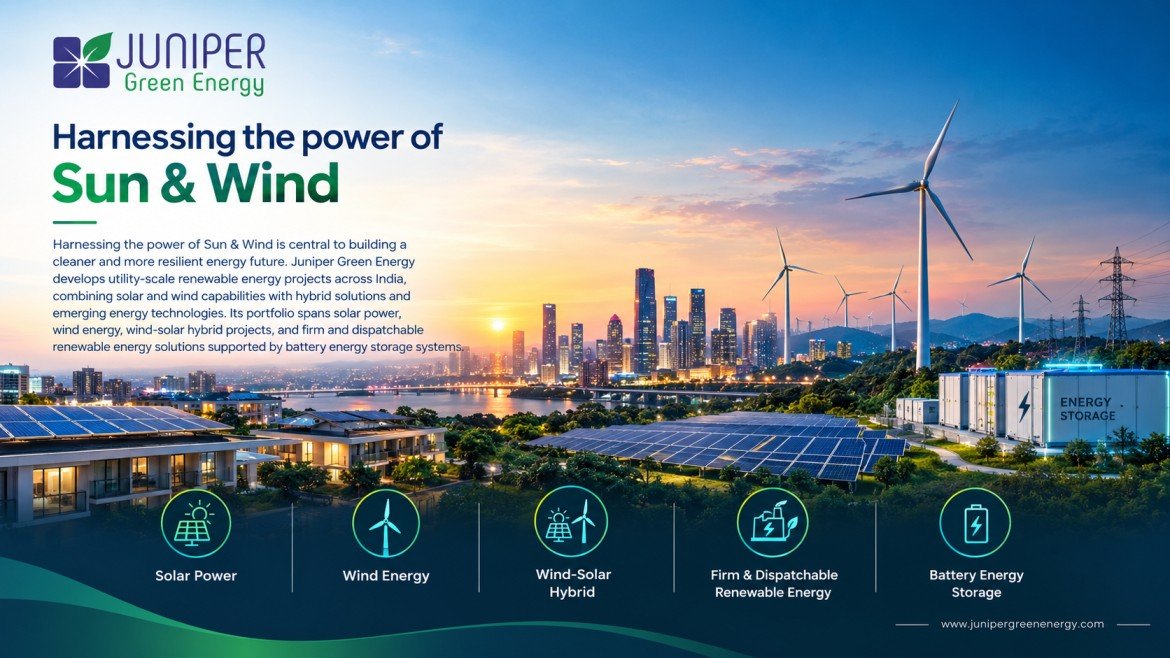
Its portfolio includes solar, wind, wind-solar hybrid, and Firm and Dispatchable Renewable Energy projects, supported by battery energy storage solutions. Through these initiatives, the company contributes to the development of renewable power infrastructure and India’s transition toward a lower-carbon energy system.
Its focus on large-scale project development reflects the growing importance of integrated energy solutions in meeting future electricity requirements. More information about its initiatives and business activities is available through Juniper Green Energy.
Building a Sustainable Future Through Clean Energy
Renewable energy is becoming an essential part of long-term development because it connects environmental responsibility with economic opportunity and energy security. Continued investment in solar, wind, hybrid systems, and energy storage can help create a more flexible and sustainable electricity infrastructure.
As India continues to expand its energy capacity, the contribution of renewable energy developers, technology providers, and policymakers will remain important. Supporting renewable energy solutions in India is not simply about generating cleaner electricity; it is about creating a stronger foundation for economic progress, environmental protection, and a sustainable future for generations to come.