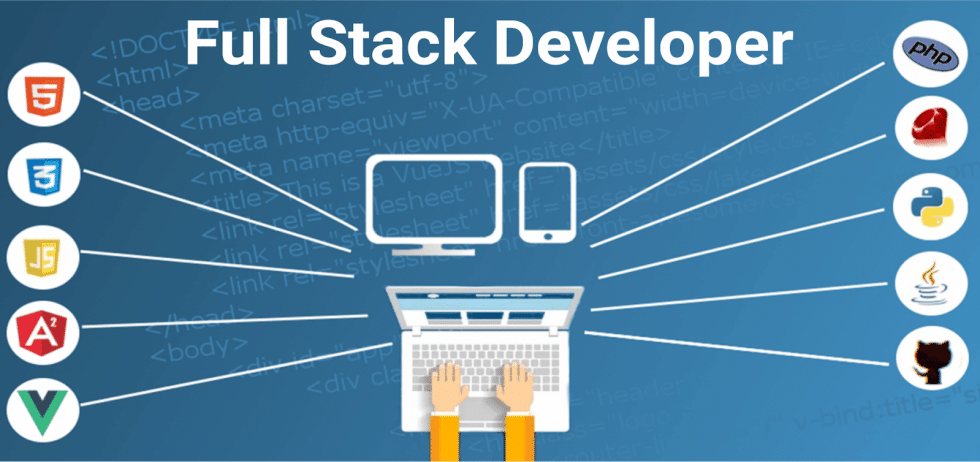

To become a successful full-stack developer, you need a diverse skill set encompassing both front-end and back-end development, along with foundational knowledge in databases, DevOps, and soft skills. Here’s a detailed breakdown of the necessary skills:
1. Front-End Development Skills
These skills are essential for creating the user interface of applications.
- Core Technologies:
- HTML5: For structuring web content.
- CSS3: For styling and layout.
- JavaScript (ES6+): For interactivity and dynamic behavior.
- Frameworks and Libraries:
- React.js or Vue.js: For building interactive UIs.
- Angular: For creating dynamic single-page applications (SPAs).
- UI/UX Design Basics:
- Knowledge of design tools like Figma or Adobe XD.
- Understanding responsive design principles (Media Queries, Flexbox, CSS Grid).
- Version Control: Familiarity with Git for managing code changes.
2. Back-End Development Skills
Back-end skills are required for handling server-side operations, APIs, and database interactions.
- Programming Languages:
- Node.js (JavaScript): Popular for back-end development.
- Other options: Python (Django/Flask), Java (Spring Boot), Ruby (Rails), PHP (Laravel).
- Frameworks and Libraries:
- Express.js (Node.js) for RESTful APIs.
- ORM tools like Sequelize (Node.js), Hibernate (Java), or Mongoose (MongoDB).
- Server-Side Concepts:
- API development (RESTful APIs, GraphQL).
- Authentication and Authorization (OAuth, JWT, Session Management).
Know more- Full Stack Classes in Pune
3. Database Management Skills
Managing and interacting with databases effectively is crucial.
- SQL Databases:
- MySQL, PostgreSQL, SQLite for structured data.
- NoSQL Databases:
- MongoDB, Cassandra, or Firebase for unstructured or semi-structured data.
- Database Design:
- Designing schemas and optimizing database performance.
4. DevOps and Deployment Skills
To manage the deployment, scaling, and monitoring of applications.
- Version Control: Git, GitHub, or GitLab for collaborative development.
- Containerization and Orchestration:
- Docker for containerized applications.
- Kubernetes for managing containerized applications at scale.
- CI/CD Pipelines:
- Tools like Jenkins, GitHub Actions, or CircleCI for automated testing and deployment.
- Cloud Platforms:
- AWS (Amazon Web Services), Microsoft Azure, or Google Cloud for hosting applications.
Know more- Full Stack Course in Pune
5. Soft Skills
Collaboration and problem-solving abilities are as important as technical skills.
- Problem-Solving: The ability to debug issues and think critically.
- Communication: Clear communication with team members, stakeholders, and clients.
- Time Management: Balancing multiple tasks and meeting deadlines.
- Adaptability: Staying updated with evolving technologies.
6. Additional Skills
- Version Control: Git, GitHub, GitLab.
- Security Basics:
- Understanding vulnerabilities like SQL injection, XSS, CSRF.
- Familiarity with tools for securing web applications (e.g., Snyk, SonarQube).
- Testing:
- Unit testing with tools like Jest (JavaScript) or JUnit (Java).
- End-to-end testing using Selenium or Cypress.
- Mobile-Friendly Development:
- Knowledge of frameworks like React Native or Flutter for cross-platform mobile app development.
Learning Path
- Start with the basics of front-end (HTML, CSS, JavaScript).
- Learn a popular front-end framework (e.g., React.js).
- Move on to back-end languages (e.g., Node.js or Java) and frameworks.
- Understand database design and integration.
- Familiarize yourself with DevOps tools for deployment and scalability.
- Work on real-world projects to apply and refine your skills.
Know more- Full Stack Training in Pune

