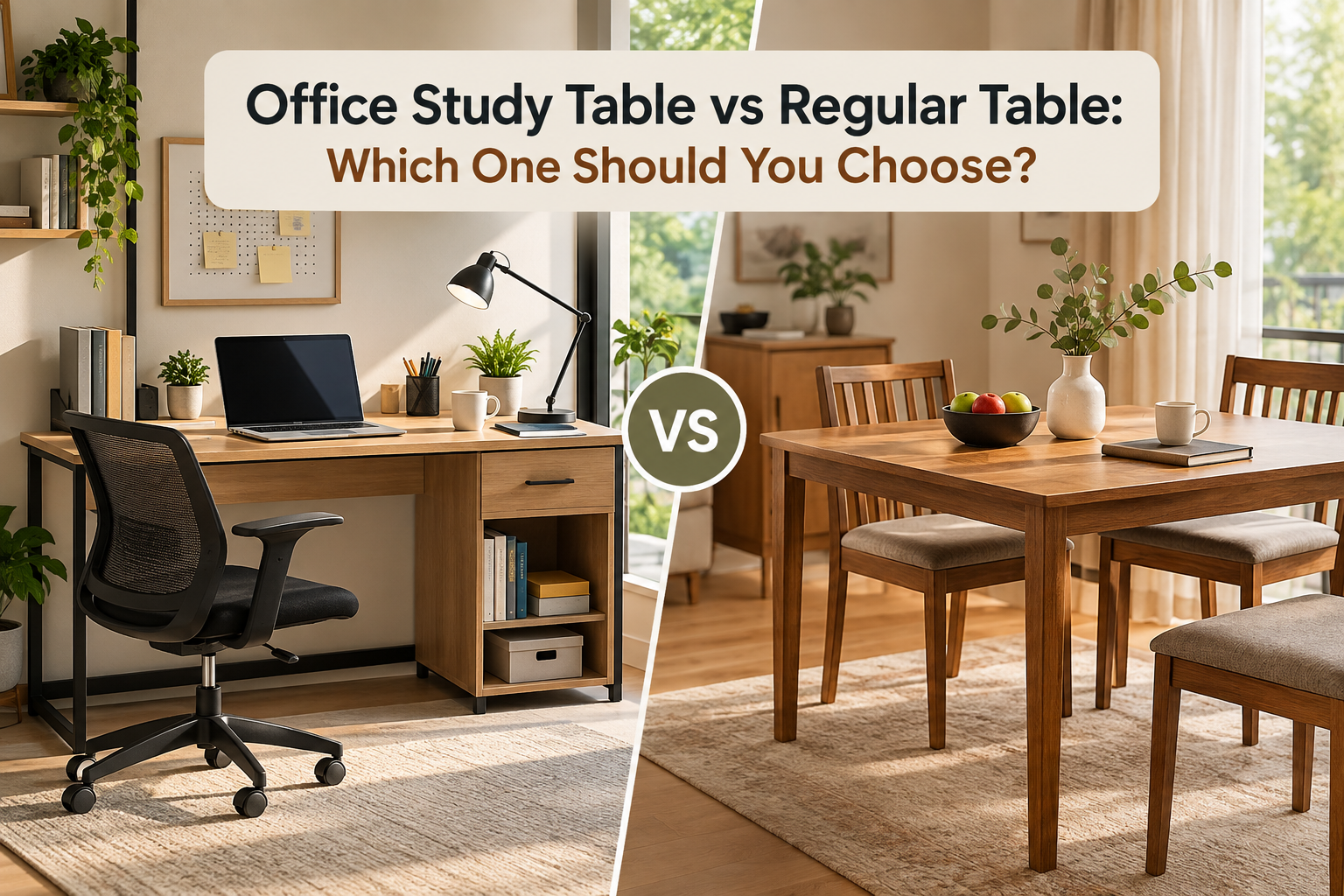


Choosing the right table for your home or office can make a big difference to your comfort, productivity, and overall workspace organisation. While a regular table may seem like a simple and affordable option, an office study table is specifically designed to support activities such as working, studying, writing, using a computer, and organising everyday essentials.
With more people working and studying from home, the demand for functional furniture has increased. An office study table can provide dedicated space for a laptop or desktop, documents, stationery, books, and other work essentials. On the other hand, a regular table can be useful when you need a simple surface for multiple purposes.
So, which one should you choose? The answer depends on how you use your space, how much storage you need, and what level of comfort and organisation you expect from your table.
What Is an Office Study Table?
An office study table is designed specifically for work, study, and other focused activities. It usually offers a suitable tabletop height, enough working space, and sometimes additional features such as drawers, shelves, cabinets, or compartments.
A well-designed office study table helps create a dedicated workspace. This can be especially useful for professionals working from home, students attending online classes, freelancers, and people who regularly use laptops or computers.
The design of an office study table generally focuses on functionality. The tabletop can accommodate a laptop, monitor, keyboard, notebooks, documents, and other essentials while leaving enough room to work comfortably.
What Is a Regular Table?
A regular table is a more general-purpose piece of furniture. It can be used for dining, writing, displaying objects, occasional work, or other household activities depending on its design.
Regular tables are available in many shapes, sizes, materials, and designs. However, they may not always be designed with long working or studying sessions in mind.
For example, a dining table can provide a large surface for working, but its height, seating position, and overall design may not be ideal for spending several hours working on a laptop.
This does not mean that regular tables are unsuitable. They can be a practical choice when you need flexibility or already have a suitable table at home.
Office Study Table vs Regular Table: Key Differences
The main difference between an office study table and a regular table is their purpose. An office study table is designed around productivity and organisation, while a regular table is generally designed for broader household use.
Here are some important factors to consider before making your choice.
1. Purpose of Use
The first thing to consider is how you plan to use the table.
If you need a dedicated surface for working or studying every day, an office study table can be a more suitable choice. It provides a defined workspace where you can keep your laptop, books, documents, stationery, and other essentials.
A regular table can be a better option if you need a multipurpose surface. For example, the same table may be used for occasional work, meals, hobbies, or other activities.
If work or study is a regular part of your daily routine, having a dedicated office study table can help create a more structured workspace.
2. Workspace and Size
The amount of tabletop space is another important consideration.
An office study table is generally designed to provide practical working space. Depending on the model, you may have enough room for a laptop, monitor, keyboard, mouse, notebooks, and documents.
A regular table can also offer plenty of space, but its dimensions may not be optimised for office or study activities.
Before buying, measure the area where you plan to place the table. Consider both the table’s width and depth, along with the space required for a chair and movement around the furniture.
For smaller rooms, a compact office study table can help create a functional workspace without taking up unnecessary floor space.
3. Storage Options
Storage is one of the biggest advantages of many office study tables.
Some designs include drawers, shelves, cabinets, or open compartments. These features allow you to keep stationery, books, files, chargers, and other frequently used items within easy reach.
A regular table may only provide a tabletop without dedicated storage.
If you prefer a clean and organised workspace, an office study table with storage can be a practical option. It can reduce clutter and help you keep essential items organised.
4. Comfort During Long Working Hours
Comfort becomes particularly important if you spend several hours at your table.
An office study table is generally designed with work and study activities in mind. When paired with a suitable chair, it can help create a more comfortable workstation.
The height of the table should allow your arms to rest comfortably while typing or writing. There should also be enough legroom underneath the tabletop.
A regular table may work well for occasional use, but its height or design may not always be suitable for extended work sessions.
Regardless of the table you choose, remember that the chair also plays an important role in creating a comfortable workspace.
5. Organisation
A dedicated workspace can make it easier to maintain an organised routine.
With an office study table, you can create specific places for your laptop, notebooks, files, stationery, and other work essentials. If the table includes shelves or drawers, you can keep frequently used items close without filling the tabletop.
A regular table can also be organised, but it may be used for multiple activities. As a result, you may need to clear the surface before starting work or study.
If you want a dedicated area where everything is ready for your daily tasks, an office study table can be a useful addition.
6. Design and Interior Style
Furniture should also complement the look of your room.
Modern office study tables are available in different finishes, colours, shapes, and designs. A simple wooden or engineered-wood table can work well in a bedroom, home office, study room, or living space.
Regular tables also come in many styles, but their design may be focused on purposes other than work or study.
When choosing a table, consider your existing furniture, wall colours, available space, and overall interior style. A well-matched office study table can become both a functional and attractive part of your room.
When Should You Choose an Office Study Table?
An office study table can be a good choice if you:
- Work from home regularly
- Study for several hours every day
- Use a laptop or desktop computer frequently
- Need storage for books, documents, or stationery
- Want a dedicated workspace
- Prefer an organised and clutter-free setup
- Have limited space and need functional furniture
- Want furniture designed specifically for work or study
For professionals, students, freelancers, and remote workers, having a dedicated table can make the workspace more practical and easier to manage.
When Is a Regular Table a Better Choice?
A regular table may be suitable if you:
- Need a multipurpose table
- Work or study only occasionally
- Already have a suitable table at home
- Want to use the same furniture for different activities
- Do not require additional storage
- Have enough space for a larger general-purpose table
For occasional tasks, purchasing a dedicated office study table may not always be necessary.
Why Choose a DeckUp Office Study Table?
When choosing an office study table, focus on functionality, durability, size, storage, and design rather than selecting a table based only on appearance.
DeckUp offers furniture designed for modern homes and practical everyday use. A well-designed DeckUp office study table can help create a dedicated area for working, studying, reading, or completing everyday tasks.
Before choosing a model, consider the size of your room, the amount of equipment you use, your storage requirements, and the available space for a chair. These factors will help you select a table that fits naturally into your workspace.
How to Choose the Right Office Study Table
Before making your purchase, keep these points in mind:
Measure your available space: Check the width, depth, and height of the area where you want to place the table.
Consider your work equipment: Think about whether you will use a laptop, monitor, keyboard, books, documents, or other accessories.
Check storage requirements: If you have many books, files, or stationery items, look for a design with drawers or shelves.
Think about comfort: Make sure the table provides adequate legroom and works well with your chair.
Choose a suitable design: Select a finish and style that complements your existing furniture.
Consider durability: Look for quality materials and sturdy construction that can handle regular use.
Final Thoughts
The choice between an office study table and a regular table depends largely on your daily requirements. A regular table can be practical when you need flexible, multipurpose furniture, while an office study table is designed specifically around working, studying, organisation, and productivity.
If you work or study regularly, an office study table can provide a dedicated and organised space for your daily activities. Features such as suitable dimensions, storage compartments, adequate legroom, and a practical design can make your workspace more comfortable and functional.
Before buying, evaluate your available space, storage needs, work equipment, and usage habits. Choosing a table based on these factors will help you create a workspace that is comfortable, organised, and suitable for everyday use. For modern homes and work-from-home setups, a thoughtfully designed office study table can be a practical furniture investment that supports both productivity and better space management.