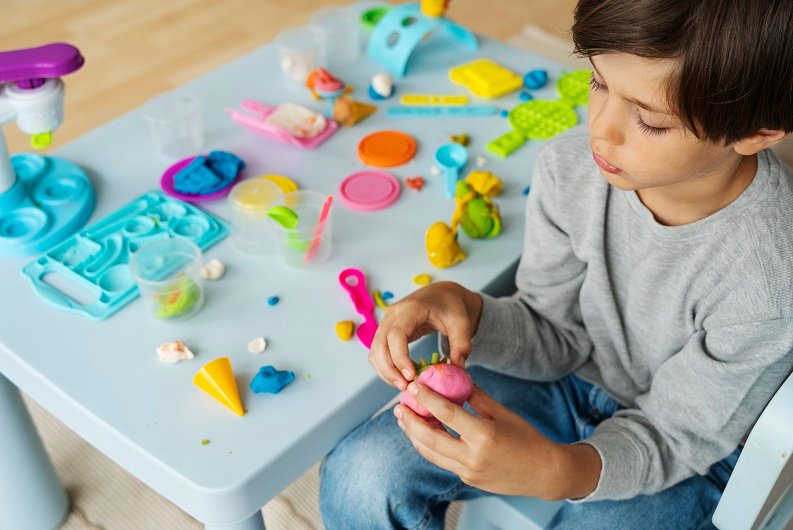


Children learn by doing. When they squeeze dough, build shapes, sort objects or create their own pretend-play stories, they are not simply keeping busy. They are exploring how things work and developing skills through direct experience. This is especially useful for families in the UAE, where indoor play can be an important part of the day during hot weather. Hands-on toys give children opportunities to explore, create and learn away from passive entertainment. Research from UNICEF and Harvard’s Center on the Developing Child also highlights play as an important part of children’s learning and development.
What Is Hands-On Play?
Hands-on play involves children actively using their bodies, senses and imagination while playing. Instead of simply watching something happen, they touch, move, build, shape, arrange and experiment.
For example, a child playing with modelling dough may decide what to make, choose colours, squeeze and roll the material then change the design. Each step gives the child a chance to make decisions and learn through trial and error.
This type of play can involve:
- Touch And Movement: Children explore different textures, shapes and resistance as they handle toys and materials.
- Creative Expression: Open-ended toys allow children to make something based on their own ideas rather than following only one outcome.
- Problem-Solving: Building, matching and shaping activities encourage children to work out what fits or what to do next.
Why Sensory Play Matters
Sensory play gives children opportunities to explore the world through touch, sight and movement. For younger children, these simple experiences can make everyday learning more engaging.
A soft, mouldable material such as Play-Doh, for instance, can be squeezed, rolled, flattened and shaped. Playzo Kids offers several Play-Doh options, including the Play-Doh 4 Pack Classic Colors, which provides four colours for shaping and creative activities.
Sensory activities can also encourage children to:
- Notice differences between colours, shapes and textures.
- Strengthen hand movements through squeezing, rolling and moulding.
- Stay engaged with an activity for longer as they experiment with different ideas.
UNICEF notes that children learn through exploring their environment, while playful activities can support cognitive, physical, social and emotional development.
How Creative Toys Encourage Independent Thinking
Creative toys do not always need to have a single correct answer. This gives children room to make choices and develop their own ideas.
For example, the Play-Doh Mini Fun Factory Shapes Playset allows children to press Play-Doh through different moulds and create various shapes. Rather than simply completing a fixed task, children can decide what to make and how to combine their creations.
This matters because independent play gives children space to make decisions without an adult directing every step. Harvard’s Center on the Developing Child explains that play can help children practise skills such as focusing attention, working memory and self-control.
Choosing Toys For Different Ages
The best hands-on toy depends on your child’s age, abilities and interests. You do not need to choose the most complicated option.
Toddlers
Look for simple toys that involve safe textures, basic shapes and easy movements. Large, easy-to-handle pieces can make exploration more manageable.
Preschoolers
This is a useful stage for creative materials, pretend-play sets, simple puzzles and activities involving colours, shapes and early letters. For example, Playzo Kids lists the Play-Doh Fundamentals ABC Tool Set with 6 Non-Toxic Colors, designed to let children practise making and identifying letters through play.
Young Children
Older children may enjoy more structured creative challenges, construction activities and games where they need to plan, experiment or solve problems.
Always check the recommended age range and supervise younger children where appropriate.
Making Hands-On Play Work At Home
You do not need a dedicated playroom to create useful play opportunities. A small table, play mat or clear floor space can become a creative area.
Try these simple approaches:
- Create A Short Activity: Set aside 15–20 minutes for one activity instead of expecting children to play for a long period.
- Ask Open Questions: Try “What are you making?” or “What could you add?” rather than showing them exactly what to do.
- Allow Mistakes: If a structure falls down or a creation looks different from the original idea, let your child try again.
- Rotate Toys: Keep a few hands-on toys available and put others away for later. This can make familiar toys feel interesting again.
For UAE families, indoor creative play can be particularly practical during very hot afternoons when outdoor activities are less convenient.
Finding Suitable Learning Toys In The UAE
Choosing Early Learning Products UAE parents can use at home does not have to mean selecting toys that look like schoolwork. The most useful choice may simply be something that encourages your child to touch, create, experiment and make decisions.
Playzo Kids offers toys across different age groups, including creative products, educational games, puzzles, arts and crafts and baby toys. Its website also groups toys by age, making it easier for parents to explore options based on their child’s stage.
Why The Parent’s Role Still Matters
A good toy can provide the activity, but your involvement can make the experience richer. Sitting nearby, asking questions or joining the game gives children opportunities to communicate what they are thinking.
You also do not need to correct every creation. If your child makes a purple dinosaur with three eyes, for example, there is no need to make it realistic. Letting children lead the activity can support imagination and confidence.
UNICEF similarly encourages parents to use playful moments to explore, communicate and learn with children.
Conclusion
Hands-on play gives children a practical way to explore ideas, use their senses and express their creativity. Sensory and creative toys can support these experiences through simple activities such as moulding, building, sorting and pretend play.
For UAE families, these toys can also provide meaningful indoor activities when outdoor play is less practical. The goal is not to make every play session educational, but to give children safe opportunities to explore, make choices and enjoy learning through play.
Frequently Asked Questions
- What Are Sensory Toys For Children?
Sensory toys are designed to give children opportunities to explore experiences such as texture, shape, colour, movement and sound. Examples include modelling dough, tactile materials and toys involving sorting or manipulation.
- Are Creative Toys Useful For Preschool Children?
Yes. Creative toys can encourage children to experiment, make choices and express their ideas. Activities such as moulding, drawing, building and pretend play can make learning more active and engaging.
- How Can UAE Parents Encourage Indoor Hands-On Play?
Set up a simple activity area indoors and provide a small selection of age-appropriate toys. During particularly hot periods, creative activities can offer children an alternative to outdoor play.
- Should Parents Join Their Children During Play?
Parents can join when children want company or need help, but it is also useful to give children opportunities to lead their own play. Asking questions rather than giving constant instructions can encourage independent thinking.
- How Do I Choose The Right Creative Toy?
Consider your child’s age, interests, abilities and the recommended age range of the product. Choose toys that are easy for your child to use and provide opportunities to explore rather than simply producing one fixed result.