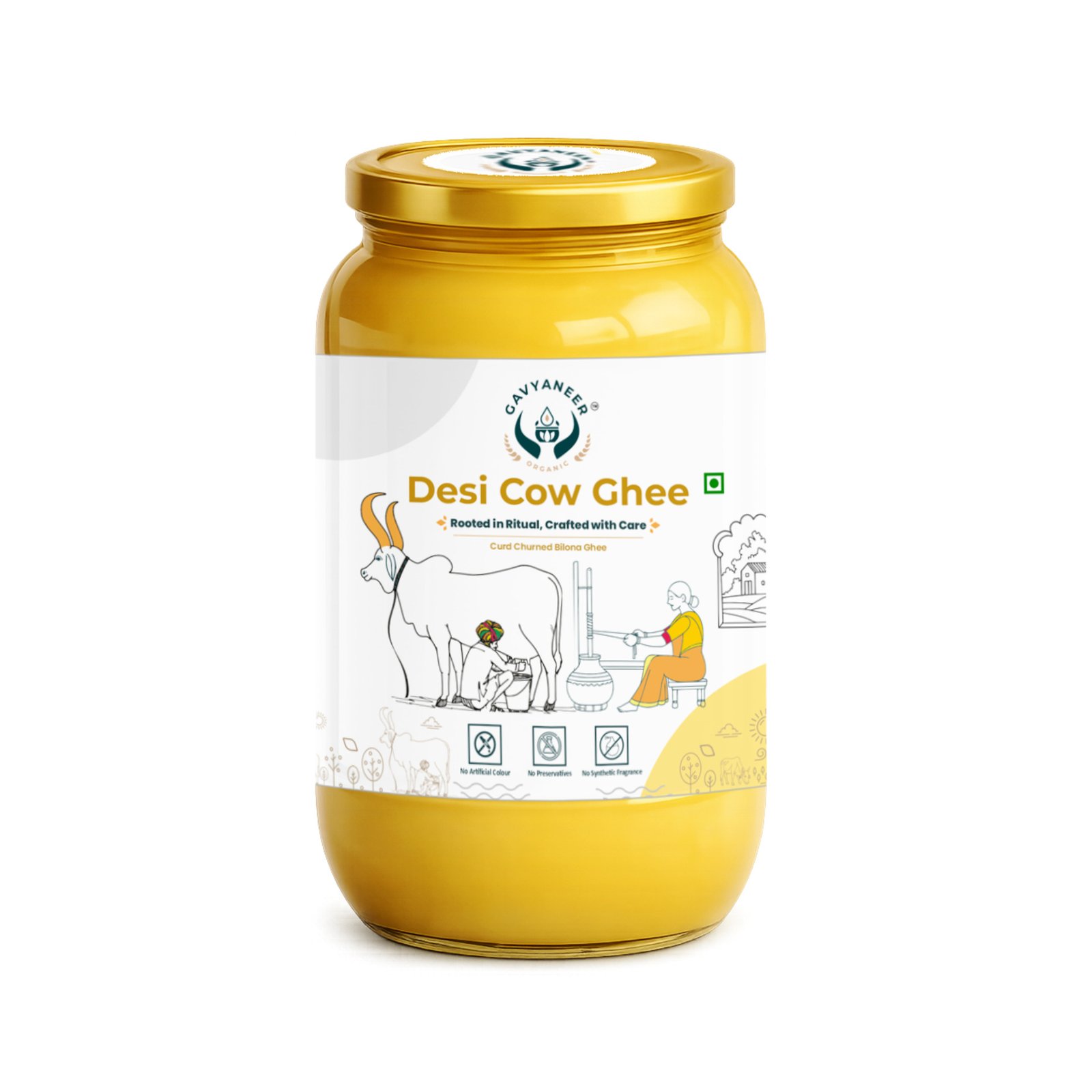


Ghee is a traditional clarified butter widely used in Indian cooking and food preparation. With growing interest in different types of ghee, terms such as A2 Cow Ghee and regular ghee are increasingly common. While both are forms of clarified butter, the main distinction is generally related to the type of milk used to make the butter from which the ghee is prepared.
Understanding the difference between A2 Cow Ghee and regular ghee can help consumers make a more informed choice based on sourcing, production methods, taste, aroma, texture, and product labelling.
What Is A2 Cow Ghee?
A2 Cow Ghee is ghee made from milk identified as containing the A2 type of beta-casein protein. The A1 and A2 terms refer to variants of beta-casein found in cow’s milk. When ghee is made from milk marketed as A2 milk, the resulting product is commonly referred to as A2 Cow Ghee.
It is important to understand that A2 refers specifically to the type of beta-casein protein associated with the milk source. It does not, by itself, describe the complete quality, purity, preparation method, or nutritional profile of the finished ghee.
What Is Regular Ghee?
Regular ghee is clarified butter made by heating butter or milk fat until the water and milk solids are separated from the fat. The term “regular ghee” is broad and may refer to ghee made from different milk sources or production methods.
Therefore, regular ghee is not necessarily a specific type of ghee. Its characteristics can vary depending on the milk source, processing method, ingredients, and manufacturing practices used.
A2 Cow Ghee vs Regular Ghee: Key Differences
The most important difference between A2 Cow Ghee and regular ghee is the milk source and how that source is identified.
1. Milk Source
A2 Cow Ghee is produced from milk identified as containing the A2 beta-casein variant. Regular ghee can be produced from milk without a specific A2 designation and may come from different sources.
For consumers, checking the product label and sourcing information is important rather than assuming that every cow ghee is A2 Cow Ghee.
2. Protein Type in the Original Milk
A2 Cow Ghee is associated with milk containing the A2 form of beta-casein. Regular ghee does not necessarily have an A2-specific designation.
However, the clarification process used to make ghee removes most of the water and milk solids. Therefore, the A2 terminology primarily describes the milk source used before clarification, rather than suggesting that finished ghee is a significant source of milk protein.
3. Preparation Method
Both A2 Cow Ghee and regular ghee can be prepared through traditional or modern methods. The preparation method can influence the flavour, aroma, colour, and texture of the finished product.
A product labelled A2 does not automatically indicate a particular traditional preparation method. Consumers should check the product description for information about how the ghee is made.
4. Taste and Aroma
The taste and aroma of ghee can vary considerably depending on the milk source, preparation method, freshness, and storage conditions.
A2 Cow Ghee may have the familiar rich aroma and flavour associated with cow ghee, but the exact sensory characteristics depend on how the product is prepared. Regular ghee can also have a rich, buttery aroma and flavour.
5. Colour and Texture
Ghee may range from pale yellow to deeper golden shades, depending on factors such as milk source and preparation. Its texture can also vary from smooth and liquid to semi-solid or grainy depending on temperature and processing.
Colour or texture alone should not be used to determine whether a ghee is A2.
Is A2 Cow Ghee the Same as Desi Cow Ghee?
Not necessarily. A2 Cow Ghee refers to the A2 beta-casein classification associated with the milk source, while “desi cow ghee” generally refers to ghee made from milk of indigenous or native cattle breeds.
These terms describe different aspects of the product. Therefore, A2 Cow Ghee and desi cow ghee should not automatically be treated as identical.
Is A2 Cow Ghee the Same as Gir Cow Ghee?
No. Gir Cow Ghee refers to ghee associated with milk from Gir cows, while A2 refers to the beta-casein type identified in milk.
Gir cows are generally associated with A2-type milk, but the terms Gir Cow Ghee and A2 Cow Ghee describe different characteristics. A product can be marketed based on its breed source, A2 classification, or both, depending on its sourcing and labelling.
How to Choose Good-Quality A2 Cow Ghee?
When buying A2 Cow Ghee, consider more than the A2 label. Check the following:
- Milk source and sourcing information
- Product ingredients
- Manufacturing or preparation method
- Packaging and sealing
- Manufacturing and expiry dates
- Storage instructions
- Product certifications or quality information where applicable
- Seller or manufacturer’s details
A clear product label can help you understand exactly what you are purchasing.
How Should A2 Cow Ghee Be Stored?
Ghee should generally be stored according to the manufacturer’s instructions. Keep the container properly closed and use a clean, dry spoon when taking out the product. Exposure to moisture, heat, air, or contaminants can affect the quality and freshness of ghee over time.
Always follow the storage instructions provided on the product packaging.
Can A2 Cow Ghee Be Used for Cooking?
Yes. Ghee is commonly used in a variety of Indian cooking applications, including sautéing, frying, baking, and preparing traditional dishes. A2 Cow Ghee can be used according to the product’s intended culinary applications and the manufacturer’s instructions.
The choice between A2 Cow Ghee and regular ghee can depend on personal preference, sourcing considerations, taste, and the type of product you want to include in your kitchen.
Frequently Asked Questions About A2 Cow Ghee
Is A2 Cow Ghee different from ordinary cow ghee?
The primary distinction is the A2 classification of the beta-casein in the milk used as the source. Ordinary or regular cow ghee may not carry a specific A2 designation.
Does A2 mean the ghee is automatically higher quality?
No. The A2 designation describes a characteristic of the milk source. Overall ghee quality depends on factors such as ingredients, sourcing, preparation, freshness, handling, packaging, and storage.
What is the difference between A1 and A2 milk?
A1 and A2 refer to different variants of the beta-casein protein found in milk. A2 milk is identified by the presence of the A2 beta-casein variant.
Is A2 Cow Ghee the same as Gir Cow Ghee?
No. A2 refers to a milk protein classification, while Gir Cow Ghee refers to ghee associated with Gir cows. They are related concepts but are not interchangeable terms.
How can I identify genuine A2 Cow Ghee?
Check the product label, sourcing information, manufacturer details, ingredients, and any available certification or quality documentation. Avoid relying only on colour, aroma, or texture to determine whether a product is A2.
Why is A2 Cow Ghee sometimes more expensive?
The price can vary depending on factors such as milk sourcing, cattle breed, production method, processing, packaging, quality controls, and supply. A2 labelling alone does not determine the price.
Conclusion
The difference between A2 Cow Ghee and regular ghee primarily relates to the milk source and the A2 beta-casein classification associated with that milk. Both are forms of clarified butter, but their sourcing, preparation, taste, aroma, texture, and labelling can vary between products.
If you are comparing different types of ghee, focus on the complete product information rather than the name alone. Understanding the milk source, preparation method, ingredients, storage requirements, and manufacturer information can help you choose a ghee that matches your preferences and requirements.
To explore different ghee options and learn more about their product details, visit A2 Cow Ghee.