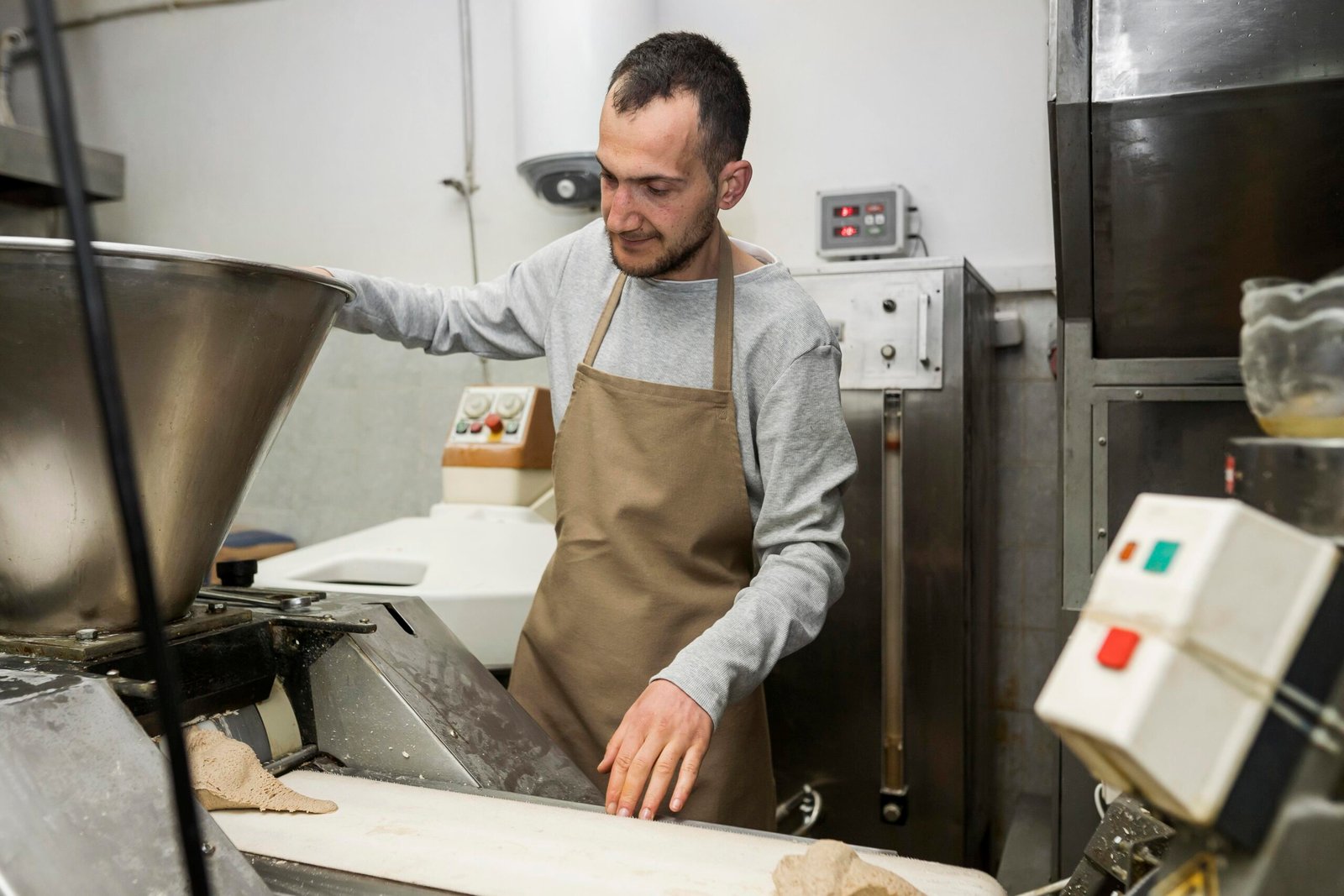


Dough mixing is a fundamental part of commercial baking, but getting it right consistently can be more challenging than it first appears. A batch that looks perfectly prepared one day may turn out sticky, dense or difficult to handle the next.
These differences can affect everything from product appearance and texture to production schedules and ingredient waste. In a busy commercial bakery, even small preparation mistakes can become costly when repeated across multiple batches.
Understanding common dough mixing problems is the first step towards improving consistency and maintaining an efficient production process.
Here are seven mistakes commercial bakeries should watch out for.
1. Using Incorrect Ingredient Measurements
One of the most common causes of inconsistent dough is inaccurate ingredient measurement.
Adding too much water can make dough sticky and difficult to work with, while insufficient water may result in a stiff mixture that does not develop properly. Incorrect flour or yeast quantities can also change the final texture and fermentation behaviour.
In commercial settings, relying on scoops or estimates instead of weighing ingredients can introduce unnecessary variation.
A better approach is to use standardised recipes, calibrated weighing equipment and clearly documented preparation procedures. This allows staff to follow the same ingredient ratios regardless of who is operating the mixing equipment.
2. Mixing for Too Long or Not Long Enough
Mixing time has a direct impact on dough development. If the dough is under-mixed, the ingredients may not be evenly incorporated and the gluten structure may remain weak.
On the other hand, over-mixing can cause excessive dough development, increase friction-related heat and negatively affect the dough’s handling characteristics.
The correct mixing time depends on several factors, including the flour type, hydration level, batch size and mixing equipment.
Rather than applying one fixed mixing time to every recipe, bakery operators should establish suitable mixing procedures for individual products. Observing the dough’s texture and elasticity can help determine when it has reached the desired stage.
3. Ignoring Dough Temperature
Temperature is another important factor that is sometimes overlooked during mixing.
As mixing continues, friction between the dough and equipment generates heat. If the temperature rises too much, fermentation may begin faster than expected, making it harder to manage the production schedule.
Excessively warm dough can also become more difficult to handle, depending on its composition and intended use.
Bakeries can manage this by monitoring dough temperature, adjusting water temperature and following suitable mixing schedules. Regular checks are particularly useful when producing large batches or working in warmer environments.
4. Using the Wrong Mixing Equipment
Not all doughs have the same consistency or mixing requirements. A method that works well for a soft bread dough may not be suitable for a heavier or denser mixture.
Using equipment that is not suited to the recipe or batch size can lead to uneven mixing, excessive strain on machinery and inconsistent results.
Choosing an appropriate Machine For Dough helps bakeries match their mixing requirements with the right equipment. Factors such as bowl capacity, mixing action, speed settings and production volume should all be considered.
The aim is not simply to purchase a larger machine but to select equipment that supports the bakery’s actual production needs.
5. Adding Ingredients in the Wrong Order
The order in which ingredients are introduced can influence how evenly they are incorporated.
For example, adding dry ingredients without allowing sufficient initial mixing can create pockets of flour or uneven distribution. Certain recipes may also require specific handling of yeast, salt, fats or other additions.
There is no single ingredient order that suits every dough recipe. However, following a consistent preparation sequence helps minimise variation.
Bakery teams should document the correct ingredient order for each product and ensure staff understand why those steps matter.
6. Overlooking Equipment Maintenance
Even well-designed mixing equipment cannot deliver consistent results if it is poorly maintained.
Worn components, damaged mixing attachments or loose fittings can affect mixing performance. Accumulated dough residue may also create hygiene concerns and interfere with normal equipment operation.
Routine cleaning and maintenance help prevent these problems. Operators should inspect equipment regularly, follow manufacturer recommendations and report unusual noises, vibration or changes in performance.
Preventative maintenance can also reduce unexpected downtime, which is particularly important for bakeries working to tight production schedules.
7. Failing to Standardise Mixing Procedures
A commercial bakery may have several operators working across different shifts. If each person follows a slightly different approach, the finished dough can vary even when the same ingredients are used.
One operator might mix for longer, another might use a different speed setting, while someone else may adjust hydration without documenting the change.
Standard operating procedures help reduce these inconsistencies.
A useful mixing procedure should include ingredient quantities, mixing sequence, speed settings, approximate mixing duration, target dough temperature and visual checks for the finished dough.
Staff training and regular recipe reviews can help ensure these procedures are followed consistently.
Improving Dough Mixing for Better Production Results
Consistent dough mixing depends on the right combination of ingredients, equipment, preparation methods and operator knowledge.
Commercial bakeries can improve results by measuring ingredients accurately, monitoring temperature, choosing suitable mixing equipment and maintaining clear production procedures.
It is also worth reviewing recurring problems rather than treating every poor batch as an isolated incident. If dough regularly becomes too sticky or develops unevenly, examining the mixing process may reveal an underlying issue.
With a more structured approach, bakeries can reduce avoidable waste, improve product consistency and keep production running smoothly.