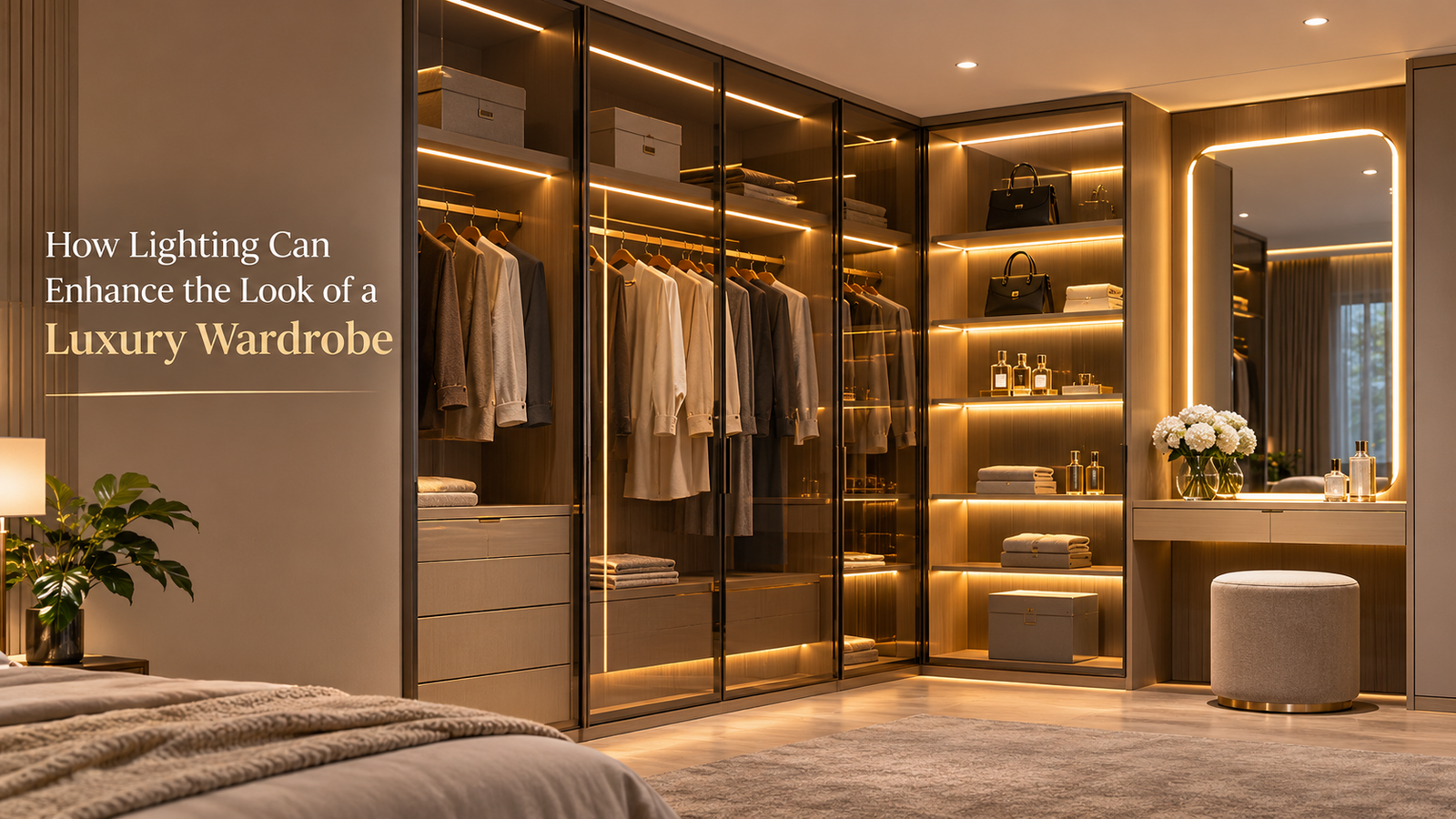


A well-designed wardrobe does more than provide storage for clothes, accessories and everyday essentials. It also contributes to the overall appearance, comfort and functionality of a bedroom. While materials, finishes, handles and layouts receive considerable attention during wardrobe planning, lighting is another important element that can significantly influence the final result. The right lighting can make a wardrobe look more elegant, improve visibility and create a premium dressing experience.
A thoughtfully planned luxury wardrobe design combines attractive aesthetics with practical storage solutions. Lighting plays an important role in achieving this balance. From illuminated shelves and sensor-based lights to LED strips and integrated dressing mirrors, different lighting options can make a wardrobe more convenient and visually appealing.
Whether you are planning a walk-in wardrobe, a built-in wardrobe or a contemporary sliding wardrobe, understanding how lighting works can help you make better design decisions. This guide explains different wardrobe lighting ideas, their benefits, placement options, costs and common mistakes to avoid when creating a sophisticated bedroom interior.
Why Is Lighting Important in a Luxury Wardrobe Design?
Lighting is not simply an additional decorative feature. It directly affects how comfortably you can use your wardrobe. Poor lighting can make it difficult to identify clothing colours, find accessories or organise smaller storage sections. On the other hand, well-planned illumination makes everyday activities easier while enhancing the overall design.
Here are some important reasons to include lighting in your wardrobe planning.
1. Improves Visibility Inside the Wardrobe
Deep shelves, corner sections and closed cabinets can become difficult to access when there is insufficient light. Integrated LED lighting helps illuminate these areas, allowing you to locate clothes, footwear and accessories without constantly moving items around.
For example, vertical LED strips installed along the inner sides of a wardrobe can distribute light across hanging sections and shelves. This is particularly useful for large wardrobes with multiple compartments.
2. Creates a Premium Appearance
Lighting can highlight the materials, textures and finishes used in wardrobe interiors. A soft glow around glass shutters, illuminated display shelves or warm lighting beneath overhead cabinets can create a refined visual effect.
In a luxury wardrobe design, lighting should complement the overall interior theme rather than appear as a separate decorative element.
3. Makes Daily Dressing More Convenient
A wardrobe should support your daily routine. Integrated lighting helps you select outfits, match accessories and organise clothing more efficiently.
When combined with a well-positioned dressing mirror, appropriate lighting can also make it easier to check your appearance before leaving the room.
4. Highlights Interior Design Details
Premium wardrobe interiors often feature textured panels, glass shutters, wooden finishes, metallic handles and decorative shelving. Carefully positioned lights can draw attention to these elements without making the space look excessively bright.
7 Lighting Ideas That Can Transform a Luxury Wardrobe
Different lighting techniques serve different purposes. The ideal combination depends on the wardrobe’s size, layout, materials and intended use.
Here are seven practical lighting ideas worth considering.
1. Integrated LED Strip Lighting
LED strip lighting is one of the most versatile options for modern wardrobe interiors. These slim lights can be installed along shelves, cabinet edges, hanging sections and wardrobe panels.
They provide consistent illumination while keeping the lighting fixtures relatively discreet.
Where to install LED strips:
-
Along the vertical sides of wardrobe compartments.
-
Under shelves to illuminate lower storage sections.
-
Inside open display cabinets.
-
Around selected wardrobe panels.
-
Beneath overhead storage units.
Why consider this option?
LED strips are available in different colour temperatures and brightness levels. Warm white lighting creates a comfortable, inviting appearance, while neutral white lighting is useful for everyday dressing and identifying clothing colours.
For a balanced luxury wardrobe design, choose LED strips with diffused covers to minimise visible light dots and harsh glare.
2. Sensor-Based Wardrobe Lighting
Sensor-based lighting adds convenience to wardrobes, particularly those with multiple closed compartments.
These systems automatically switch on when the wardrobe door opens or when movement is detected, depending on the sensor type. The lights turn off after the door closes or when the detection period ends.
Key benefits include:
-
Hands-free operation.
-
Better visibility inside closed cabinets.
-
Reduced need for manual switches.
-
Convenient access during early mornings and evenings.
-
Suitable for wardrobes used frequently throughout the day.
Door-activated sensors are especially useful for wardrobes with hinged shutters. Motion sensors can also work well in walk-in wardrobe areas.
Before purchasing, check sensor compatibility, placement requirements, power supply and replacement options.
3. Backlit Wardrobe Shelves
Backlit shelves are an attractive option for homeowners who want their wardrobe to have a boutique-inspired appearance.
Lighting installed behind or beneath selected shelves creates a soft glow that highlights displayed accessories, handbags, watches and decorative objects.
This lighting technique works particularly well with glass shelves, open compartments and textured wardrobe back panels.
Practical applications include:
-
Displaying premium handbags.
-
Organising watches and jewellery.
-
Highlighting decorative storage boxes.
-
Creating an attractive accessories section.
-
Adding visual depth to open wardrobe compartments.
However, avoid illuminating every shelf unnecessarily. Selective backlighting generally creates a more balanced appearance and prevents the wardrobe from looking overly decorative.
4. Lighting Around Dressing Mirrors
A dressing mirror is an important feature in many premium wardrobe layouts. Adding suitable lighting around it improves visibility and creates a functional dressing area.
You can choose from several options:
-
Vertical LED lights on both sides of the mirror.
-
Backlit mirrors with integrated illumination.
-
LED strips around the mirror frame.
-
Recessed ceiling lights positioned near the dressing area.
For accurate outfit selection and colour assessment, choose lighting with a high Colour Rendering Index (CRI). A CRI of 90 or above is a useful target for dressing areas because it helps colours appear closer to their natural appearance.
Avoid placing a single strong light directly above the mirror, as it can create unwanted shadows on the face.
5. Recessed Spotlights for Walk-In Wardrobes
Walk-in wardrobes often require a combination of general and task lighting. Recessed ceiling spotlights are useful for illuminating the overall dressing area without occupying visible wall or storage space.
They can be positioned to provide light over:
-
Hanging clothes.
-
Central dressing areas.
-
Shoe storage sections.
-
Accessory cabinets.
-
Dressing mirrors and seating areas.
When planning recessed lighting, consider the wardrobe layout before finalising ceiling positions. Spotlights should illuminate the storage areas rather than create unnecessary shadows behind the person using the wardrobe.
For larger walk-in wardrobes, combine recessed lights with shelf lighting to create more even illumination.
6. Glass Wardrobe Shutters with Internal Lighting
Glass shutters can give a wardrobe a sophisticated and contemporary appearance. When combined with internal lighting, they create an elegant display effect while allowing selected wardrobe sections to remain visually accessible.
Depending on the design, you can consider:
-
Clear glass shutters.
-
Frosted glass panels.
-
Smoked or tinted glass.
-
Textured glass finishes.
-
Aluminium-framed glass doors.
Internal lighting works particularly well with glass-fronted accessory cabinets and display sections.
However, transparent glass requires better organisation because the contents remain visible. If you prefer a cleaner appearance, frosted or tinted glass can provide a more subtle visual effect.
7. Warm Ambient Lighting for a Relaxing Bedroom
Ambient lighting helps connect the wardrobe with the rest of the bedroom interior.
Instead of focusing only on the wardrobe’s internal compartments, consider how ceiling lights, wall lights and concealed lighting work together to create a consistent atmosphere.
Warm white lighting is often suitable for bedrooms because it creates a comfortable and relaxing environment.
You can incorporate ambient lighting through:
-
Concealed ceiling LED strips.
-
Cove lighting near the wardrobe wall.
-
Wall-mounted decorative lights.
-
Soft lighting above wardrobe units.
-
Indirect illumination around dressing areas.
For a cohesive luxury wardrobe design, coordinate the colour temperature of wardrobe lighting with the surrounding bedroom lights.
How to Choose the Right Lighting for Different Wardrobe Designs
Not every wardrobe requires the same lighting arrangement. A compact wardrobe has different requirements compared with a large walk-in wardrobe.
The following comparison can help you select suitable lighting.
| Wardrobe Type | Recommended Lighting | Main Benefit |
|---|---|---|
| Sliding Wardrobe | Internal LED strips and sensor lights | Improves visibility without affecting door movement |
| Hinged Wardrobe | Door-activated LED lighting | Illuminates compartments when opened |
| Walk-In Wardrobe | Recessed spotlights and shelf lighting | Provides wider and more balanced illumination |
| Glass Wardrobe | Internal accent lighting | Highlights display sections and finishes |
| Modular Wardrobe | Integrated LED strips | Provides compartment-specific illumination |
| Floor-to-Ceiling Wardrobe | Vertical LED strips | Illuminates taller storage sections |
When selecting lighting, consider how frequently you use each compartment. Frequently accessed sections should receive functional lighting, while decorative lighting can be reserved for display areas.
Choosing the Right Colour Temperature for Wardrobe Lighting
Colour temperature influences how a wardrobe looks and how accurately you see clothing colours. It is measured in Kelvin (K).
Choosing the wrong colour temperature can affect the overall bedroom atmosphere and make clothing colours appear different under artificial light.
Here is a simple comparison:
| Colour Temperature | Appearance | Suitable Application |
|---|---|---|
| 2700K–3000K | Warm and soft | Bedroom ambience and decorative shelves |
| 3500K–4000K | Neutral white | General wardrobe interiors and dressing areas |
| 5000K–6500K | Cool daylight | Specific task areas where brighter illumination is preferred |
Which colour temperature should you choose?
For most bedroom wardrobes, 3000K–4000K is a practical starting point.
-
Choose 3000K for a warm, luxurious atmosphere.
-
Choose 3500K–4000K for balanced visibility and everyday dressing.
-
Consider higher colour temperatures only where a brighter, cooler appearance is specifically required.
For wardrobes where colour matching is important, pay attention to CRI as well as colour temperature.
Important Features to Consider Before Installing Wardrobe Lighting
A visually attractive lighting arrangement should also be reliable, safe and easy to maintain.
Before finalising your luxury wardrobe design, evaluate the following features.
1. LED Quality and Energy Efficiency
Choose quality LED fixtures from reliable manufacturers. Check their rated lifespan, energy consumption, warranty and replacement availability.
Although LED lighting is generally energy-efficient, the actual performance depends on the product specifications and installation quality.
2. Dimming Functionality
Dimmable wardrobe lighting allows you to adjust brightness according to the activity.
For example, brighter illumination can be useful when selecting clothes, while softer lighting can create a more subtle appearance when displaying accessories.
Ensure that the LED driver, dimmer and light fixtures are compatible.
3. Concealed Wiring
Visible wires can affect the clean appearance of premium wardrobe interiors.
Plan the wiring routes during the wardrobe design stage. Concealed wiring also helps reduce accidental contact with cables and keeps the storage area organised.
4. Heat Management
LED fixtures generate less heat than many traditional lighting options, but heat management still matters.
Select fixtures suitable for enclosed cabinet applications and follow the manufacturer’s installation guidelines. Avoid placing unsuitable lighting close to delicate fabrics or materials.
5. Easy Maintenance
Lighting should be convenient to maintain over time.
Before installation, check whether LED strips, sensors, drivers and connectors can be accessed without dismantling the wardrobe.
This becomes especially important for floor-to-ceiling cabinets and built-in wardrobe units.
How Much Does Luxury Wardrobe Lighting Cost?
The cost of wardrobe lighting depends on the type of fixtures, wardrobe dimensions, installation complexity, electrical requirements and product quality.
A basic LED strip installation generally costs less than a customised lighting system with sensors, illuminated glass cabinets and dimmable controls.
Instead of spending equally on every section, prioritise lighting based on functionality.
| Lighting Option | Relative Cost | Best Suited For |
|---|---|---|
| Basic LED Strip | Low | Shelves and cabinet interiors |
| Sensor-Based LED Lights | Medium | Frequently used closed compartments |
| Backlit Shelves | Medium to High | Display sections |
| Illuminated Dressing Mirror | Medium to High | Dressing areas |
| Recessed Spotlights | Medium | Walk-in wardrobes |
| Customised Smart Lighting | High | Premium wardrobe installations |
These are relative cost categories, not fixed market prices. Actual quotations depend on the specifications and installation requirements.
How can you manage your lighting budget?
-
Install functional lighting in frequently used compartments first.
-
Use accent lighting selectively.
-
Choose standardised LED components where possible.
-
Plan wiring before wardrobe installation.
-
Avoid unnecessary smart features if basic sensors meet your requirements.
-
Compare product warranties and maintenance costs before purchasing.
A well-planned lighting arrangement can deliver a premium appearance without requiring expensive fixtures throughout the entire wardrobe.
Common Wardrobe Lighting Mistakes to Avoid
Even an expensive wardrobe can lose its visual appeal if lighting is poorly planned. Here are some common mistakes to avoid.
1. Installing Lights Without Considering Wardrobe Layout
Lighting should be planned according to shelf positions, hanging sections and cabinet dimensions. Installing lights before finalising the internal layout can result in poorly illuminated areas.
2. Choosing Excessively Bright Lights
Very bright lighting can create glare, particularly when installed behind glass shutters or near mirrors.
Choose appropriate brightness levels and consider diffusers to distribute light more evenly.
3. Ignoring Colour Rendering
A wardrobe may look attractive under decorative lighting, but poor colour rendering can make clothes appear different from their actual shades.
For dressing areas, prioritise high-CRI lighting.
4. Using Different Colour Temperatures Everywhere
Mixing warm yellow and cool white lighting without a clear design plan can make the wardrobe look inconsistent.
Maintain a coordinated lighting scheme throughout the bedroom.
5. Forgetting Electrical Planning
Insufficient power outlets, exposed wires and inaccessible drivers can create maintenance problems.
Discuss electrical requirements with your interior designer and electrician before installing the wardrobe.
6. Overusing Decorative Lighting
Adding LED strips to every shelf, panel and cabinet can make the wardrobe look visually crowded.
Use functional lighting where visibility is important and accent lighting where you want to highlight specific design features.
How Magppie Can Complement a Premium Wardrobe Interior
Creating an elegant wardrobe involves more than selecting attractive shutters or adding decorative lights. The complete design should bring together materials, finishes, storage arrangements, lighting and the surrounding bedroom interiors.
For homeowners planning a premium bedroom, Magppie can be considered when exploring design-led interior solutions and contemporary styling ideas.
When planning your wardrobe, pay attention to how different design elements work together:
-
Material selection: Choose finishes that complement the bedroom’s flooring, wall colours and furniture.
-
Lighting integration: Plan concealed LED strips, mirror lighting and illuminated display sections according to the wardrobe layout.
-
Storage functionality: Include dedicated compartments for clothing, footwear, handbags and accessories.
-
Visual consistency: Coordinate handles, glass panels, wardrobe shutters and lighting finishes.
-
Practical maintenance: Select materials and lighting components that are easy to clean, access and maintain.
A successful luxury wardrobe design should reflect your personal style while supporting your everyday storage and dressing requirements.
Rather than treating lighting as the final decorative addition, make it part of the initial design discussion. This allows the electrical layout, storage compartments and lighting fixtures to work together more effectively.
Frequently Asked Questions (FAQs)
1. What is the best lighting for a luxury wardrobe design?
Integrated LED strip lighting is one of the most practical options for luxury wardrobes. It can illuminate shelves, hanging sections and storage compartments. Combining LED strips with sensor lights and mirror lighting creates a functional and visually appealing arrangement.
2. Which LED colour is best for wardrobe lighting?
Warm white (2700K–3000K) creates a comfortable bedroom atmosphere, while neutral white (3500K–4000K) offers balanced visibility for everyday dressing. The right choice depends on the wardrobe’s design and intended use.
3. Are sensor lights useful inside wardrobes?
Yes. Sensor lights automatically illuminate wardrobe compartments when doors open or movement is detected, depending on the sensor system. They are particularly useful for closed cabinets, shoe storage and frequently accessed compartments.
4. How can I make a small wardrobe look luxurious with lighting?
Use vertical LED strips, illuminated shelves and a well-lit dressing mirror. Avoid installing too many decorative fixtures. A simple lighting arrangement with concealed wiring and coordinated finishes can make a compact wardrobe appear more refined.
5. Is warm or cool lighting better for a walk-in wardrobe?
Neutral white lighting around 3500K–4000K is a practical choice for dressing and selecting clothes. Warm lighting around 3000K can be added for decorative sections to create a more relaxed atmosphere.
6. Can LED strip lights be installed in an existing wardrobe?
Yes. Many LED strip systems can be retrofitted into existing wardrobes. However, installation depends on the cabinet material, available power supply, wiring access and mounting surface. Battery-powered or rechargeable sensor lights can also be considered where electrical connections are difficult.
7. What is the ideal CRI for wardrobe lighting?
A CRI of 90 or above is a good target for dressing areas because it helps clothing colours appear more natural. This is particularly useful when coordinating outfits and selecting accessories.
8. Should wardrobe lighting be installed before or after the wardrobe is fitted?
The lighting plan should ideally be prepared before wardrobe installation. This helps determine wiring routes, sensor positions, LED channels and power requirements. Some surface-mounted or battery-operated lights can be added later, but integrated systems are easier to execute when planned in advance.
Conclusion
Lighting can significantly influence the appearance, functionality and overall experience of a premium wardrobe. From integrated LED strips and sensor-based illumination to backlit shelves and dressing mirror lights, the right combination can make everyday storage more convenient while enhancing bedroom interiors.
When planning a luxury wardrobe design, consider lighting alongside materials, storage layouts, finishes and wardrobe dimensions. Prioritise visibility in frequently used compartments, select appropriate colour temperatures and avoid unnecessary decorative fixtures. Most importantly, plan electrical connections and maintenance access before installation.
For homeowners looking to create a sophisticated and functional bedroom, Magppie offers a design-led starting point for exploring premium interior aesthetics. Invest time in planning the right combination of wardrobe finishes, storage features and lighting to create a space that looks elegant and works comfortably every day.