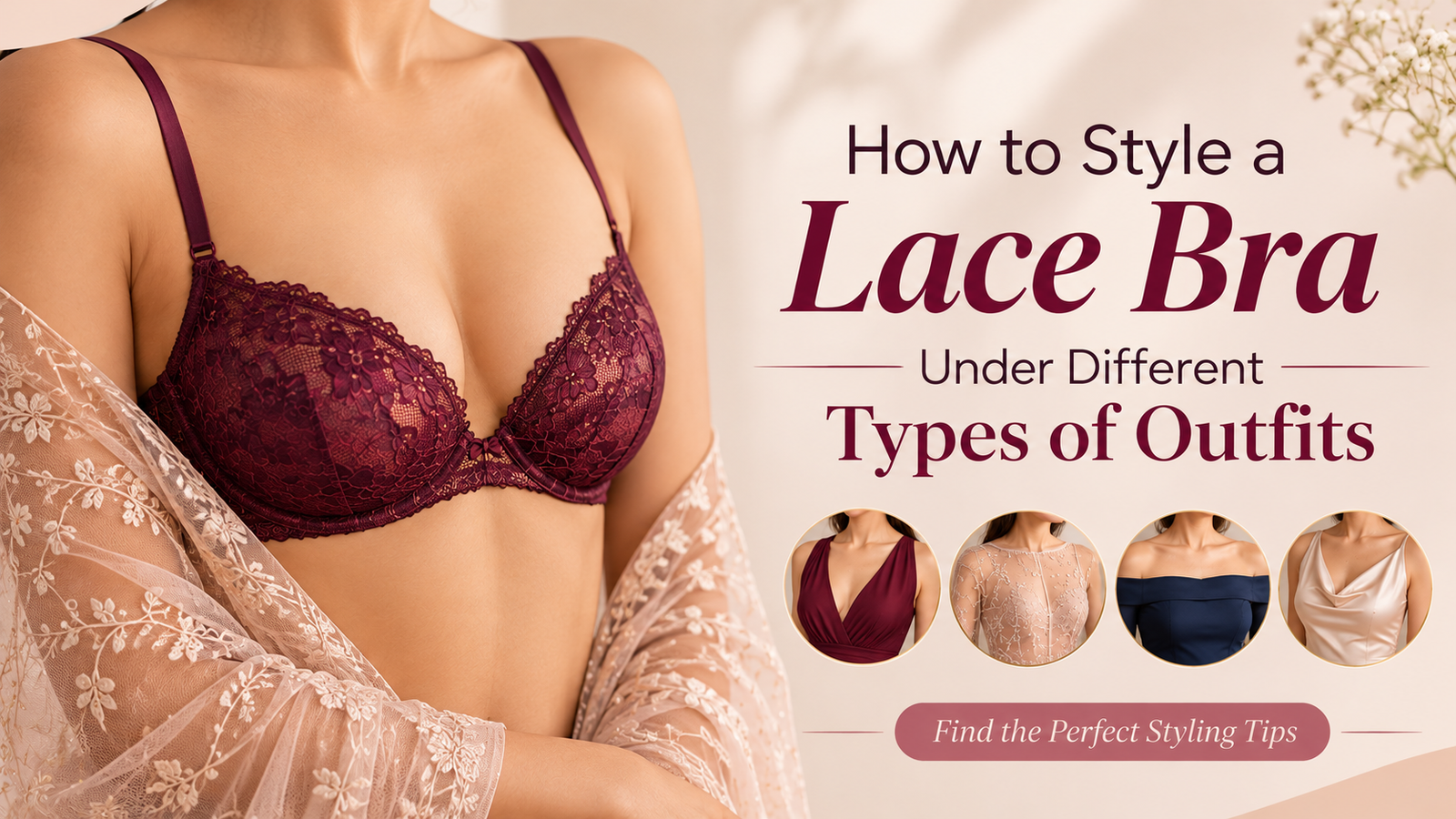


Choosing lingerie for an outfit is not simply about matching colours. Neckline depth, fabric thickness, back coverage, and the placement of seams all influence how the final look comes together. Lace adds texture and decorative detail, but its raised patterns and edges can sometimes show through delicate fabrics or become visible in unexpected places.
The key is to understand which lingerie construction works with each outfit. Whether you are dressing for a wedding, an evening event, or a special occasion, the right combination can help you maintain a polished appearance without compromising comfort.
1. Deep-Neck Blouses and Plunging Necklines
Deep-neck blouses, wrap dresses, and plunging tops require careful attention to the centre and upper edges of your innerwear. A conventional full-coverage design may become visible when the neckline dips below the natural cup line.
Look for a plunge-style construction with a lower centre front. This allows the neckline of the lingerie to follow the shape of the outfit more closely. Avoid decorative lace borders that extend above the garment’s neckline, particularly when wearing deep V-shaped designs.
Before finalising your outfit, check the neckline while sitting and leaning forward. A design that remains hidden when standing may become visible when you move.
2. Sheer and Embroidered Outfits
Sheer saree blouses, mesh dresses, and embroidered tops often feature transparent panels that make innerwear part of the visible styling. In these cases, the colour, pattern, and placement of lace become important.
Choose a shade that complements the embroidery rather than automatically matching the outer fabric. For example, a closely matched tone creates a subtle appearance, while a deliberate contrast can work with fashion-forward outfits.
A lace bra with a coordinated pattern can look intentional beneath sheer sections. However, consider the placement of embroidery on the garment. If the outer fabric already has heavy detailing, simpler innerwear may create a more balanced result.
3. Backless and Low-Back Dresses
Backless gowns and low-back blouses create one of the biggest challenges when selecting lingerie. A regular back band can become visible even when the front fits perfectly.
For these outfits, consider specialised low-back or transparent-back designs, depending on how much of the back is exposed. A conventional lace design with a wide back band may not work simply because its front appearance matches the dress.
Check the exact height of the back neckline before selecting your innerwear. Also consider whether the garment has a completely open back or only a lowered back panel. These require different solutions.
4. Off-Shoulder and One-Shoulder Outfits
Off-shoulder gowns and asymmetrical blouses leave one or both shoulders exposed. Standard shoulder straps can interrupt the neckline and draw attention away from the outfit.
A strapless or convertible design is generally more suitable. Some multiway styles allow straps to be repositioned or removed, making them useful for different neckline constructions.
Pay attention to the support structure rather than relying only on strap removal. The underband should fit securely, and the cups should stay in position when you move your arms. If the outfit is fitted around the bust, test the complete look before wearing it for an extended occasion.
5. Satin, Silk, and Other Smooth Fabrics
Satin and silk reflect light, which can make even minor texture differences noticeable. Raised lace patterns, decorative seams, and thick cup edges may create visible outlines beneath these materials.
If you want to wear a lace bra with a smooth-finish outfit, choose one with flatter lace detailing and seamless or smoothly finished cups. Avoid heavily embroidered designs beneath thin satin because the texture may become visible.
The colour also matters. A shade that blends with your skin tone is often less noticeable beneath light-coloured fabric than bright white innerwear. Test the outfit in natural and indoor lighting to identify any visible lines.
6. Fitted Gowns and Structured Bodices
Bodycon dresses and structured gowns follow the body’s shape closely. Innerwear that shifts, bunches, or creates uneven edges can affect the garment’s overall silhouette.
For these outfits, prioritise a close-fitting design with smooth cup construction and minimal decorative thickness. Lace detailing should ideally remain flat rather than creating raised areas beneath the dress.
Also check the position of the underband and side panels. They should not create visible bulges or press uncomfortably into the skin. If the gown already has built-in cups or boning, check whether additional innerwear is necessary.
7. Coordinate Lace with the Overall Outfit
Lace styling works best when it complements the garment’s design rather than competing with it. Consider the outfit’s neckline, embroidery, colour palette, and level of detailing before selecting your innerwear.
For heavily embellished outfits, understated lace patterns can prevent the overall look from appearing crowded. With minimal or sheer garments, more decorative designs can become an intentional styling element.
A lace bra should also provide the coverage you want. Do not choose a design solely because its pattern looks attractive beneath an outfit if the cups, straps, or back construction are unsuitable.
8. Test the Complete Look Before the Occasion
A fitting check should involve more than looking in the mirror while standing still. Wear the complete outfit with your chosen innerwear and check the neckline, sides, back, and cup edges.
Sit down, raise your arms, bend slightly, and walk around. These movements can reveal exposed straps, shifting cups, visible lace borders, or uncomfortable pressure points.
Pay attention to how the outfit behaves under different lighting conditions, particularly if the fabric is sheer or reflective. Making adjustments before the event is easier than discovering a fitting issue after getting dressed.
Final Thoughts
Styling lace lingerie requires matching its construction to the outfit rather than choosing it based on appearance alone. Plunge designs work with deeper necklines, strapless options suit exposed shoulders, and smooth cup finishes are better suited to satin and fitted fabrics. By considering transparency, back coverage, fabric texture, and fit, you can make lace a thoughtful part of your occasion-wear wardrobe while maintaining comfort and a clean finish.