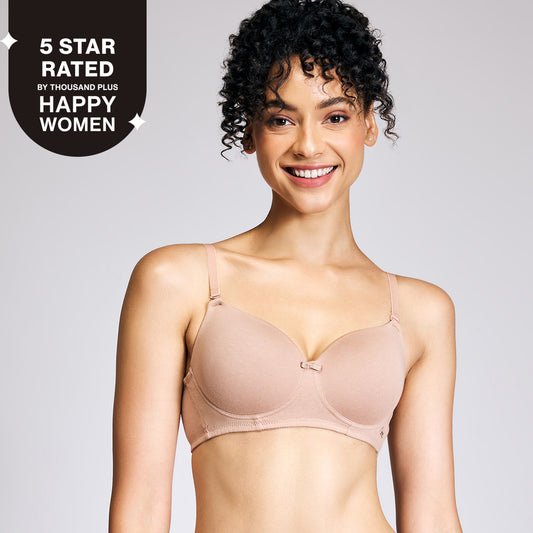


A bra can look perfect when you first put it on, yet become uncomfortable after a few hours. Maybe the cups leave gaps under your T-shirt, the band keeps riding up, or the padding seems to sit awkwardly against your chest. These problems are easy to blame on the design, but sometimes the real issue is the size.
A Padded Bra should provide coverage, maintain its shape, and sit comfortably beneath your clothes. If you constantly adjust it throughout the day, your current size or cup shape may not be right for you. Recognising the signs can help you find a better fit without relying on guesswork.
1. The Cups Have Noticeable Gaps
One of the clearest signs of a poor fit is empty space between your breasts and the cups. You may notice the fabric lifting away from your chest, especially near the top of the bra.
This can happen when the cups are too large, but size is not always the only reason. Moulded cups have a set shape, so a design that does not match your natural breast shape may gape even when the labelled size seems correct.
Try adjusting the straps gently and checking the fit again. If the gaps remain, consider a different cup size or a style with a more suitable shape.
2. Your Breasts Spill Over the Cups
If breast tissue bulges over the top or sides, the cups may not provide enough room. This can make the bra visible beneath fitted tops and cause uncomfortable pressure around the chest.
A Padded Bra should contain your breast tissue without squeezing it into place. The padding should sit smoothly around the breasts rather than forcing them upward or outward.
Try a larger cup size or a different cup design if you notice persistent spillage. Avoid choosing a smaller size simply because you prefer a more compact appearance.
3. The Band Keeps Riding Up
The band provides much of a bra’s stability. If it moves upward at the back, especially when you raise your arms, it may be too loose.
Some people tighten their shoulder straps to compensate, but this rarely fixes the underlying problem. Instead, it can create unnecessary pressure around the shoulders.
A well-fitting band should sit relatively level around your torso and feel secure without digging painfully into the skin. If yours keeps shifting, reassess the band size and overall construction.
4. The Padding Feels Bulky or Uneven
Padding is meant to create coverage and shape, but it should not make your breasts feel crowded inside the cups.
If the padding wrinkles, folds, or creates an uneven outline beneath clothing, the cup shape or size may not suit you. The same issue can occur when the cups are too shallow for your natural breast shape.
When trying a Padded Bra, look at how the cups sit both under clothing and without it. The fabric should lie smoothly without obvious gaps, bulges, or awkward edges.
5. The Underband Feels Too Tight
A band that leaves deep marks, digs into the skin, or makes breathing uncomfortable is a sign that something needs attention. Although a bra should fit securely, it should not feel restrictive during normal activities.
The issue may be a band that is too small, but cup size can also influence how tight the entire bra feels. If the cups are too small, they can pull the bra forward and create additional tension around the torso.
Try a different size combination rather than automatically moving to a larger band. The goal is to achieve a stable fit without excessive pressure.
6. The Straps Keep Slipping or Digging In
Shoulder straps should help keep the cups in position, not carry the entire weight of the bra.
If they repeatedly fall off, check their adjustment first. If the problem continues, the strap placement or bra design may not suit your shoulders.
On the other hand, straps that leave painful marks may be too tight or compensating for a loose band. A properly fitted Padded Bra should remain stable without requiring you to pull the straps excessively tight.
7. The Centre Does Not Sit Comfortably
The centre section between the cups should generally sit close to the chest, depending on the bra’s design and your natural breast shape.
If it floats noticeably away from the body, the cups may be too small, the band may be too loose, or the design may not suit your shape.
If the centre presses painfully against the breastbone, check whether the bra fits correctly and whether the underwire or cup construction is appropriate for you.
Persistent discomfort is not something you need to tolerate just to achieve a particular look.
8. You Keep Adjusting It Throughout the Day
Perhaps the most overlooked sign of an incorrect fit is the need for constant adjustment. You may find yourself pulling down the band, repositioning the cups, or fixing the padding every few hours.
A Padded Bra that fits well should stay reasonably secure during everyday activities, including walking, sitting, and reaching overhead.
Try moving around while checking the fit before buying. Raise your arms, bend forward, and sit down to see whether the bra remains comfortable and in place.
How to Find the Right Size
Start by checking your current measurements rather than assuming your usual size will always fit. Different designs can fit differently, even when the size label is identical.
Check the band, cups, straps, and centre section together. If one area feels wrong, consider whether the issue comes from the size or the shape of the bra itself.
The best fit should provide comfortable coverage, a stable band, and smooth cups without digging, spilling, or gaping. Once these elements work together, your bra is more likely to feel comfortable throughout the day and sit neatly beneath your clothes.
Choosing the right size is not about squeezing your body into a particular shape. It is about finding a bra that works with your natural shape while giving you the coverage and comfort you want.