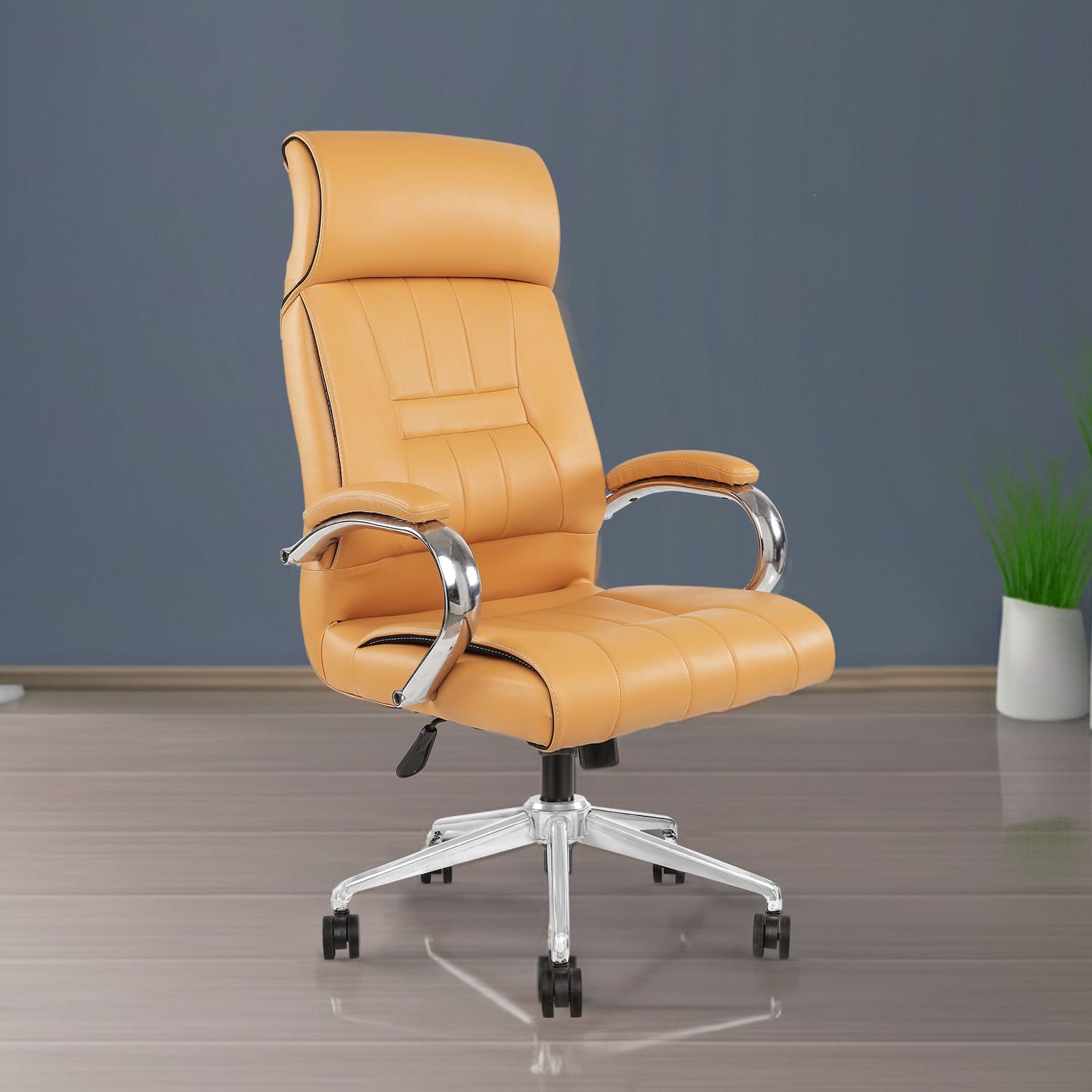


Executive professionals often spend a significant part of their working day attending meetings, reviewing reports, making decisions, and managing teams. Their seating requirements go beyond appearance because a chair must remain comfortable and functional throughout different activities.
A well-designed boss chair combines supportive seating, practical adjustments, durable materials, and a professional appearance. However, not every executive-style chair offers the same level of comfort or functionality.
Understanding the features that matter most can help professionals choose seating that suits their daily responsibilities.
1. Comfortable Seating for Long Working Hours
Executive work often involves extended periods of sitting, making seat comfort an important consideration.
A suitable boss chair should provide adequate cushioning without feeling excessively soft or rigid. Very soft cushions may compress significantly during prolonged use, while overly firm seats may create uncomfortable pressure points.
High-density foam and well-constructed seat padding can help maintain consistent support over time.
Seat dimensions also matter. The chair should provide enough width for comfortable movement while supporting the thighs without pressing against the backs of the knees.
The goal is to maintain comfort during routine desk work without encouraging prolonged sitting in one position.
2. Proper Back Support for Everyday Work
Backrest design plays an important role in executive seating.
Many executive chairs feature high backrests that support a larger portion of the upper body. However, backrest height alone does not guarantee comfort.
A good boss chair should provide suitable support around the lower back while allowing the user to sit naturally against the backrest.
Lumbar support is particularly relevant because the lower spine has a natural inward curve. A poorly shaped backrest may leave this area unsupported.
Some chairs offer adjustable lumbar support, while others incorporate a fixed contour into the backrest.
The most appropriate option depends on how well the chair fits the user’s body.
3. Adjustable Features for Different Working Activities
Executive responsibilities involve different sitting positions throughout the day.
Typing, reading documents, participating in video meetings, and reviewing presentations may require small changes in posture.
A boss chair with useful adjustments can accommodate these activities more effectively.
Important features include:
- Seat-height adjustment to align the user with the desk
- Adjustable armrests to support the forearms
- Reclining mechanisms for changing sitting positions
- Tilt tension controls for managing reclining resistance
- Locking mechanisms to maintain preferred backrest positions
Not every executive needs every adjustment. The priority should be features that improve compatibility with the user’s body and workstation.
4. Material Quality and Daily Maintenance
Executive chairs are available in different upholstery materials, including genuine leather, leatherette, fabric, and mesh.
Each material offers distinct advantages.
Genuine leather provides a traditional executive appearance but generally requires appropriate conditioning and maintenance.
Leatherette offers a similar visual finish and can be easier to wipe clean, although its durability depends on material quality and usage conditions.
Fabric upholstery may provide a softer feel, while mesh can improve airflow in warmer working environments.
When selecting a boss chair, consider room temperature, cleaning requirements, and how frequently the chair will be used.
Material selection should balance appearance with practical maintenance needs.
5. Stability and Strong Construction
Executive seating should feel stable during routine movement, reclining, and position changes.
A chair’s overall construction influences how reliably it performs over time.
Important components include the base, gas-lift mechanism, armrest attachments, wheels, and reclining system.
A suitable boss chair should have a stable base, smooth height adjustment, and securely fitted components.
Buyers should also check the manufacturer’s stated weight capacity rather than assuming that a larger-looking chair automatically supports greater weight.
A strong visual design is not necessarily evidence of superior construction.
6. Professional Appearance Without Sacrificing Functionality
Executive offices often require furniture that creates a professional and coordinated environment.
Chair design can contribute to this appearance through upholstery finishes, backrest proportions, stitching, and overall structure.
However, visual appeal should not outweigh practical considerations.
An oversized chair may look impressive but feel uncomfortable for a shorter user. Similarly, wide armrests may interfere with desk clearance.
A well-chosen boss chair should complement the office while providing appropriate dimensions and adjustments.
Professional appearance and everyday functionality should work together rather than compete.
7. Smooth Mobility and Practical Desk Compatibility
Executives frequently move between computers, documents, storage areas, and meeting spaces.
A swivel mechanism allows users to change direction without repeatedly twisting their upper body.
Smooth-rolling castors can also make movement around the workstation easier.
However, wheel suitability depends on the flooring. Hard surfaces and carpets may require different castor designs.
Before purchasing, check whether the chair fits beneath the desk and provides sufficient clearance for movement.
A boss chair that is too wide or has excessively high armrests may restrict access to the workstation.
Practical dimensions are therefore just as important as overall design.
8. Durability, Warranty, and Long-Term Value
An executive chair is often used repeatedly throughout the working week.
This makes durability an important factor when comparing different options.
Look for clear information about construction materials, adjustment mechanisms, upholstery care, and warranty coverage.
Consider whether replacement components or servicing are available if the chair develops problems.
A higher price does not automatically guarantee better performance.
Instead, evaluate whether the chair’s features, build quality, and maintenance requirements justify its cost.
Long-term value comes from choosing seating that remains comfortable and functional under regular use.
9. Supporting Healthy Daily Sitting Habits
Even a supportive chair cannot eliminate the effects of remaining seated for extended periods.
Executives should adjust their seating position according to their desk height and working activities.
Feet should rest comfortably on the floor or a footrest, shoulders should remain relaxed, and frequently used equipment should be positioned within easy reach.
Regular standing breaks and changes in posture are also important.
The right chair supports comfortable working positions, but daily movement remains essential.
Conclusion
A suitable executive chair should offer more than an attractive appearance. Comfortable cushioning, appropriate back support, useful adjustments, durable construction, and workstation compatibility all contribute to everyday usability.
The ideal boss chair should fit the user’s body, accommodate different professional activities, and remain dependable through regular use.
By prioritizing practical comfort and construction quality alongside executive styling, professionals can select seating that supports a more comfortable and efficient working environment.