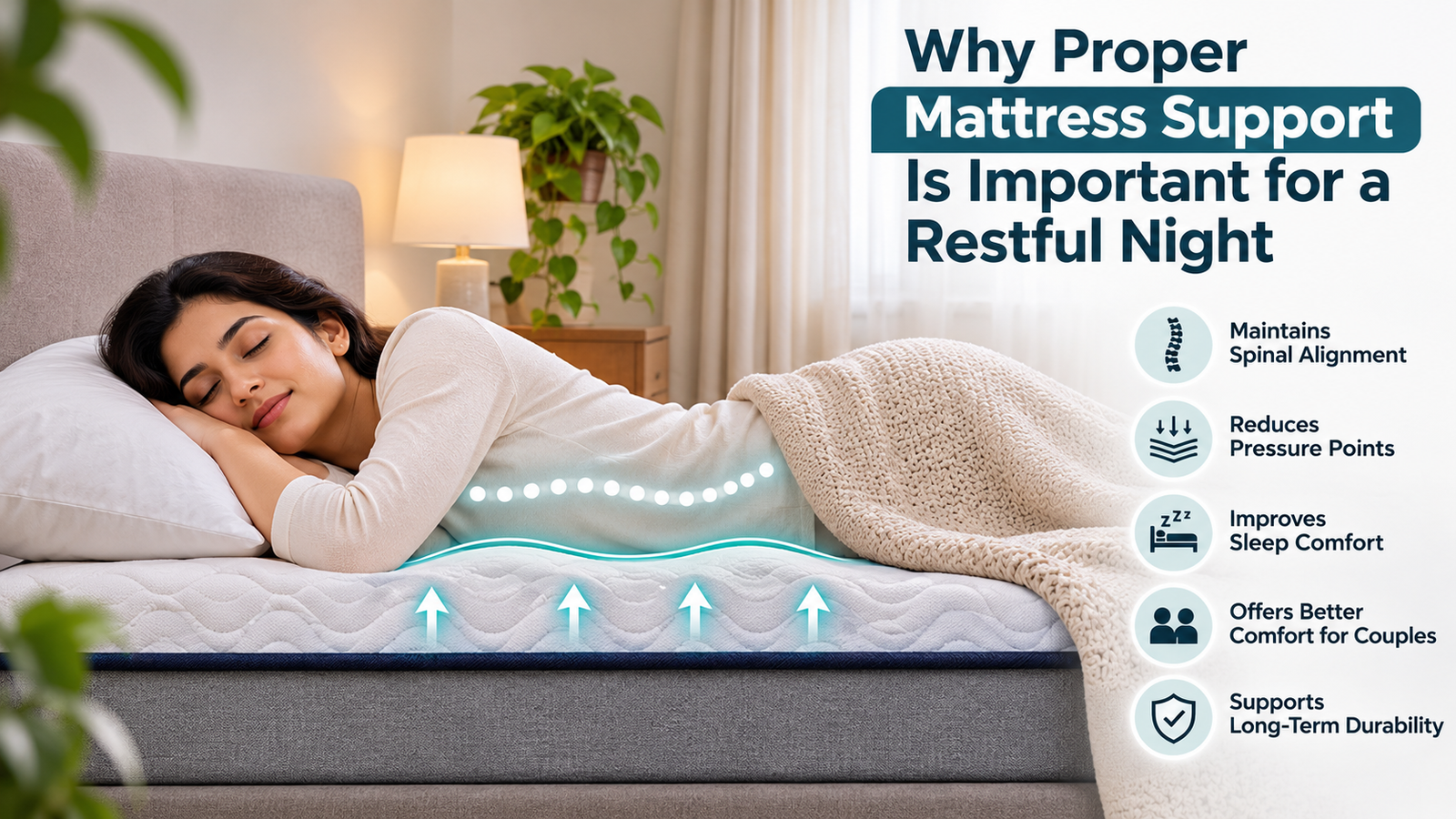


A comfortable sleeping environment involves more than soft pillows, cosy bedsheets and a quiet bedroom. One of the most important factors influencing sleep comfort is the support provided by your mattress. The right mattress helps distribute body weight, maintain a comfortable sleeping posture and reduce unnecessary pressure on different parts of the body. On the other hand, a mattress that lacks proper support may contribute to discomfort, frequent position changes and interrupted sleep.
Whether you sleep on your back, side or stomach, choosing a mattress that supports your body’s natural alignment can make a noticeable difference to your sleeping experience. However, with several options available, including memory foam mattresses, latex mattresses and different firmness levels, selecting the right one can feel confusing.
Understanding how mattress support works and which features matter can help you make a more informed purchase. This guide explains why proper mattress support is essential for restful sleep, what to look for when buying a mattress and how to choose an option that suits your sleeping preferences.
What Is Mattress Support and Why Does It Matter?
Mattress support refers to how effectively a mattress holds your body in a comfortable and balanced position while you sleep. It involves maintaining spinal alignment, distributing body weight and preventing excessive sinking into the sleeping surface.
A supportive mattress should accommodate the natural curves of your body rather than forcing your spine into an uncomfortable position.
For example, when sleeping on your side, your shoulders and hips need enough cushioning to settle comfortably. When sleeping on your back, the mattress should support the lower back without allowing the hips to sink excessively.
Proper mattress support matters because it can help:
- Maintain a more comfortable sleeping posture.
- Distribute body weight more evenly.
- Reduce excessive pressure around the shoulders, hips and lower back.
- Minimise discomfort caused by an unsuitable sleeping surface.
- Support comfortable movement and position changes during sleep.
- Improve overall sleeping comfort.
It is important to understand that support and softness are not the same thing. A mattress can feel soft while still providing adequate support, provided its construction is designed to accommodate your body appropriately.
7 Reasons Why Proper Mattress Support Is Important for Better Sleep
1. Helps Maintain Natural Spinal Alignment
Your spine has natural curves that need appropriate support when you lie down. A mattress that is too soft may allow certain body areas to sink excessively, while an overly firm mattress may not provide enough cushioning around prominent pressure points.
Both situations can make it difficult to maintain a comfortable sleeping posture.
A mattress with balanced support helps keep your spine in a more neutral position throughout the night.
For example:
- Back sleepers generally benefit from support that prevents excessive sinking around the hips.
- Side sleepers need enough cushioning around the shoulders and hips to maintain comfortable alignment.
- Stomach sleepers often prefer a firmer surface that limits excessive sinking around the midsection.
When comparing mattresses, consider how well the surface supports your preferred sleeping position rather than choosing based on firmness alone.
2. Helps Reduce Pressure Around Sensitive Body Areas
Pressure distribution is another important feature of a quality mattress. Different parts of your body apply different amounts of weight to the sleeping surface.
The shoulders, hips, knees and lower back may experience concentrated pressure, particularly when sleeping on your side.
A mattress with suitable cushioning and support helps distribute this pressure more evenly.
Memory foam mattresses are often considered by people who prefer a contouring sleeping surface because the material responds to body weight and shape. Latex mattresses offer a different experience, generally providing a more responsive surface with cushioning and bounce.
When selecting a mattress, consider:
- How much cushioning your shoulders and hips need.
- Whether you prefer a contouring or responsive surface.
- Whether the mattress feels comfortable when lying in your usual sleeping position.
- Whether you experience uncomfortable pressure after remaining in one position.
The objective is to find a mattress that balances cushioning with underlying support.
3. Supports Comfortable Sleep for Different Sleeping Positions
Your sleeping position plays a major role in determining the type of mattress that may suit you.
A mattress that works well for one person may not feel equally comfortable to someone with different sleeping habits.
For back sleepers
Back sleepers generally need a mattress that supports the natural curve of the lower back while keeping the hips comfortably positioned. Medium to medium-firm options may suit many back sleepers, depending on body weight and personal preference.
For side sleepers
Side sleepers place more pressure on their shoulders and hips. A mattress with adequate pressure relief and cushioning can help accommodate these areas without allowing the body to sink excessively.
For stomach sleepers
Stomach sleepers often benefit from a firmer mattress that limits excessive sinking around the abdomen and hips. This can help maintain a more comfortable sleeping posture.
For combination sleepers
People who change sleeping positions frequently may prefer a responsive mattress that makes turning and repositioning easier.
Before buying a mattress, identify your most common sleeping position. This simple step can help narrow down the available choices.
4. Helps Minimise Discomfort Caused by an Unsuitable Sleeping Surface
Waking up with stiffness or discomfort can have several possible causes, including sleeping posture, daily physical activity and an unsuitable mattress.
An old, sagging or poorly supportive mattress may create an uneven sleeping surface. Over time, its comfort layers or support structure may lose their original performance.
Some common warning signs include:
- Visible dips or sagging in the mattress.
- Uneven areas across the sleeping surface.
- Feeling as though you are sinking too deeply.
- Frequently changing positions to find a comfortable spot.
- Waking up feeling less comfortable than when you went to bed.
Replacing an unsuitable mattress with one that better matches your body and sleeping preferences may improve sleeping comfort.
However, persistent back pain or other physical discomfort should not automatically be attributed to your mattress. Consult a qualified healthcare professional when symptoms continue.
5. Improves Comfort for Couples Sharing a Bed
Choosing a mattress for two people involves more than selecting the correct size. Both sleepers should feel adequately supported, even if they have different body weights and sleeping preferences.
One important feature to consider is motion isolation.
Motion isolation refers to how effectively a mattress limits the transfer of movement from one side of the bed to the other.
For example, if one person frequently changes sleeping positions, a mattress with good motion isolation may help reduce disturbances for the other person.
Couples should also consider:
- Mattress size and available sleeping space.
- Individual firmness preferences.
- Body weight differences.
- Edge support when sitting or sleeping near the sides.
- Temperature comfort and mattress breathability.
A queen or king size mattress may provide more personal sleeping space, depending on the bedroom dimensions and individual requirements.
6. Helps Maintain Consistent Sleeping Comfort
A mattress is a long-term household investment, so its ability to maintain comfort over time is an important buying consideration.
Mattress durability depends on several factors, including material quality, construction, density, usage and maintenance.
For instance, a mattress with a well-designed support core may provide more consistent support than one that develops noticeable indentations after regular use.
When comparing different mattress options, pay attention to:
- Core construction and material quality.
- Foam density, where applicable.
- Layer thickness and composition.
- Weight capacity and manufacturer recommendations.
- Warranty coverage.
- Care and maintenance instructions.
Do not judge mattress durability based only on its initial softness or thickness. The quality of its internal construction is equally important.
7. Makes Everyday Rest More Comfortable
A mattress influences how comfortable your bed feels every night. Whether you are sleeping after a long working day, taking a short afternoon nap or spending extra time resting on weekends, the sleeping surface should accommodate your body comfortably.
The right combination of support, cushioning and responsiveness can make it easier to settle into a comfortable sleeping position.
For people who spend several hours in bed, choosing a mattress based on their everyday requirements is particularly important.
Instead of focusing only on premium features, prioritise the qualities that directly affect your comfort.
Types of Mattresses and Their Support Features
Different mattress materials provide different levels of cushioning, responsiveness and support. Understanding these differences can help you select a mattress that matches your preferences.
Memory Foam Mattress
Memory foam mattresses are designed to respond to body weight and shape. They gradually contour around the body, creating a cushioning effect.
Key features:
- Contouring comfort.
- Pressure distribution.
- Reduced motion transfer in many designs.
- Available in different firmness levels.
Suitable for: People who prefer a body-contouring sleeping surface, including many side sleepers and couples looking for motion isolation.
When buying a memory foam mattress, check the foam density, comfort-layer construction and ventilation features.
Latex Mattress
Latex mattresses generally offer a more responsive feel compared with traditional memory foam. They provide cushioning while allowing the sleeper to move more easily across the surface.
Key features:
- Responsive cushioning.
- Natural bounce.
- Available in different firmness options.
- Some latex constructions offer good airflow.
Suitable for: People who prefer a supportive surface with more responsiveness and less of a sinking sensation.
Before purchasing, check whether the mattress uses natural, synthetic or blended latex, as construction can vary.
Hybrid Mattress
A hybrid mattress combines different materials, commonly foam comfort layers with a spring-based support system.
This construction aims to provide a balance of cushioning, responsiveness and support.
Key features:
- Combination of foam and spring support.
- Different comfort and firmness options.
- Potentially better airflow through suitable spring constructions.
- Responsive sleeping surface.
Suitable for: People who want a combination of cushioning and the familiar feel of a spring-based mattress.
Spring Mattress
Spring mattresses use interconnected or individually arranged springs to support the sleeping surface. Their feel and motion transfer characteristics depend on the spring design and comfort layers.
Key features:
- Responsive support.
- Traditional spring-based feel.
- Different spring configurations.
- Available in multiple firmness options.
Suitable for: People who prefer a more traditional mattress feel and a responsive sleeping surface.
How to Choose the Right Mattress for Proper Support
Finding a suitable mattress requires evaluating more than its material or price. The following factors can help you make a practical buying decision.
1. Consider Your Body Weight
Body weight influences how deeply you sink into a mattress.
A lighter person may find a firm mattress uncomfortable because it does not provide sufficient cushioning. A heavier person may prefer a mattress with a stronger support structure to prevent excessive sinking.
Look for a mattress that provides an appropriate balance between cushioning and support for your body weight.
2. Select the Right Firmness Level
Mattress firmness is generally described as soft, medium-soft, medium, medium-firm or firm.
Your ideal firmness depends on several factors:
- Sleeping position.
- Body weight.
- Personal comfort preference.
- Pressure sensitivity.
- Existing mattress experience.
Remember that firmness ratings are not always standardised across brands. A medium-firm mattress from one manufacturer may feel different from another.
3. Check Mattress Size
A mattress should provide enough space for comfortable movement throughout the night.
Common mattress sizes include:
- Single mattress for individual sleepers.
- Double mattress for smaller bedrooms or couples who prefer a compact sleeping arrangement.
- Queen mattress for couples needing additional sleeping space.
- King mattress for couples who want more room to move.
Measure your bed frame and available bedroom space before purchasing.
4. Evaluate Material and Construction
The internal construction of a mattress determines much of its overall feel and performance.
Check whether the mattress uses memory foam, latex, springs or a combination of materials.
Also consider the quality of the support core, comfort layers, outer fabric and ventilation features.
A well-constructed mattress should offer a suitable combination of comfort, support and durability.
5. Compare Price, Warranty and Return Policies
Mattress prices vary depending on material, construction, size and brand.
A higher price does not automatically mean a mattress will be more comfortable for you.
Before making a purchase, compare:
- Mattress specifications.
- Material and construction.
- Available sizes.
- Warranty duration and coverage.
- Delivery and installation charges.
- Trial period and return conditions, if offered.
- Customer reviews and product feedback.
Loom and Needles shoppers can use these factors to evaluate mattress options according to their individual comfort and budget requirements.
Common Mistakes to Avoid When Buying a Mattress
Even after researching different mattress types, buyers sometimes make decisions based on incomplete information.
Avoid these common mistakes:
Choosing a mattress only because it is soft: Softness does not necessarily indicate good support. Look for a balance between cushioning and structural support.
Ignoring your sleeping position: A mattress that suits a stomach sleeper may not provide the same comfort to a side sleeper.
Not checking the mattress dimensions: Always measure your bed frame before ordering to avoid size-related problems.
Overlooking the internal construction: The material layers and support core are important factors that influence mattress performance.
Ignoring long-term durability: Consider material quality, warranty coverage and care instructions rather than focusing only on the initial price.
Buying without checking return conditions: If you are purchasing a mattress online, understand the trial period, return policy and applicable conditions before placing your order.
How to Maintain Your Mattress and Preserve Its Support
Even a well-constructed mattress requires proper care to maintain its condition.
Follow these practical maintenance tips:
- Use a suitable mattress protector to help prevent dust, spills and stains.
- Clean the mattress according to the manufacturer’s care instructions.
- Allow proper ventilation by keeping the bedding and sleeping area clean and dry.
- Rotate the mattress only if the manufacturer recommends it.
- Avoid placing excessive weight on the mattress.
- Use a compatible bed frame with adequate support.
- Check periodically for sagging, uneven surfaces or visible damage.
Remember that not every mattress is designed to be flipped. Always follow the manufacturer’s instructions to avoid damaging its internal construction.
Why Consider Loom and Needles When Choosing a Mattress?
Selecting a mattress is a personal decision because sleeping habits, body weight and comfort preferences vary from person to person.
Loom and Needles is a brand to consider when comparing mattress options for everyday home use. Rather than choosing solely by appearance or price, evaluate the available products based on their construction, comfort layers, support characteristics and size options.
When exploring mattress options from Loom and Needles, consider the following:
- Comfort requirements: Choose a surface that suits your preferred sleeping position.
- Support features: Evaluate how the mattress accommodates your body weight and sleeping posture.
- Material selection: Compare available foam, latex or other mattress constructions.
- Size availability: Select a size that fits your bed frame and sleeping arrangements.
- Long-term value: Review durability information, warranty terms and maintenance requirements.
Taking time to compare these features can help you select a mattress that meets your everyday sleeping needs.
Frequently Asked Questions About Mattress Support
1. Why is proper mattress support important?
Proper mattress support helps maintain comfortable spinal alignment, distributes body weight and reduces excessive pressure on different body areas. It also helps create a more comfortable sleeping surface.
2. Which mattress is best for proper body support?
The best mattress depends on your sleeping position, body weight and comfort preferences. Memory foam, latex and hybrid mattresses can all provide suitable support when designed with appropriate materials and construction.
3. Is a firm mattress always better for back support?
No. A firm mattress is not automatically better for everyone. The ideal firmness should provide adequate support while allowing your body to maintain a comfortable sleeping position. Medium-firm options may suit many people, but individual requirements vary.
4. How do I know if my mattress is not providing enough support?
Common signs include visible sagging, uneven surfaces, excessive sinking and difficulty finding a comfortable sleeping position. You may also notice that your mattress feels less comfortable than it previously did.
5. How often should I replace my mattress?
There is no fixed replacement schedule for every mattress. Its lifespan depends on material quality, construction, usage and maintenance. Consider replacing it when you notice persistent sagging, structural deterioration or a significant decline in comfort.
6. Which mattress is suitable for side sleepers?
Side sleepers generally benefit from a mattress that provides sufficient cushioning around the shoulders and hips while maintaining overall body support. Memory foam and suitable latex or hybrid mattresses are worth comparing.
7. Can a mattress affect sleep quality?
Yes. An uncomfortable or poorly supportive mattress may contribute to frequent position changes and interrupted rest. Choosing a mattress that suits your sleeping position and comfort requirements can help create a more comfortable sleeping environment.
8. What should I check before buying a mattress online?
Check mattress dimensions, material composition, firmness options, support construction, warranty coverage, delivery conditions and return policies. Reading product specifications and customer reviews can also help you make a more informed decision.
Conclusion
Proper mattress support plays an important role in creating a comfortable sleeping environment. From maintaining natural spinal alignment and distributing body weight to accommodating different sleeping positions, the right mattress can make everyday rest more comfortable.
However, choosing a suitable mattress requires more than selecting the softest or most expensive option. You should consider your body weight, sleeping position, preferred firmness, mattress material, size and long-term durability before making a purchase.
Whether you prefer the contouring feel of memory foam, the responsiveness of latex or the combination of materials offered by a hybrid mattress, focus on finding the right balance of comfort and support.
Explore the mattress options available from Loom and Needles, compare their features and specifications, and choose a mattress that matches your sleeping preferences and everyday comfort requirements. A well-informed mattress purchase is an important step towards creating a more comfortable place to rest every night.