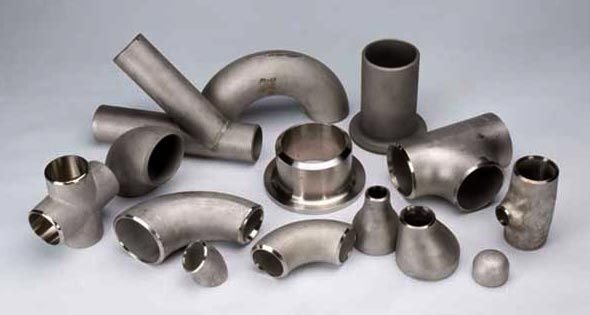


Selecting the right buttweld fittings starts with matching material grade, wall thickness, pressure rating and corrosion resistance to the service the line actually carries. These fittings weld directly onto pipe ends, forming a permanent joint with no mechanical seal to loosen. Oil and gas, chemical processing, power generation, water treatment and manufacturing plants rely on them for high-pressure and high-temperature lines where leak paths cannot be tolerated. Piping codes and project specifications set most of the limits.
What Are Buttweld Fittings
Butt weld pipe fittings connect, redirect, branch or resize a line by welding end to end with the adjoining pipe. The bevelled ends meet, and the weld fuses both components into one continuous pressure boundary. Threaded and socket weld connections behave differently: threads introduce a mechanical seal, while socket welds leave an internal gap and a step in the bore. A butt-welded joint keeps the bore smooth, which limits turbulence, pressure drop and localised erosion. Weld procedure qualification, welder certification and non-destructive examination all govern joint integrity. Dimensional compatibility between the fitting and the pipe matters just as much.
Common Types of Buttweld Fittings
Five fitting types cover most industrial piping layouts, with configuration chosen against flow requirements, design specifications and installation conditions.
Buttweld Elbows
Buttweld elbows turn the line through 45 or 90 degrees. Long-radius designs reduce pressure loss across the bend, while short-radius elbows suit congested layouts where space is limited.
Buttweld Tees
Equal tees split or merge flow between branches of the same diameter. Reducing tees serve branch lines of smaller bore, keeping the run size unchanged at the header connection.
Buttweld Reducers
Concentric reducers share a common centreline and suit vertical runs. Eccentric reducers hold one side flat, which prevents vapour pockets in horizontal pump suction lines and allows full drainage.
Buttweld Caps
Caps close an open pipe end permanently. Fabricators use them to terminate headers, seal future tie-in points and complete test sections before a system goes into pressurised service.
Buttweld Stub Ends
Stub ends pair with lap joint flanges to create a detachable connection. The flange rotates freely for bolt hole alignment, which helps with lines needing frequent dismantling for cleaning.
Key Factors to Consider When Selecting Buttweld Fittings
Six technical variables decide whether a fitting holds up across the design life of the piping system or fails early.
- Carbon steel, stainless steel and alloy steel each suit different fluids, so grade selection follows fluid compatibility, mechanical properties, operating conditions and project specifications.
- Nominal size, outside diameter, wall thickness and schedule on the fitting must match the connected pipe; otherwise the weld preparation will not align.
- Design pressure, operating temperature and the governing piping code together set the minimum thickness and the grade a fitting must meet.
- Corrosion resistant buttweld fittings become necessary once the conveyed fluid, ambient moisture, chlorides or process chemicals threaten the base material over the service life.
- Weldability governs fabrication, so check filler compatibility, qualified welding procedures, preheat or post-weld heat treatment requirements and the inspection scope before ordering.
- Dimensional conformity to ASME B16.9 and material conformity to the relevant ASTM specification confirm that the fitting matches what the drawing calls for.
Industrial Applications of Buttweld Fittings
Industrial buttweld fittings appear across six sectors, with material and design set by the process fluid and the governing standard.
Oil and Gas
Refineries and offshore platforms use these fittings to link pipelines, separators, pumps and process equipment carrying hydrocarbons at elevated pressure.
Chemical Processing
Chemical plants route acids, solvents and process fluids through welded lines where a threaded joint would corrode or leak at the seal.
Power Generation
Steam headers, feedwater lines and utility piping in thermal and nuclear plants depend on welded joints rated for sustained temperature cycling.
Water Treatment
Treatment and distribution networks use elbows, tees and buttweld reducers to redirect flow, feed branch lines and connect pumps to filtration trains.
Pharmaceutical and Food Processing
Process lines in these plants call for stainless grades, smooth bores and surface finishes that satisfy cleaning and sterilisation requirements.
Manufacturing
Factories connect compressed air, cooling water, hydraulic and gas lines with welded fittings that withstand vibration from nearby rotating equipment.
Common Mistakes to Avoid When Choosing Buttweld Fittings
Most field failures trace back to a decision made during procurement rather than a defect in the fitting supplied.
- Picking a material grade on price alone fails once the conveyed fluid attacks the base metal, and replacement costs exceed the original savings.
- Ordering a fitting without checking pipe schedule and wall thickness leaves a mismatched weld preparation that weakens the joint under load.
- Buyers sometimes skip the design pressure and temperature check, then install a fitting rated below the conditions the line actually sees.
- Assessing only the primary fluid overlooks chlorides, humidity and corrosion under insulation, all of which attack the fitting from outside.
- Accepting a consignment without material test certificates removes any traceability, leaving no proof that the grade matches the purchase specification.
- Rushed welding, skipped radiography and poor fit-up create defects that no fitting quality can compensate for once the line goes live.
Check the piping specification first, and consult a qualified piping engineer when operating conditions are demanding.
Tips for Buying the Right Buttweld Fittings
Procurement teams reduce rework and delivery delays by verifying a short set of details before the purchase order goes out to the supplier.
- Confirm the fitting type, nominal size, material grade and wall thickness against the line list.
- Verify dimensional conformity to ASME B16.9 and material conformity to the applicable ASTM specification.
- Request material test certificates and heat number traceability for every consignment.
- Assess the supplier’s in-house testing, stock depth and committed delivery schedule.
- Confirm compatibility with the connected pipe and the intended service conditions, including pipe fittings already installed upstream.
Conclusion
The right buttweld fittings come from matching material grade, dimensions, pressure and temperature rating, corrosion resistance and applicable standards to the actual service. Correct selection supports piping integrity and steady flow, provided the fabricator welds and inspects the joint properly. Verify every technical specification against the piping class before sourcing for an industrial project.