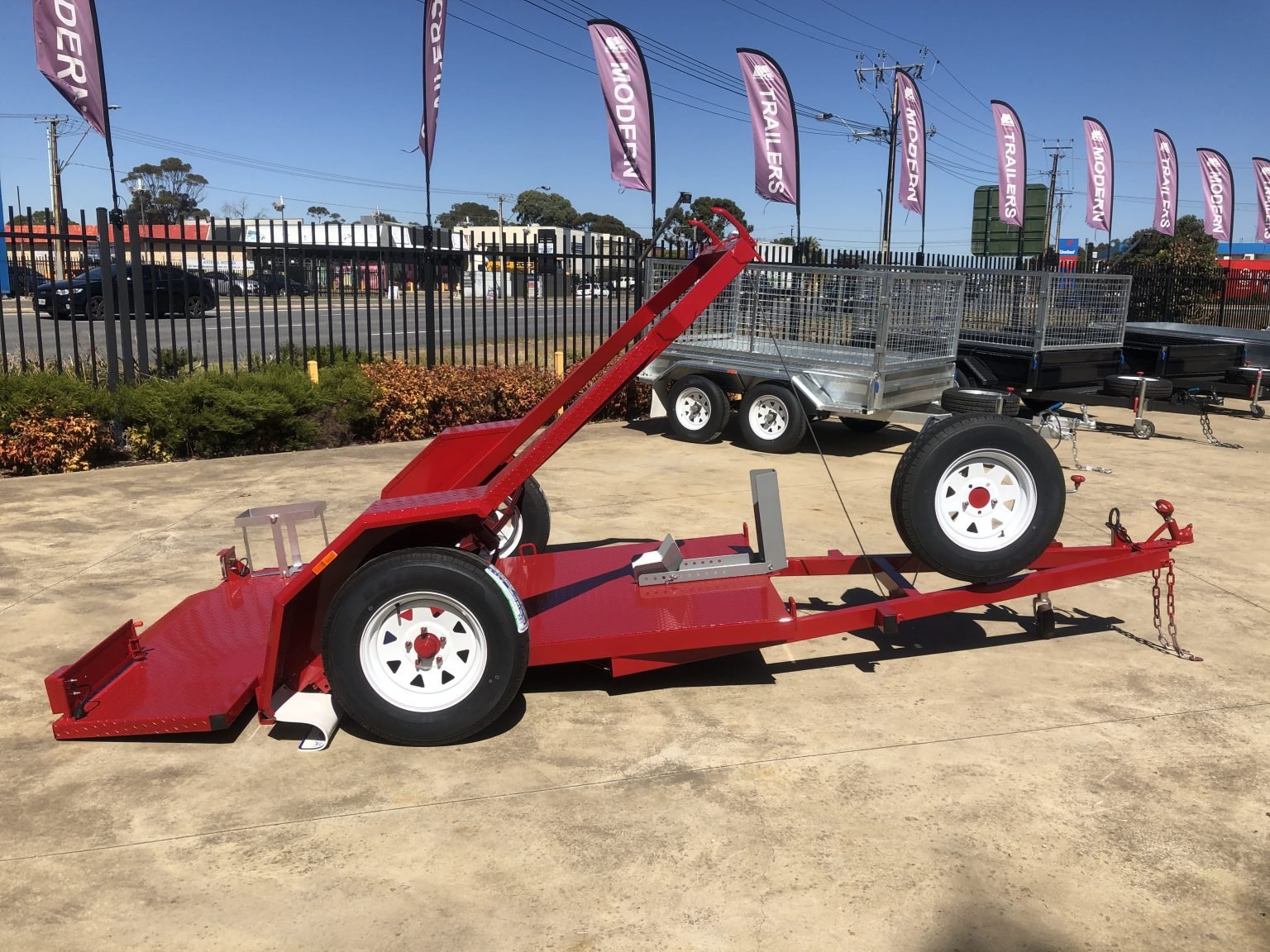


Moving heavy equipment, machinery, and bulky materials requires the right trailer. Traditional trailers often need separate ramps or additional handling to unload cargo. Tilt trailers offer a practical alternative, using an adjustable deck that angles toward the ground. This creates a loading surface for suitable wheeled equipment.
For businesses and individuals with frequent transport needs, tilt trailers can improve convenience and reduce manual handling. Understanding how the mechanism works can help buyers choose a trailer that suits their cargo and operating requirements.
How Does a Tilt Trailer Work?
A tilt trailer has a deck that moves from a horizontal position to an angled position.
Depending on the model, the tilting mechanism may operate through gravity, hydraulics, or a manual system.
The mechanism lets operators move equipment onto or off the trailer without positioning separate loading ramps for every task.
Key Benefits of the Tilt Mechanism
An adjustable deck offers several practical advantages during transport operations. Its benefits include:
- Easier loading and unloading: The angled deck provides a gradual surface for moving suitable machinery, vehicles, and equipment. This can simplify loading compared with lifting cargo onto a fixed-height deck.
- Reduced manual handling: Operators may not need to position and remove separate ramps for each loading task. This can reduce some handling, although safe lifting and loading procedures are still important.
- Improved loading efficiency: A tilt mechanism can make repeated loading and unloading tasks more straightforward. This is useful for businesses transporting equipment between different work sites.
- Access for wheeled equipment: Ride-on machinery, small vehicles, and equipment with wheels can move onto a suitably designed tilt deck more easily.
- Flexible transport applications: Depending on its specifications, a tilt trailer can carry landscaping equipment, construction machinery, and other compatible loads.
These advantages depend on the trailer’s capacity, deck design, surface, and the type of equipment being transported.
Tilt Trailers vs Traditional Trailers
Traditional flat-deck trailers generally have a fixed loading surface. Ramps must suit the load, be positioned correctly, and be secured before use.
Tilt trailers provide an adjustable loading surface, which can reduce the need for separate ramps.
What to Consider When Choosing a Tilt Trailer
Selecting the right trailer involves checking its construction, capacity, and operating mechanism. Important factors include:
- Load capacity: Check the rated payload, Aggregate Trailer Mass (ATM), and Gross Trailer Mass (GTM) details relevant to the trailer.
- Deck dimensions: Measure your equipment to confirm that it fits securely on the platform.
- Tilt mechanism: Compare manual, hydraulic, and gravity-operated systems based on your loading requirements.
- Axle configuration: Consider whether a single or tandem axle arrangement is appropriate for the load.
- Braking system: Check that the braking configuration meets applicable Australian requirements.
- Build quality: Assess the chassis, suspension, tyres, and tie-down points.
A suitable trailer should match both the cargo and the conditions in which it will operate.
Conclusion
Tilt trailers make loading and unloading easier by allowing the deck to move into an angled position. This can reduce reliance on separate ramps and simplify regular equipment transport. Before purchasing, compare load capacity, deck dimensions, axle configuration, and the tilt mechanism. Follow the manufacturer’s instructions and secure every load correctly before travelling.